A vegan meal plan with grocery list comes down to three steps: set your weekly calorie and protein targets, schedule seven days of meals, then translate those meals into an aisle-sorted shopping list. Do it once and the whole week runs on autopilot.
Most people skip the planning part and end up staring into the fridge at 6pm. That's where takeout budgets spiral and nutrition falls apart. A 20-minute planning session on Sunday fixes both problems. This guide gives you the full system — a ready-to-use 7-day meal plan, a category-sorted vegan grocery list, protein targets, and the common nutrient gaps you actually need to know about.
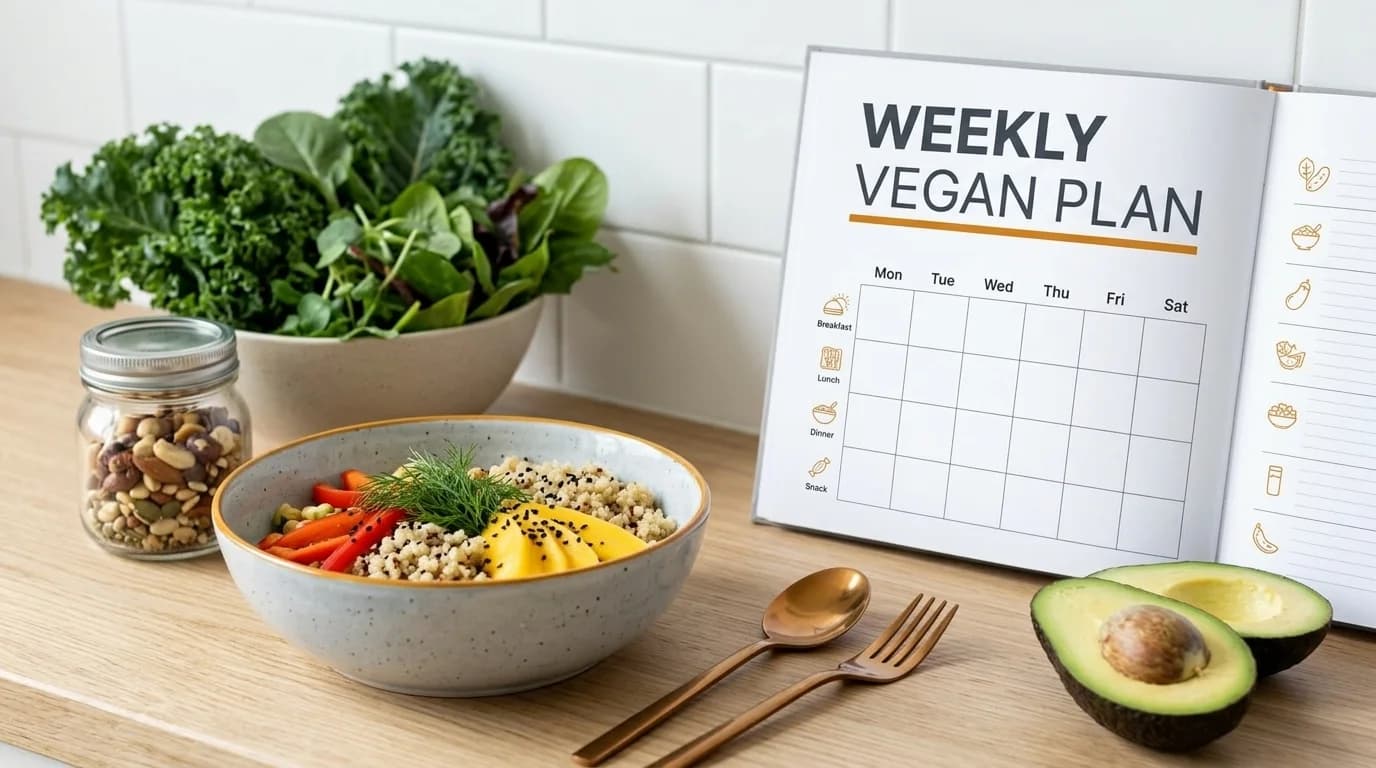
How Do You Start a Sustainable Vegan Meal Plan?
Before you pick a single recipe, get clear on what you're actually trying to achieve. That sounds obvious, but most people skip this step and end up with a meal plan that doesn't fit their life.
Define your nutritional goals first
Weight management, muscle building, and general energy all need different macros. An athlete needs 1.6–2.2g of protein per kilogram of body weight. Someone focused on fat loss needs a modest calorie deficit — usually 300–500 calories below maintenance. If you just want to eat healthier, you can keep things simpler and focus on getting a protein source, a whole grain, and plenty of vegetables into every meal.
You can use an online recipe nutrition calculator to get a baseline. This isn't about obsessing over numbers. It's about having a rough target so your plan actually moves you toward your goal instead of just feeling healthy in theory.
The most common mistake: focusing on what to remove instead of what to add. A solid vegan plan is built on nutrient-dense additions, not just subtractions.
Build a simple weekly framework
Start with dinners. They're the most involved meal of the day and drive everything else. Once you've got seven dinners sketched out, lunches are often just yesterday's dinner repurposed, and breakfasts are usually the simplest slot to fill.
Three habits that make this sustainable:
- Theme your nights — "Taco Tuesday" or "Grain Bowl Thursday" removes daily decision-making without making your week feel rigid.
- Cook double portions at dinner. Next-day lunch is done before you even think about it.
- Build in one flex night per week for leftovers, eating out, or whatever sounds good. It prevents burnout.
If you're new to this, meal planning for beginners covers the core system in more detail before you dive into the vegan-specific strategies here.
Your 7-Day Vegan Meal Plan: Breakfast, Lunch, and Dinner
This plant-based meal plan uses overlapping ingredients to minimize waste. The grocery list in the next section matches exactly what you need for this week.
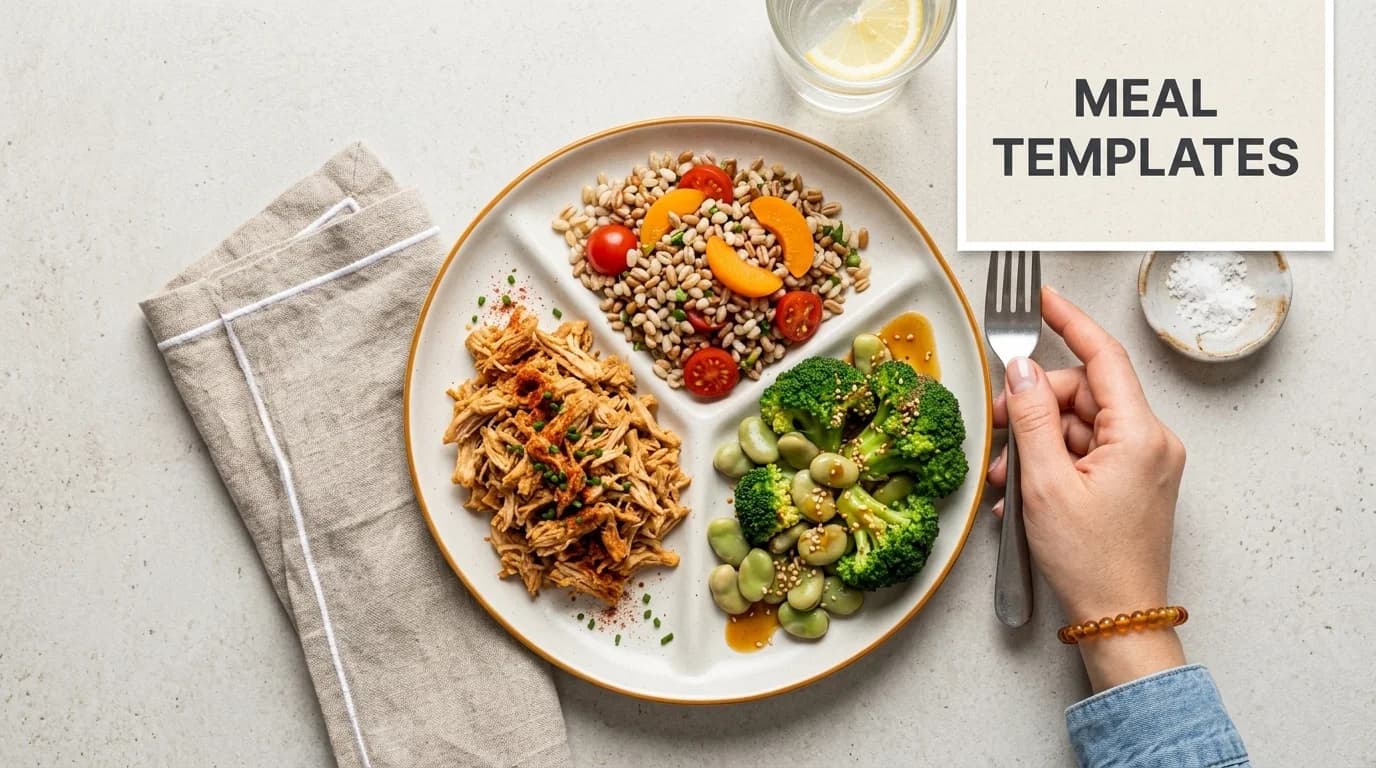
| Day | Breakfast | Lunch | Dinner |
|---|---|---|---|
| Monday | Overnight oats with berries and chia seeds | Chickpea salad sandwich on whole wheat bread | Lentil and sweet potato curry with brown rice |
| Tuesday | Tofu scramble with spinach and bell pepper | Leftover lentil curry with rice | Black bean tacos with corn, avocado, and salsa |
| Wednesday | Banana oat smoothie with almond milk | Quinoa grain bowl with roasted broccoli and tahini | Soy-ginger tempeh stir-fry with noodles |
| Thursday | Overnight oats with walnuts and banana | Leftover tempeh stir-fry | White bean and tomato pasta with nutritional yeast |
| Friday | Chia pudding with mixed berries | Lentil soup with whole wheat bread | Baked tofu grain bowl with roasted sweet potato and greens |
| Saturday | Tofu scramble with avocado on toast | Black bean wrap with lettuce, tomato, and hummus | Chickpea and spinach coconut milk curry with quinoa |
| Sunday | Banana pancakes (oats, banana, flax egg) | Leftover chickpea curry | Flex night — leftovers, takeout, or batch cooking for next week |
Most breakfasts here take under 10 minutes to put together. Dinners average 25–35 minutes once you have your components prepped. For more options on quick prep, see easy healthy meal plans.
Balanced plate ratios
Each meal in this plan roughly follows a 40/30/30 split: 40% complex carbs, 30% plant protein, 30% vegetables and healthy fats. You don't need to weigh anything. The proportions work themselves out when you build meals around a grain, a protein, and a pile of vegetables.
How Do I Build an Optimized Vegan Grocery List?
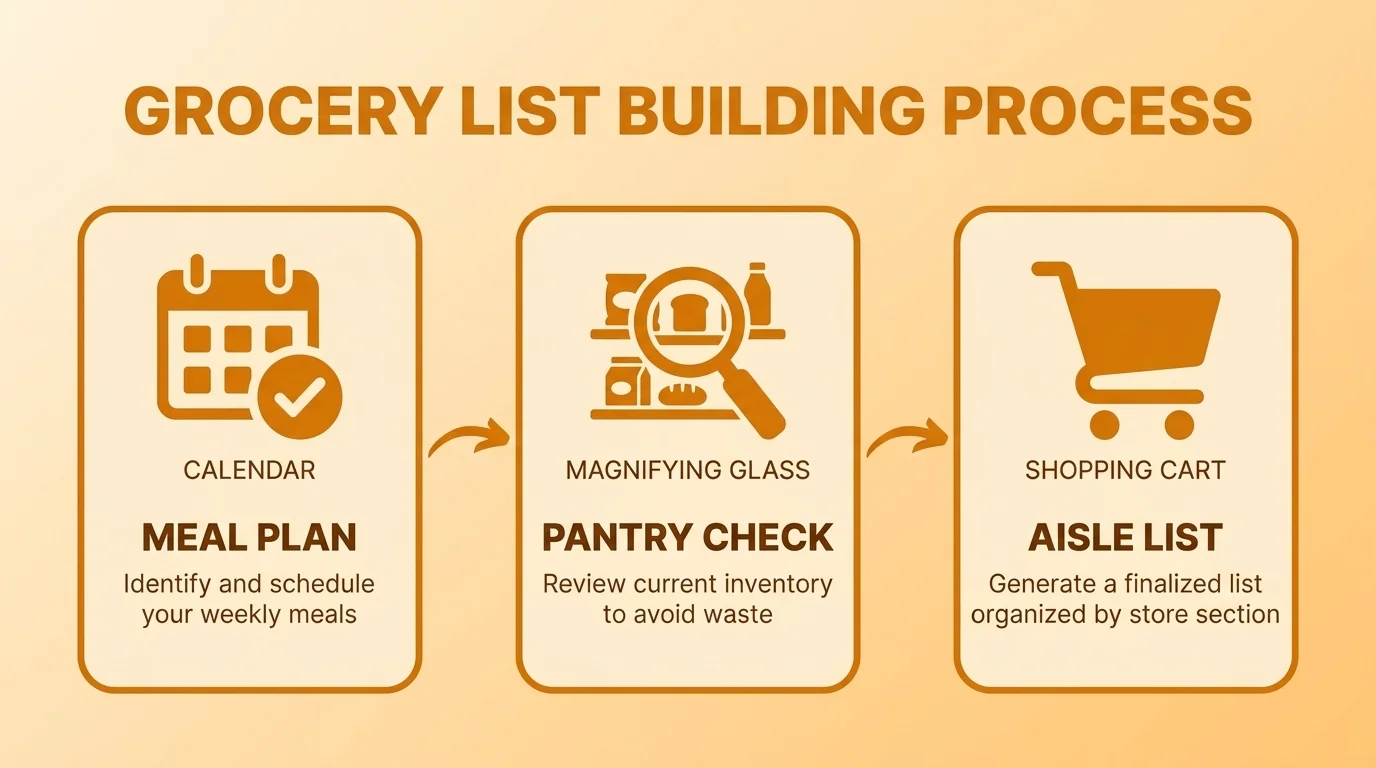
The grocery list is where the vegan meal plan with grocery list system actually earns its name. Before writing anything down, do a five-minute pantry scan. You probably already have oats, rice, or half a bag of lentils. Cross those off before you get to the store.
Then organize by store section. This one habit cuts shopping time by roughly half and keeps you from doubling back across the store.
Sample aisle-sorted vegan grocery list for one week
Everything below covers the 7-day plan above. Quantities are for one person — double for two.
Fresh Produce
- Onions — 1 large yellow
- Garlic — 1 head
- Sweet potatoes — 2 large
- Spinach — 1 large bag (about 5 oz)
- Bell peppers — 1 red, 1 green
- Broccoli — 1 head
- Avocados — 2
- Roma tomatoes — 3
- Cucumber — 1
- Carrots — 1 bunch
- Fresh cilantro — 1 bunch
- Lemon — 1
- Lime — 1
- Bananas — 3–4
- Apples — 2 (for snacks)
Grains and Pantry
- Rolled oats — 1 large container
- Quinoa — 1 bag (2 lbs)
- Brown rice — 1 bag
- Whole wheat pasta — 1 box
- Whole wheat bread — 1 loaf
- Corn tortillas — 1 pack
- Chia seeds — 1 small bag
- Walnuts or almonds — 1 small bag
- Ground flaxseed — small bag
Canned and Jarred Goods
- Canned chickpeas — 2 cans (15 oz each)
- Canned black beans — 2 cans
- Canned white beans (cannellini) — 1 can
- Canned diced tomatoes — 1 large can (28 oz)
- Full-fat coconut milk — 1 can
- Vegetable broth — 1 carton (32 oz)
- Tahini — 1 jar
- Soy sauce or tamari — 1 bottle
- Olive oil, cumin, chili powder, smoked paprika, oregano, nutritional yeast
Plant-Based Proteins
- Extra-firm tofu — 2 blocks
- Tempeh — 1 block
- Dried red lentils — 1 bag (1 lb)
Refrigerated and Non-Dairy
- Unsweetened soy milk or almond milk — 1 carton (64 oz)
- Hummus — 1 container
Frozen
- Frozen edamame — 1 bag
- Frozen corn — 1 bag
- Frozen mixed berries — 1 bag (for oats and smoothies)
Buying oats, rice, and dried lentils in bulk drops your cost per serving significantly. A 2 lb bag of dried lentils costs about $2.50 and gives you roughly 10 servings. The same protein from canned lentils would cost three times as much.
Want this list auto-generated from your own meal plan? Kitchendary's smart grocery list tool creates category-sorted lists from any 7-day plan in seconds, combining duplicate ingredients and checking against your pantry. For more guidance on building efficient shopping lists, see building a healthy meal plan with a grocery list.
Hitting Your Protein and Nutrient Needs on a Plant-Based Diet
This is the question most people have when they start a vegan weekly meal plan. The good news: hitting 50–60g of protein daily on plants is straightforward once you know which foods to lean on. The trickier part is the micronutrients that plant-based eating can fall short on.
How to hit 50–60g of protein per day from plants
The target for a sedentary adult is roughly 0.8g per kilogram of body weight. For someone who exercises regularly, 1.2–1.6g/kg is a better target. Here's how the numbers add up in a typical day on this plan:
| Food | Serving size | Protein |
|---|---|---|
| Tofu (extra-firm) | 4 oz (half block) | ~10g |
| Cooked lentils | 1 cup | ~18g |
| Chickpeas | 1 cup cooked | ~15g |
| Tempeh | 3 oz | ~16g |
| Edamame | 1 cup shelled | ~17g |
| Quinoa | 1 cup cooked | ~8g |
| Soy milk | 1 cup | ~7g |
A lunch of lentil curry (18g) plus a dinner of tempeh stir-fry (16g) plus a breakfast with soy milk (7g) gets you to 41g before you even count the chickpeas, quinoa, or edamame snacks. If you're targeting higher protein for muscle gain, high-protein vegetarian meal plan goes deeper on optimizing macros.
The four nutrient gaps worth knowing about
A well-planned vegan diet covers most bases. But four nutrients are genuinely harder to get from plants alone, and ignoring them leads to real problems over time.
| Nutrient | Why it matters | Best plant sources | Supplement needed? |
|---|---|---|---|
| Vitamin B12 | Nerve function, red blood cells | Fortified plant milks, nutritional yeast | Yes — most vegans need one |
| Iron | Energy, oxygen transport | Lentils, spinach, tofu, pumpkin seeds | Pair with vitamin C to improve absorption |
| Omega-3 (EPA/DHA) | Brain and heart health | Flaxseed, chia, walnuts (ALA form only) | Algae oil supplement for EPA/DHA directly |
| Calcium | Bone density | Fortified soy milk, kale, bok choy, almonds | Only if intake is consistently low |
B12 is the non-negotiable one. Plant foods don't contain usable B12. A cheap daily supplement (250–500mcg cyanocobalamin) covers it completely. For iron, the trick is pairing iron-rich foods with vitamin C. Lentil soup with a squeeze of lemon is a good example — the lemon roughly doubles iron absorption from the lentils.
Smart Vegan Meal Prep and Budget Strategies
Two hours on a Sunday is enough to set up a full week. The mistake most people make is cooking five identical containers of the same meal — by Wednesday they're ordering pizza. Component prepping solves this.
Component prepping: build once, eat many ways
Instead of finished meals, you prep the building blocks. Then you mix and match all week without eating the same thing twice.
A typical Sunday prep session for this plan takes 90–120 minutes:
- Cook a big pot of brown rice and quinoa (20 minutes active, 40 minutes hands-off)
- Roast a full tray of sweet potato, broccoli, and bell pepper at 400°F for 30 minutes
- Simmer a batch of red lentils with cumin, garlic, and coconut milk
- Press and bake a block of tofu (25 minutes, barely any work)
- Mix overnight oats for the next two days
- Make a jar of lemon-tahini dressing
With those components ready, every meal this week is 10 minutes of assembly. Grain bowl? Done. Taco? Done. Stir-fry? Done. The vegetarian weekly meal plan guide has more component-prep ideas if you want to expand your rotation.
30-minute vegan meals for busy nights
Even with prepped components, some nights you just need to cook something fast. These three recipes work with the grocery list above:
- 15-minute lentil pasta: sauté garlic and onion, add canned tomatoes and a can of brown lentils, season with oregano. Toss with cooked whole wheat pasta.
- Speedy black bean tacos: heat black beans with cumin and chili powder. Fill corn tortillas, top with salsa and sliced avocado.
- 10-minute chickpea salad sandwich: mash chickpeas with a fork, stir in a little tahini, chopped celery, lemon juice, and salt. Pile on toast.
Cost comparison: plant vs. animal protein
A common concern is that going vegan gets expensive. The opposite is true if you build your meals around whole foods instead of processed alternatives.
| Protein source | Type | Avg. cost per serving (USD) |
|---|---|---|
| Lentils (dried) | Plant-based | $0.25 |
| Chickpeas (canned) | Plant-based | $0.35 |
| Tofu | Plant-based | $0.70 |
| Tempeh | Plant-based | $1.10 |
| Ground beef | Animal-based | $1.50 |
| Chicken breast | Animal-based | $1.75 |
Even tempeh — the most expensive plant protein on the list — costs less per serving than ground beef. Lentils cost six times less than chicken breast per serving of protein.
Smart shopping habits that actually move the needle
- Buy seasonal produce. In-season vegetables are fresher and 20–40% cheaper than out-of-season.
- Compare unit prices, not package prices. The bigger container isn't always better value.
- Swap canned beans for dried when you have time. The savings add up fast over a month.
- Use what you have before buying more. If a recipe calls for kale and you've got spinach, swap it. For more on this, eating on a budget covers more ways to stretch what you already have.
The vegan food market hit USD 14.4 billion in 2023 and is projected to reach USD 31.1 billion by 2032 — a sign that plant-based eating has moved well past niche. The good news for your grocery budget: growing demand has made staples like tofu, tempeh, and plant milks significantly cheaper and easier to find than they were even five years ago.
FAQ
How do I get enough protein on a vegan diet?
Ensure every meal includes a protein-rich food like lentils, chickpeas, tofu, tempeh, or quinoa. For example, a single cup of cooked lentils provides about 18 grams of protein, making it easy to meet daily needs.
What are essential vegan pantry staples?
Always keep legumes (chickpeas, lentils), grains (oats, rice, quinoa), canned goods (diced tomatoes, coconut milk), and flavor builders (nutritional yeast, spices, tahini) on hand. These items form the base for countless quick and easy meals.
Is it hard to create a vegan meal plan with food allergies?
No, a vegan plan is highly adaptable. Since it already excludes dairy and eggs, you can easily substitute soy with beans and lentils or use gluten-free grains like quinoa and rice to meet specific dietary needs.
How can I keep my vegan meals from getting boring?
Prevent meal fatigue by trying one new recipe each week and exploring different international cuisines. Using a 'component prep' strategy also allows you to mix and match ingredients into new combinations throughout the week.
Isn't a vegan diet expensive?
A vegan diet centered on whole foods is often cheaper than one including meat and dairy. Staples like dried beans, lentils, seasonal produce, and grains are among the most affordable and nutrient-dense foods available.
How much time does vegan meal prep take?
A dedicated meal prep session typically takes about 2 hours on a weekend. This investment saves significant time and reduces stress during busy weekdays by ensuring you have healthy components ready to go.
Can I build muscle on a vegan meal plan?
Yes, you can effectively build muscle by prioritizing high-protein plant foods like tofu, tempeh, seitan, lentils, and protein powders. Simply adjust your meal plan's macronutrient ratios to support your fitness goals.
What nutrients do vegans most commonly miss?
The main ones to watch are vitamin B12 (get a supplement or use fortified foods), iron (pair plant sources with vitamin C), omega-3s (flaxseed, chia, walnuts, or algae oil), calcium (fortified plant milks, leafy greens), and vitamin D (sunlight or a supplement in winter months).
How do I organize a vegan grocery list efficiently?
Group your list by store section: produce, grains and pantry, canned goods, plant proteins, refrigerated items, and frozen. Starting your shop at the produce perimeter and finishing in the center aisles saves time and reduces backtracking.