To create a healthy meal plan with a grocery list, first choose 7-10 recipes for the week, focusing on meals that share common ingredients. Next, list every ingredient needed for those recipes and cross-reference it with what you already have in your pantry. Finally, organize the remaining items into an aisle-by-aisle grocery list to make shopping faster.
Building a healthy meal plan from scratch takes more effort than it looks. You start by clarifying your goals — calories, macros, dietary needs. Then you find recipes that won't keep you in the kitchen for hours. Finally, you turn it all into an organized grocery list that doesn't have you wandering the aisles.
The practical shortcut is picking recipes that share ingredients. This cuts down on food waste and makes your shopping trip much more efficient.
Why is a structured meal plan so effective?
Most people know roughlywhatthey should be eating. The real difficulty is in thedoing— finding time to cook, avoiding that bag of wilted spinach at the end of the week, and staying consistent when life gets busy.
This is where good intentions often break down, leading to last-minute takeout orders and wasted groceries. Research consistently points to a lack of time as the biggest obstacle for adults trying to eat well.
A solid plan acts as a roadmap for the week. It removes the daily question of "what's for dinner?" and reduces decision fatigue. After a long workday, you don't want another complex decision standing between you and a meal.
What are the main benefits of meal planning?
A plan that works isn't about rigid rules. It's a simple framework that fits your actual life. When you get ahealthy meal plan with a grocery listworking, a few things improve right away:
- You save time:No more last-minute store runs or staring into the fridge. Your meals are planned and your shopping list is ready.
- You waste less food:Planning meals around shared ingredients means buying only what you need — a real difference given how much food the average household throws away each year.
- Your nutrition improves:When you plan ahead, you can build a menu of nutrient-dense foods that support your health goals without having to think about it midweek.
- Your stress goes down:Knowing your meals are handled frees up mental energy for everything else.
This workflow shows how it all connects: you set your goals, find recipes that fit, and then build your shopping list.
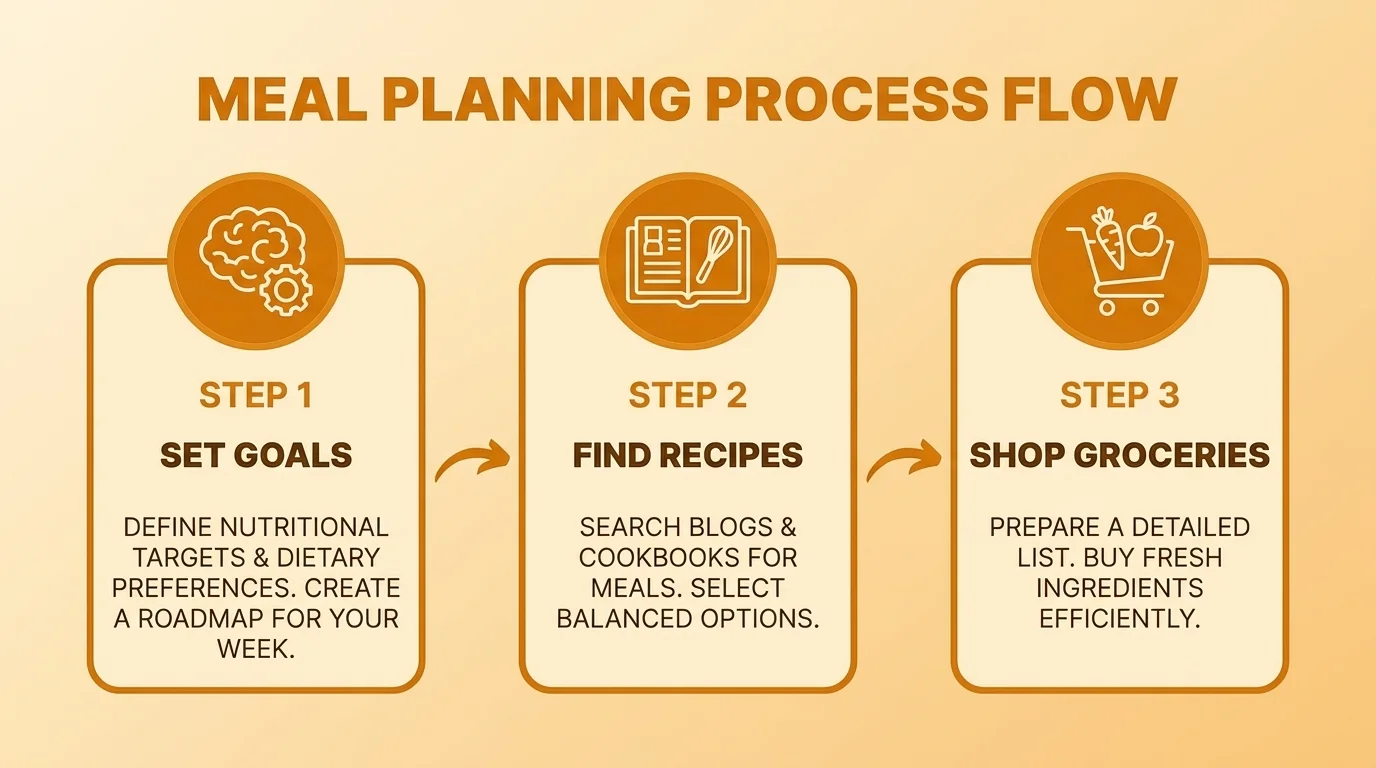
Each step flows into the next, turning a daunting task into a series of smaller, manageable actions.
Is there an easier way than using spreadsheets?
You can absolutely manage this with a pen and paper or a spreadsheet, but it gets tedious fast. There are tools now that handle the heavy lifting, turning hours of planning into a much quicker process.
An AI assistant can generate your weekly menus, create an aisle-sorted shopping list, and suggest recipe ideas based on ingredients you already have. For people stuck in a dinner rut, that kind of automation saves real time.
Instead of manually searching for low-carb recipes and cross-checking every ingredient, you set your preferences and let the tool handle the rest.
If you often find yourself with random leftover ingredients, our guide on how tocreate a meal from fridge leftoversmay be useful. An automated system not only creates the plan but also optimizes it for ingredient reuse — something that's difficult and time-consuming to manage by hand.
This guide covers both the manual approach and the automated alternative, so you can build a system that actually sticks.
What are the core components of a successful weekly meal plan?
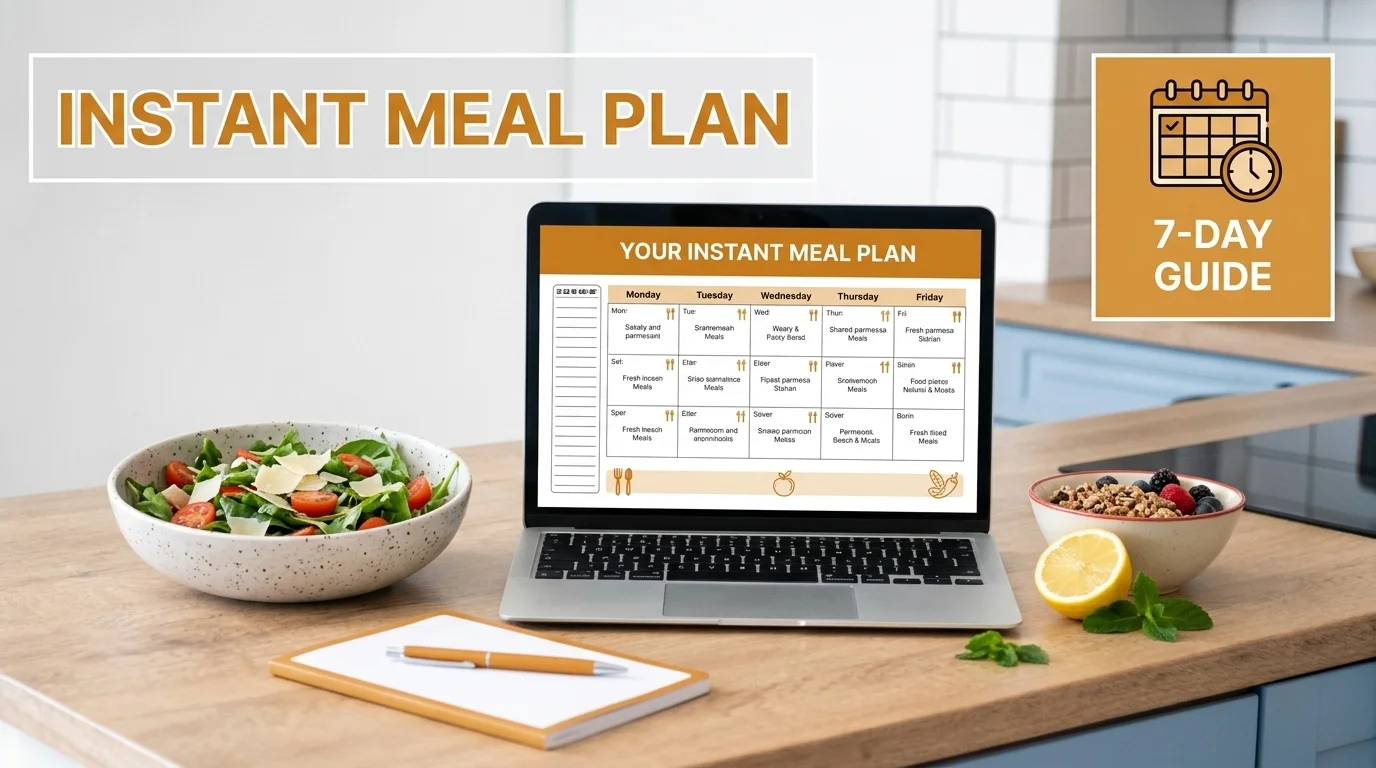
A good weekly meal plan is more than a list of recipes — it's a sustainable way of eating. It relies on nutritional balance, deliberate use of leftovers, and planned snacking. When these pieces work together, they save time, reduce waste, and make healthy eating less of a daily effort.
This approach goes beyond deciding what's for dinner. It creates a system that anticipates your needs, streamlines grocery shopping, and handles the chaos of a busy week. The goal is a plan that works foryou, not the other way around.
How can I achieve nutritional balance without overthinking it?
The foundation of any solid plan is nutritional balance — pairing protein, carbs, and fats in a way that fuels your body and keeps energy levels steady through the day. A well-balanced meal keeps you full and reduces cravings later.
A balanced dinner plate might look something like this:
- Lean Protein:Grilled chicken breast or baked salmon
- Complex Carbohydrate:A serving of quinoa or a sweet potato
- Healthy Fats:Sliced avocado or a drizzle of olive oil
- Fiber:A generous portion of roasted broccoli or a leafy green salad
This combination gives you a steady release of energy rather than the quick spike and crash from simple carbs and sugary foods. Understanding your personal needs is a good starting point; you can use our freecalorie and macro calculatorto set your daily targets.
How do I use leftovers effectively?
One of the most practical strategies for a successfulhealthy meal plan with grocery listis embracing "planned leftovers." This doesn't mean eating the same meal three days running. It means cooking a larger batch of a core ingredient and repurposing it for a different meal.
This one habit saves a significant amount of active cooking time during a hectic week — cook once, eat twice (or three times).
A roasted chicken on Sunday isn't just one dinner. It's the protein for Monday's chicken salad sandwiches and the filling for Tuesday night's tacos. Cooking with that in mind cuts effort while maintaining variety.
The same thinking applies across many dishes. A big batch of chili can go over rice one night, then top baked potatoes the next. A pot of quinoa works as a dinner side and then as the base for a grain bowl at lunch.
How should I handle snacks and hydration?
A meal plan often falls apartbetweenmeals. Unplanned snacking can derail your goals, which is why building smart, grab-and-go options into your plan matters. Healthy snacks need as much thought as your main meals.
Stock your kitchen with easy, nutrient-dense choices:
- Greek yogurt cups
- Portioned nuts and seeds
- Hard-boiled eggs
- Apple slices with peanut butter
- Baby carrots and hummus
Hydration matters just as much. Thirst is often mistaken for hunger. Drinking water consistently through the day supports your metabolism, keeps energy up, and helps manage appetite. Keeping a reusable water bottle nearby is the simplest way to stay on top of it. Planning for these in-between moments gives your week a more complete and resilient structure.
Can you provide a sample 7-day healthy meal plan and grocery list?
Theory is useful, but having a concrete example to work from builds real confidence. Here's a complete 7-day healthy meal plan, designed for a balanced diet of roughly1,800-2,000 caloriesa day, along with a fully organized grocery list.
This isn't a random collection of recipes — it's a strategic template. You'll see how meals use overlapping ingredients to keep your grocery bill down and reduce waste. Treat it as a starting point, not a rigid rulebook.
How should I use this sample plan?
The purpose here is to show what a balanced weeklooks like. Feel free to swap chicken for fish, adjust portion sizes to match your calorie and macro targets, or substitute vegetables based on what's fresh at the market.
This example walks you through incorporating variety, planning for leftovers, and building a grocery list that makes shopping faster and more efficient.
The 7-Day Healthy Meal Plan
Here's the day-by-day breakdown. "Planned Leftovers" appear on a couple of lunch days to show how cooking once can carry you through multiple meals.
| Day | Breakfast | Lunch | Dinner | Snack Option |
|---|---|---|---|---|
| Monday | ½ cup oats, 1 tbsp chia seeds, ½ cup berries | Quinoa salad with chickpeas & veggies | One-Pan Lemon Herb Chicken with roasted broccoli | Greek yogurt with a sprinkle of walnuts |
| Tuesday | 2-egg omelet with spinach and feta | Planned Leftovers:Lemon Herb Chicken | Sheet-Pan Salmon with asparagus and sweet potatoes | An apple with 2 tbsp almond butter |
| Wednesday | Greek yogurt with granola and sliced peaches | Lentil soup (pre-made or store-bought) | Turkey Meatballs with zucchini noodles | Handful of almonds and a piece of dark chocolate |
| Thursday | Smoothie: spinach, banana, protein powder, milk | Tuna salad on whole-wheat crackers | Chicken and Vegetable Stir-fry with brown rice | Baby carrots with hummus |
| Friday | Overnight oats with almond milk and cinnamon | Planned Leftovers:Stir-fry | Shrimp Scampi with whole-wheat pasta & side salad | Hard-boiled egg and orange |
| Saturday | Whole-wheat toast with avocado and egg | Large mixed green salad with grilled shrimp | Homemade Veggie Pizza on whole-wheat crust | Rice cakes with cottage cheese |
| Sunday | Scrambled tofu with bell peppers and onion | Leftover Veggie Pizza | Black Bean Burgers on whole-wheat buns | Celery sticks with peanut butter |
Need to adjust a recipe to hit your specific macros? You can plug any of these meals into arecipe nutrition calculatorto get an exact breakdown and stay on track without guessing.
The Aisle-by-Aisle Grocery List
This list is organized by supermarket section to get you in and out quickly. Before you head out, do a quick scan of your pantry for staples like olive oil, spices, and grains — you might already have them.
Produce:
- Fruits:Berries (frozen or fresh), 1 banana, 1 apple, peaches, 1 orange, 1 lemon, 2 avocados
- Vegetables:Spinach (large bag), broccoli, asparagus, 2 sweet potatoes, 2 zucchinis, 1 bag baby carrots, celery, bell peppers (assorted), 1 onion, garlic, mixed salad greens
Protein & Meat:
- 2 boneless, skinless chicken breasts
- 1 lb salmon fillet
- 1 lb ground turkey
- 1 lb shrimp (peeled and deveined)
- 1 dozen eggs
- 1 block firm tofu
Dairy & Alternatives:
- Greek yogurt (plain)
- Feta cheese
- Almond milk or milk of choice
- Cottage cheese
Pantry & Grains:
- Rolled oats
- Chia seeds
- Quinoa
- Brown rice
- Lentil soup (1 can)
- Canned chickpeas (1 can)
- Canned black beans (1 can)
- Tuna (canned, in water)
- Whole-wheat pasta
- Whole-wheat bread or crackers
- Whole-wheat pizza crust & buns
- Protein powder (optional)
- Almond butter or peanut butter
- Walnuts & almonds
- Granola (low sugar)
- Hummus
- Rice cakes
- Dark chocolate
- Spices/Oils:Olive oil, salt, pepper, dried herbs (oregano, thyme), cinnamon
Takeaway:A well-organized grocery list bridges your meal plan and your kitchen. Categorizing items by aisle cuts out backtracking and reduces shopping time, which makes healthy eating easier to maintain over time.
How can I make smart swaps in this plan?
A good meal plan is adaptable, not rigid. Whether you have dietary restrictions, personal preferences, or just want to use what you have, making substitutions is straightforward. Here are a few ideas.
For a Vegetarian/Vegan Plan:
- Swap chicken for chickpeas or extra-firm tofu.
- Replace salmon with a large, meaty portobello mushroom steak.
- Use lentils or black beans instead of ground turkey.
- Substitute eggs with a flavorful tofu scramble.
For a Lower-Carb Plan:
- Replace sweet potatoes with roasted cauliflower.
- Use zucchini noodles or spaghetti squash instead of whole-wheat pasta.
- Swap rice with cauliflower rice.
- Choose high-fiber, low-carb bread and buns.
For Budget-Friendly Options:
- Use chicken thighs instead of breasts — they're often cheaper and more flavorful.
- Opt for frozen fish fillets instead of fresh salmon.
- Buy dried beans and cook them yourself instead of using canned versions.
This flexibility reflects what most people actually need. The global health and wellness foods market reached$858.8 billion in 2023and is projected to reach$1.6 trillion by 2030. That growth is driven by people wanting food that fitstheirspecific needs, with surveys showing33.7%always buy organic and32.6%choose non-GMO products when they can.
How can I build an optimized grocery list that saves time and money?
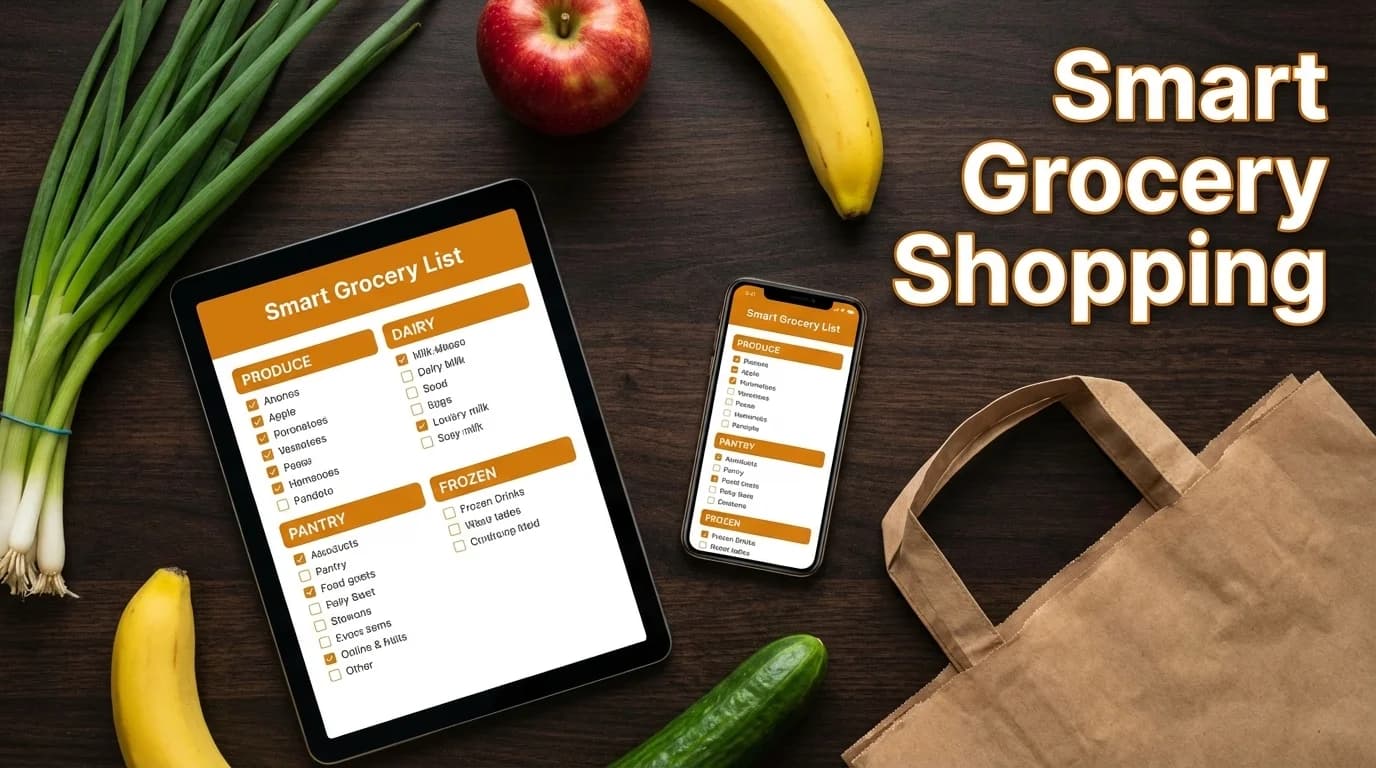
Your meal plan is the strategy, but a well-crafted grocery list is how you put it into action. The difference between a useful list and a chaotic one isn't just what's on it — it's how it's organized. A list that mirrors the layout of your store turns grocery shopping from a chore into a quick, focused task.
The goal is to walk out with exactly what you need, nothing more. That alone cuts down on aimless wandering and impulse buys that chip away at both your budget and your nutrition goals.
Why should I do a kitchen inventory first?
Before writing anything down, check what you already have. Take five minutes and open your pantry, fridge, and freezer. This step alone prevents duplicate purchases and wasted money.
You'll likely find that half-full bag of quinoa, enough olive oil, or those chicken breasts you froze last month. Cross them off your ingredient list before you shop. This one habit trims your grocery bill and reduces kitchen clutter.
How do I organize my grocery list?
Once you know what you have, build your master list. Go through your 7-day meal plan and write down every ingredient you still need. Then organize everything by supermarket aisle. This simple step can cut your shopping time noticeably by eliminating backtracking. Group your items into logical sections:
- Produce:All your fresh fruits and vegetables.
- Meat & Seafood:Chicken, salmon, ground turkey, etc.
- Dairy & Refrigerated:Eggs, yogurt, milk, cheese.
- Pantry Staples/Dry Goods:Grains, pasta, canned goods, spices, oils.
- Frozen Foods:Frozen berries, vegetables, or other items.
An organized list lets you move through the store methodically, aisle by aisle, without getting distracted or forgetting items. For those who want to automate this step, agrocery list generatorcan handle the sorting in seconds.
What are some money-saving shopping tips?
An efficient list saves time and money. With food costs rising, being strategic matters more than ever. In 2024, the average cost of a healthy diet globally reached$4.46per person per day — a figure that reflects the financial pressure on many families. Planning ahead is one of the most practical responses.
Here are a few proven tips for keeping yourhealthy meal plan with grocery listbudget-friendly:
- Buy Seasonal Produce:Fruits and vegetables that are in season aren't just fresher and more flavorful — they're cheaper too.
- Embrace Store Brands:For staples like canned tomatoes, beans, oats, and spices, store brands offer comparable quality at a lower cost.
- Know When to Buy in Bulk:Items with a long shelf life like rice, dried beans, and pasta are often cheaper per unit in larger packages, provided you have the pantry space.
- Never Shop Hungry:Going to the store on an empty stomach makes it much easier to grab things that aren't on your list.
Key Insight:Your grocery list is more than a reminder — it's a financial tool. Organizing it by aisle and applying a few smart shopping habits gives you more control over your time, your budget, and what you eat.
An aisle-sorted list makes shopping feel less like a chore and more like a well-run errand. Here's a simplified example of how to structure your list from a few meals to make your trip more efficient.
Sample Aisle-by-Aisle Grocery List
| Aisle Category | Items to Buy | Quantity Notes |
|---|---|---|
| Produce | Spinach, Avocado, Lemon, Onion | 1 large bag, 2 ripe, 1 medium, 1 yellow |
| Meat & Seafood | Chicken Breasts, Salmon Fillet | 2 large, 1 lb |
| Pantry Staples | Quinoa, Canned Chickpeas, Olive Oil | 1 box, 1 can, check supply |
| Dairy | Plain Greek Yogurt, Feta Cheese | 1 large tub, 1 block |
With a list like this, you move confidently from one section of the store to the next, grabbing exactly what you need. It's a small change that pays off in both time and savings.
What are the best meal prep strategies for a busy week?
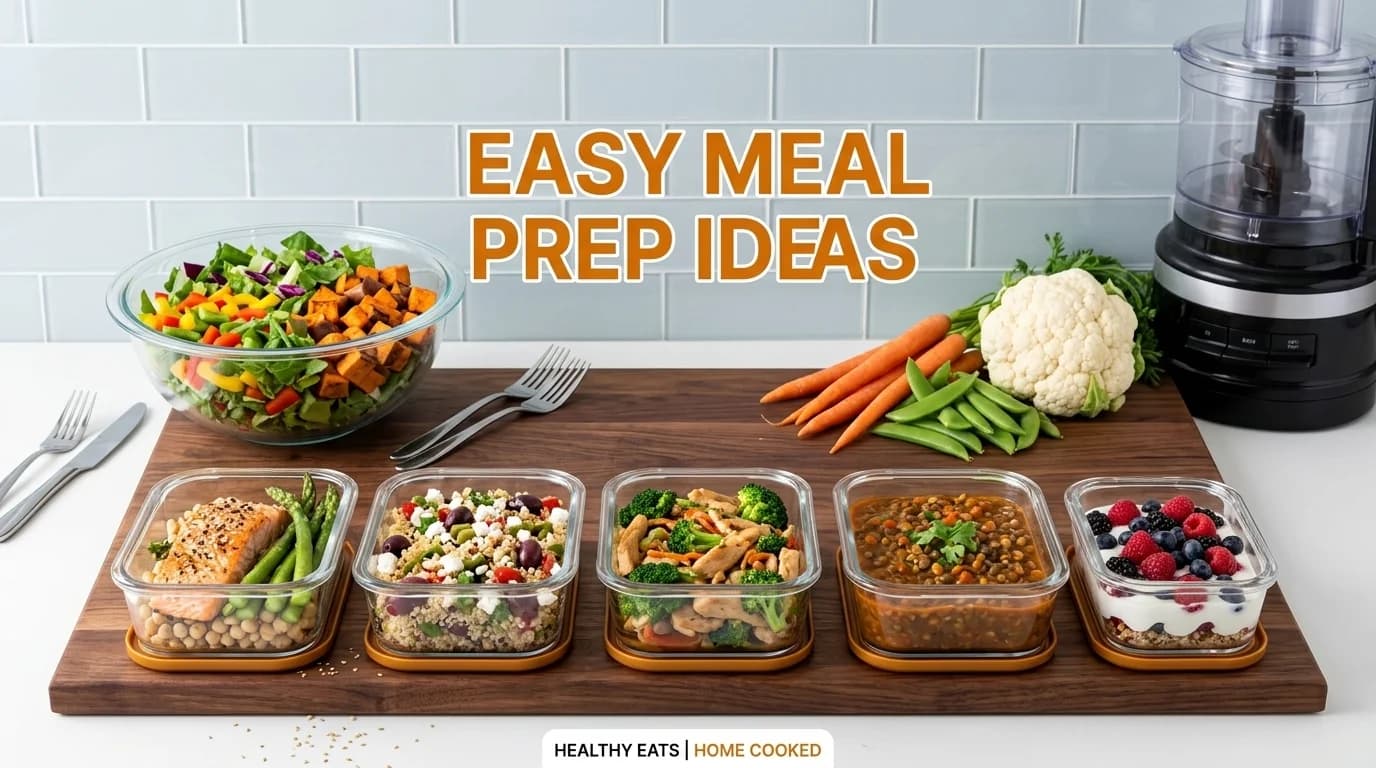
A well-designed meal plan doesn't help much if you don't have time to cook. This is where meal prep comes in — spending a couple of hours on the weekend so that weekday cooking is minimal. The approach that works depends on your schedule and how you prefer to cook, since there's no single method that suits everyone.
A focused prep session over the weekend can set you up with a full week of home-cooked meals ready to go. It removes the evening scramble and keeps you on track with your nutrition goals, even when things get hectic.
How can you find your perfect prep style?
Not everyone wants to spend their entire Sunday cooking meals for the week — and you don't have to. Different strategies work for different people and schedules. The best approach is the one you'll actually follow consistently.
Here are three common methods that can turn yourhealthy meal plan with grocery listinto real, ready-to-eat meals.
- Batch Cooking:The classic approach. You cook large quantities of staple ingredients — a big pot of quinoa, several grilled chicken breasts, or a sheet pan of roasted vegetables — and mix and match them into different meals throughout the week.
- Component Prep:If you prefer meals cooked fresh each day, this method handles just the time-consuming prep work in advance — chopping vegetables, mixing marinades, blending sauces, or portioning smoothie ingredients into bags.
- Assembled Meals:The ideal grab-and-go strategy for lunches. You fully assemble individual meals into containers so they're ready to eat — salads in a jar, grain bowls, or bento boxes with portioned protein, carbs, and vegetables.
Most people find success by combining these methods. You might batch-cook rice, component-prep chopped onions and peppers, and fully assemble three lunches to carry you through midweek.
What does a two-hour weekend prep schedule look like?
Meal prep sounds daunting until you break it into a clear schedule. You'd be surprised how much gets done in a focused two-hour window when you know the order of operations.
Here's a sample schedule to show how it can work.
A Sample Sunday Prep Session (2 Hours)
| Time Block | Task | Prep Style Used |
|---|---|---|
| First 30 Mins | Get grains cooking (quinoa, brown rice). Wash and chopallvegetables for the week. | Batch Cooking & Component Prep |
| Next 45 Mins | Season and bake proteins (chicken, fish). Roast a large sheet pan of chopped vegetables. | Batch Cooking |
| Next 30 Mins | While food cooks, make a vinaigrette, portion nuts/seeds for snacks, and hard-boil eggs. | Component Prep |
| Final 15 Mins | Let everything cool, then portion into airtight containers. Assemble 2-3 lunches (e.g., jar salads). | Assembled Meals & Storage |
This workflow keeps your prep time productive and makes sure those two hours carry real value through the rest of the week.
How should you store prepped food to keep it fresh?
All the prep in the world doesn't help if the food spoils before you eat it. Proper storage keeps your meals safe, good-tasting, and appealing enough that you actuallywantto eat them a few days later.
A good set of airtight glass containers is worth the investment. They don't stain or hold onto odors like plastic does, and you can often reheat food directly in them, saving an extra dish.
Pro Tip:For salads, layering order matters. Always put the dressing on the very bottom, followed by heartier ingredients like grains or chicken, and finish with delicate greens right at the top. This keeps everything from getting soggy.
Here are general guidelines for storing prepped items in the fridge:
- Cooked grains and vegetables:Last up to4 days.
- Cooked chicken, meat, or fish:Safe for3-4 days.
- Hard-boiled eggs:Can be stored for up to1 week.
- Salad dressings:Homemade vinaigrettes will often last for1-2 weeks.
These prep and storage habits close the gap between a good plan and a busy reality, making healthy eating something you can maintain week after week.
Why use Kitchendary instead of doing it manually?
After walking through the manual steps, it's clear that building a truly effectivehealthy meal plan with grocery listfrom scratch takes real time and energy. This is where an AI-powered tool makes a practical difference. Kitchendary automates the entire process, turning a task that takes hours into one that takes seconds.
This isn't a niche trend. The global healthy meal services market is on track to reach$15 billion in 2024, driven by people with packed schedules who want structured, healthy solutions. A 2023 survey found that41%of people were adopting new eating habits, and62%were turning to social media for inspiration. The demand for convenient, personalized nutrition keeps growing. You can review thehealthy meal market trends and full analysis.
Can AI really be more precise than manual planning?
Manual planning gives you control, but it's also easy to make mistakes. Tracking macros for every meal, cross-referencing ingredients to avoid waste, and maintaining nutritional variety across a whole week is a complex task. An AI tool handles all of those calculations instantly and consistently.
Here's where an AI planner has a clear advantage:
- Instant Personalization:It generates plans suited to your goals (weight loss or muscle gain), dietary needs (Keto, Vegan, and others), and what you actually like to eat.
- Automatic Macro and Calorie Tracking:Every meal and snack comes with accurate nutritional data — no manual entry required.
- Waste Reduction:The system picks recipes that use overlapping ingredients, so less food spoils in the fridge and less money goes to waste.
For busy professionals and families, that kind of automation removes a meaningful amount of friction from the weekly planning process.
An AI planner works like a personal nutrition assistant. It remembers your preferences, learns what you enjoy, and adjusts your plan week after week so the meals stay varied and relevant.
How does an AI planner save you time and effort?
The main benefit is getting your time back. Instead of spending hours searching recipe blogs and manually assembling a shopping list, you get a complete plan in seconds. It also generates an aisle-sorted grocery list, which makes your store trip faster and avoids the "I forgot the cilantro" problem.
If you're ready to move from planning to cooking, an AI-powered system cuts out the most tedious steps. You canbuild your first personalized plan at Kitchendary.
FAQ
How many meals should I plan for each day?
For most people, planning for three main meals (breakfast, lunch, and dinner) and one to two healthy snacks provides good structure for stable energy levels throughout the day.
What's the best way to handle leftovers?
Incorporate 'planned leftovers' by intentionally cooking a larger dinner portion to eat for lunch the next day, which saves time and reduces food waste.
How can I make my meal plan less rigid?
Build flexibility into your week by scheduling one or two 'flex meals' where you can order takeout, dine out, or pull something together from pantry staples.
How often should I create a new meal plan?
Creating a new meal plan and grocery list once a week works well for most people, since it lets you adapt to your schedule and use fresh ingredients.
Is it possible to meal plan on a tight budget?
Yes, build your meals around affordable staples like beans, lentils, eggs, seasonal produce, and pantry items like rice and oats to keep food spending in check.
How do I start meal planning if I'm a beginner?
Begin by selecting just three to four simple recipes you already enjoy, create a grocery list for those meals, and prep a few key ingredients ahead of time.
What is the easiest way to generate a meal plan and grocery list?
The fastest method is using an AI tool like Kitchendary, which instantly creates a personalized plan and an organized grocery list based on your dietary preferences and goals.