The fastest way to start is simple: spend 30-60 minutes once a week on it. Check your pantry, pick 5-7 dinners from a list of meals your family already likes, then write a grocery list organized by store section. That's it. Everything else in this guide makes that process smarter and faster.
The daily "what's for dinner?" question is a real drain. Between work, school pickups, and after-school chaos, the evening rush often ends in takeout — not because anyone wanted it, but because nobody had a plan. Meal planning doesn't fix everything. It just removes that specific source of friction.
It's not about cooking elaborate meals or becoming a different kind of person on weekends. It's about making a handful of organized decisions once a week instead of dozens of stressful ones every night.
Why a meal plan actually works
A good plan front-loads the mental effort. You decide what you're eating on Sunday, so Tuesday at 6pm you're not standing in front of an open fridge with nothing to show for it. The decision is already made. You just execute.
That shift changes the tone of weeknight cooking. It stops being a problem to solve and becomes something predictable — even something people look forward to.
What are the real benefits of planning meals?
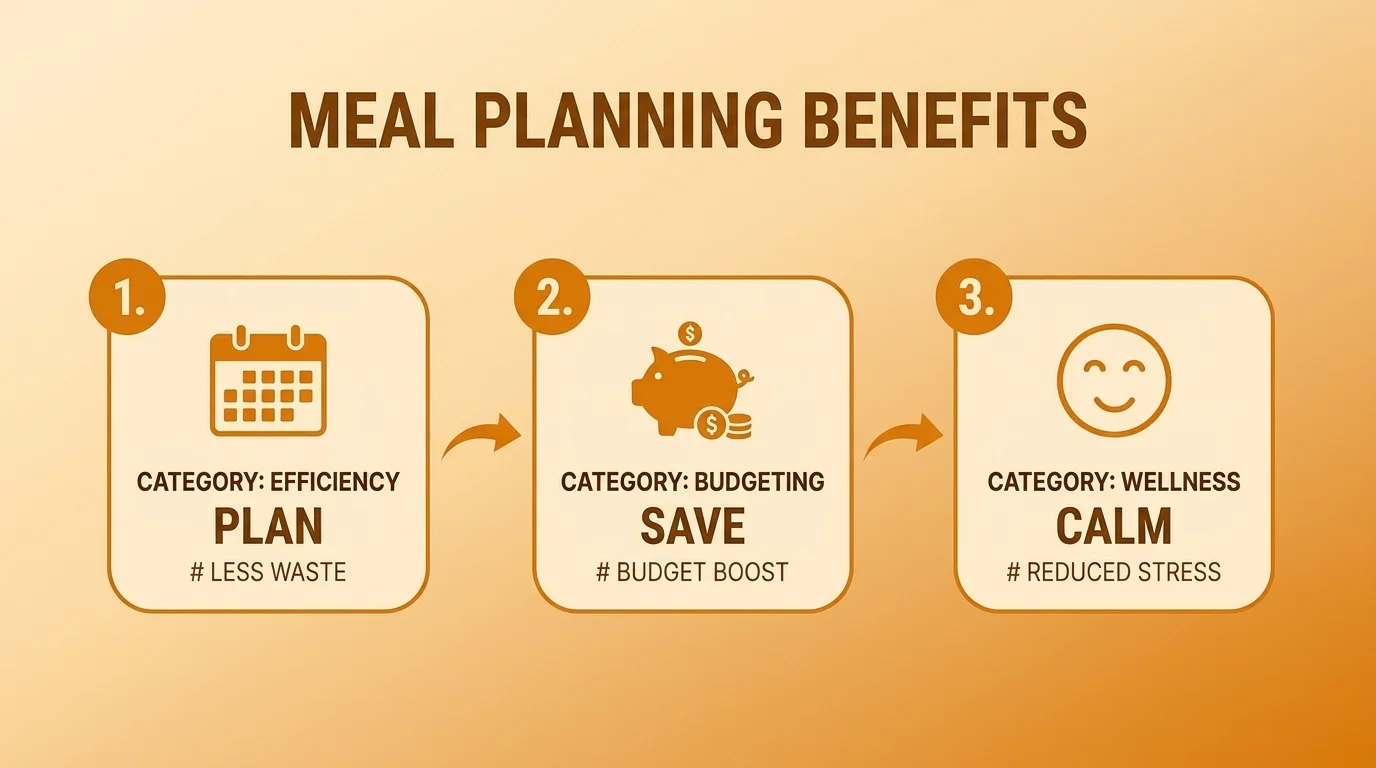
The benefits show up in practical, measurable ways once you build a consistent routine.
- You spend less money. A focused grocery list keeps you out of the impulse-buy aisles. No more emergency runs for one ingredient that end up costing $40.
- Less food goes bad. When you plan meals around what you already have and buy only what you need, the forgotten spinach-at-the-back-of-the-fridge problem mostly disappears.
- You eat better by default. When a healthy meal is already planned and the ingredients are waiting, it's much easier to cook than to order out.
- Evenings feel calmer. With the "what's for dinner?" question already answered, you spend less time scrambling and more time actually at the table.
Families who get into a consistent groove with meal planning often cut weekly food costs by up to 30%, largely because a written list eliminates extra store trips and impulse purchases.
Tools like Kitchendary can do a lot of this work automatically — plug in your family's preferences, dietary needs, and what's already in the fridge, and it generates a week of meals with a sorted shopping list. But the manual approach works fine too. The structure matters more than the tool you use to build it.
How to build a weekly meal planning routine
The goal is a repeatable habit that takes 30-45 minutes, not a project that takes over your entire weekend. The trick is knowing where to start — and that's always with what you already own.
Before you look at a single recipe, spend 10-15 minutes on a pantry and fridge audit. Check what needs to be used up. That wilting spinach, the leftover chicken, the half-empty jar of pasta sauce — this is your starting inventory. Build your first few meals around it, and you've immediately cut waste and saved money without trying.
How to create a list of family favorites
Once you know what you have, pull from a list of meals your family already eats without complaint. Aim for 10-15 go-to dinners to start. Easy, reliable, picky-eater-approved.
A realistic list might look like this:
- Taco Night: Ground beef, shredded chicken, or black beans with all the fixings set out separately.
- Spaghetti and Meatballs: A classic for a reason. Use jarred sauce on busy nights — no apology needed.
- Sheet Pan Sausage and Veggies: Minimal cleanup, flexible with whatever vegetables are on hand.
- DIY Pizza Night: Store-bought dough or naan keeps it quick. Kids can customize their own.
- Breakfast for Dinner: Scrambled eggs, pancakes, or bacon after a long day. Nobody complains.
This list is what you pull from when you're short on time or ideas. No new decisions, no recipe searching. Just pick a proven winner and move on.
How to structure a weekly menu using theme nights
With your favorites list and pantry audit done, build the actual menu. Theme nights are the simplest way to add structure without getting bored — you're picking a recipe within a category rather than staring at seven blank days.
Here's what a sample themed week looks like:
- Monday: Meatless Monday (e.g., Black Bean Burgers)
- Tuesday: Taco Tuesday (ground turkey this week)
- Wednesday: Pasta Night (e.g., Spaghetti Bolognese)
- Thursday: Leftovers or "Use-It-Up" Night
- Friday: Pizza Night (homemade or ordered)
- Saturday: Slow Cooker Saturday (e.g., Pulled Pork)
- Sunday: Family Choice — one kid picks from the favorites list
When your family knows what to expect, the daily "what's for dinner?" questions fade out. A predictable rhythm doesn't mean boring — it means one less thing to figure out every evening.
Sample one-week themed meal plan
| Day | Theme | Meal Idea | Leftover Strategy |
|---|---|---|---|
| Monday | Meatless Monday | Black Bean & Corn Quesadillas | Use extra filling for a taco salad lunch Tuesday. |
| Tuesday | Taco Tuesday | Ground Turkey Tacos | Leftover taco meat tops baked potatoes Wednesday. |
| Wednesday | Pasta Night | Spaghetti and Meatballs | Turn leftover spaghetti into a baked pasta casserole. |
| Thursday | "Use-It-Up" Night | Fridge-Clean-Out Frittata | Clears out remaining veggies and meats. |
| Friday | Pizza Night | Homemade Naan Pizzas | Extra toppings work in the next morning's omelets. |
| Saturday | Slow Cooker Saturday | Pulled Pork Sandwiches | Leftover pork goes into nachos or stuffed sweet potatoes. |
| Sunday | Family Choice | Sheet Pan Chicken & Veggies | Shred leftover chicken for wraps or salads during the week. |
This approach plans dinners and gives you a head start on lunches, stretching your grocery budget further with almost no extra work.
Once the menu is set, convert it into a shopping list organized by store section — produce, dairy, meat, pantry staples. Grouping by aisle cuts down the time you spend wandering and keeps you from buying things you don't need.
Smart meal prep strategies that save hours
A solid plan is half the battle. The other half is making sure that plan actually works on a frantic Tuesday night. That's where prep comes in.
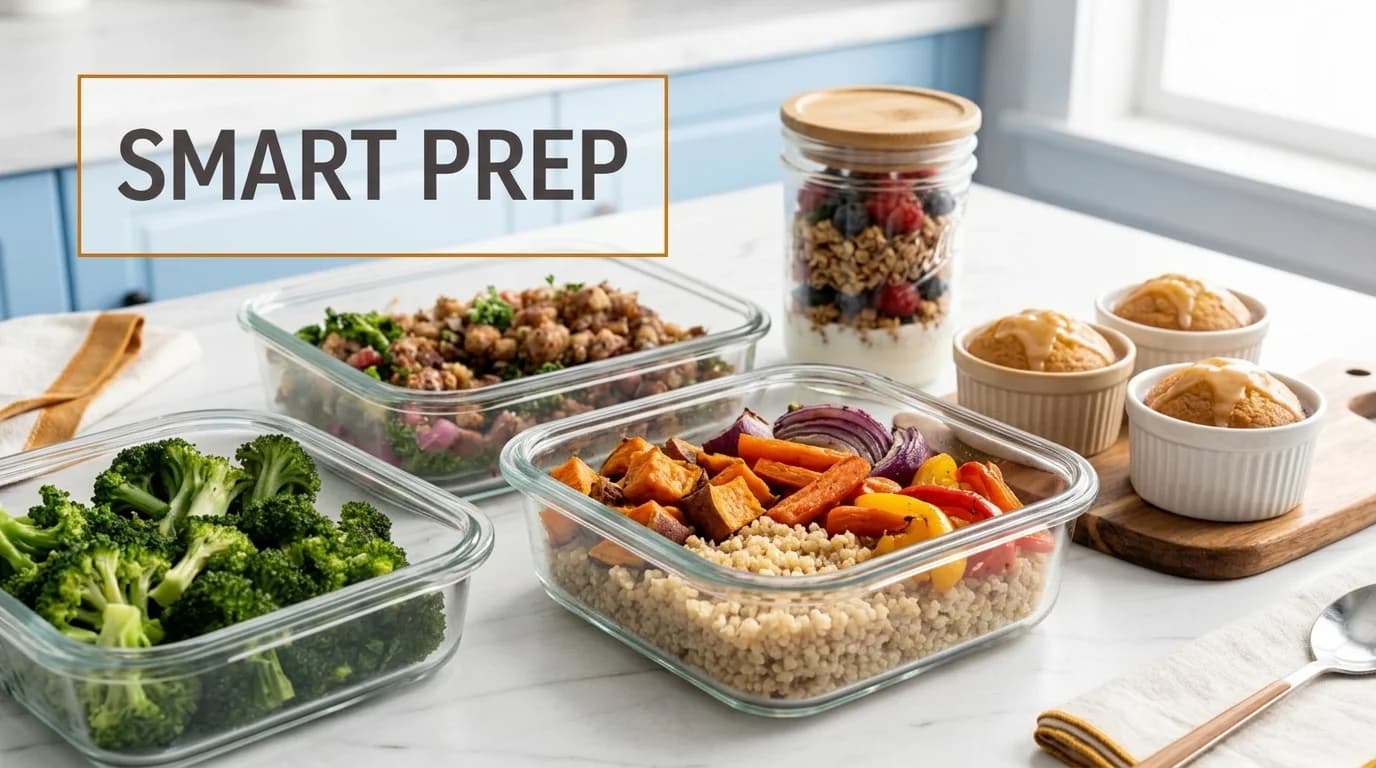
This doesn't mean cooking five different meals on Sunday. Smart prep is about preparing the building blocks — ingredients that can be used across multiple dishes throughout the week. When you get home from work, cooking becomes assembly, not a production.
Component prep instead of full meals
Component prep means focusing on individual parts, not finished dishes. It gives you flexibility while still saving serious time.
- Wash and chop vegetables: Dice onions, slice bell peppers, chop broccoli. Stored in airtight containers, they're ready for stir-fries, salads, or sheet pan dinners instantly.
- Cook a big batch of grains: Quinoa, brown rice, or pasta cooked in bulk becomes a grain bowl base, side dish, or soup addition all week.
- Marinate proteins: Chicken, beef, or tofu in a freezer bag with a marinade tenderizes and absorbs flavor — completely ready to cook on a busy night.
- Mix sauces and dressings: A batch of vinaigrette or stir-fry sauce takes ten minutes and pays off every day.
Making leftovers do double duty
Whenever you cook, make more than you need for that one meal. Leftovers used well aren't boring — they're a completely different dish.
The rule in our house: cook once, eat twice. A big batch means guaranteed leftovers for lunch or dinner the next day, which removes a whole cooking session from your week.
A roasted chicken on Sunday can become shredded chicken tacos on Tuesday, chicken salad for Wednesday lunch, and a quick soup by Thursday. A big pot of chili works as a standalone dinner, then as a topping for baked potatoes or nachos two days later.
This stretches your grocery budget and cuts down on the total time you spend cooking. The math is simple: one longer session on the weekend means three shorter ones during the week.
Which kitchen tools help most
A slow cooker or Instant Pot earns its counter space in a busy family kitchen. Both let you batch-cook proteins and stews with almost no hands-on time. Load one up on a Sunday afternoon with shredded chicken, pulled pork, or a lentil stew — by evening you have the foundation for several weeknight meals.
How to adapt a meal plan for picky eaters
Nothing unravels a good plan faster than "I don't like that." With kids at the table, that chorus can feel unavoidable. But the answer isn't cooking separate dinners. It's building one meal that everyone can customize.
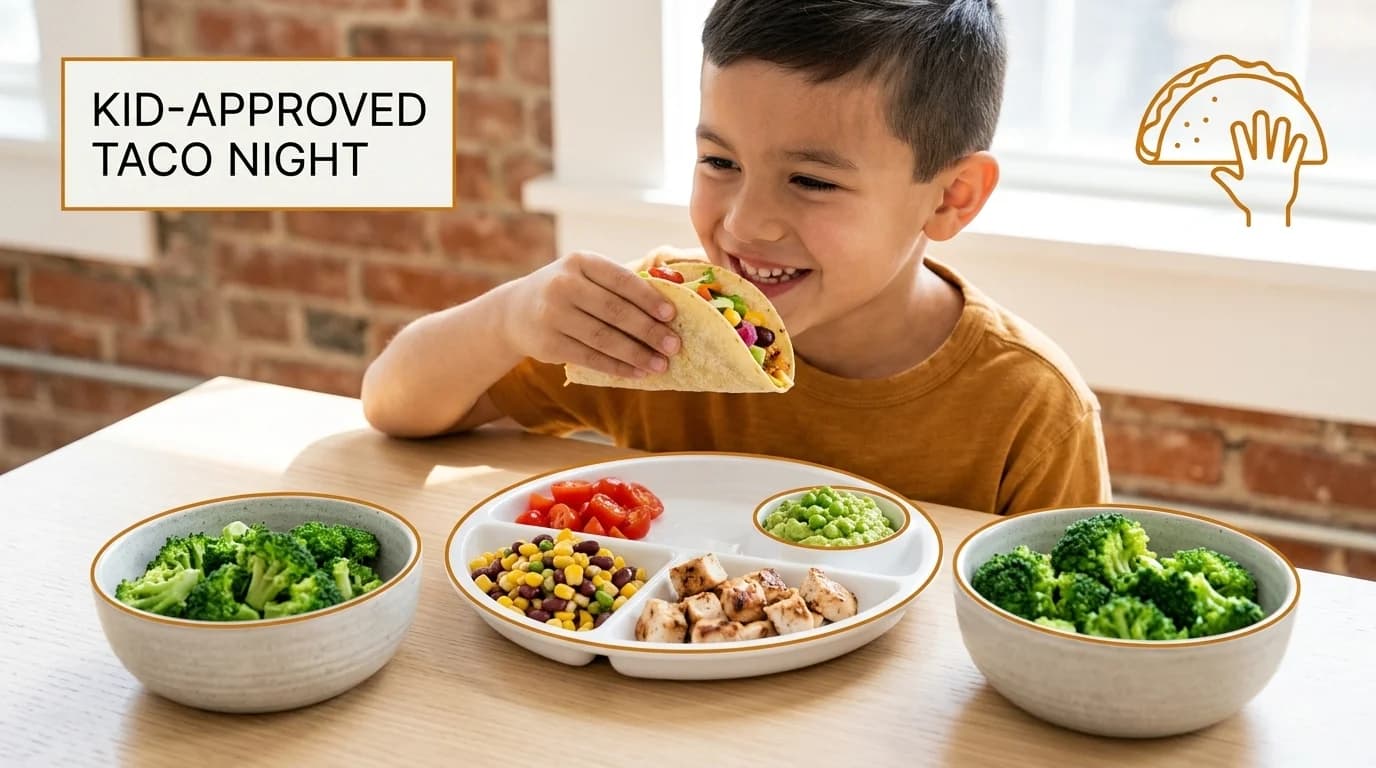
Think in terms of components, not finished plates. That shift changes everything about how picky eating gets handled at dinner.
The deconstructed meal approach
The most practical strategy for picky eaters is the deconstructed meal. Instead of a fully assembled dish, you serve all the parts separately and let each person build their own plate. Kids get control over what's on their plate, which makes them far more likely to eat without a fight.
This works for a lot of family favorites:
| Meal | What gets deconstructed | Why it works for picky eaters |
|---|---|---|
| Taco Night | Meat, cheese, lettuce, tomatoes, beans, salsa in separate bowls | Each person builds their own — tacos, nachos, or a taco salad |
| Pasta Bowls | Plain pasta, sauce, meatballs, steamed broccoli, parmesan all separate | Kids skip what they don't want without the dish falling apart |
| Power Bowls | Grain base, protein, roasted veg, beans, avocado in separate dishes | Total flexibility with zero extra cooking |
| Pizza Night | Dough or naan, sauce, cheese, toppings each separate | Kids customize their own — built-in buy-in |
When kids feel like the boss of their own plate, mealtime conflict drops. It's not a trick — it's just how autonomy works.
Getting kids involved in the planning
Giving kids a say in the meal plan itself makes a real difference. Let them pick one or two dinners for the week from the family favorites list. They feel ownership over the meals, so complaints at the table tend to drop.
Age-appropriate prep tasks help too — washing vegetables, stirring a sauce, setting out toppings for taco night. The more involved they are in making it, the more invested they are in eating it.
For families managing specific allergies or dietary needs, most recipes adapt easily with simple swaps: gluten-free pasta for one person, a plant-based protein alongside the main one. The goal is one unified meal with a few small adjustments, not separate dinners.
How to build a family meal planning budget
A meal plan without a budget target is guesswork. You need a number to work toward, otherwise you'll plan meals that sound reasonable and still end up surprised at checkout.
The USDA estimates a moderate-cost food plan for a family of four runs about $250-300 per week. That's a useful starting benchmark. Where does your family land relative to that number? If you're spending significantly more, meal planning with a specific budget target is probably the fastest lever you can pull.
How to set a realistic weekly food budget
Start by tracking what you actually spend over two or three weeks. No changes yet — just observe. Add up groceries and any takeout or delivery orders. That honest number is your baseline.
From there, set a target that's challenging but not punishing. Cutting 15-20% in the first month is achievable for most families without major sacrifice. A family spending $400 a week can reasonably aim for $320-340 with a consistent plan and grocery list.
Practical ways to reduce your weekly grocery bill
- Check sales flyers before you plan. Build your meals around what's on sale that week, especially proteins. Chicken thighs at $1.99/lb versus $4.99/lb changes what makes sense to cook.
- Buy seasonal produce. Asparagus in winter is expensive and often tastes like cardboard. The same money buys better food — and more of it — when you follow what's in season.
- Use cheaper proteins strategically. Beans, lentils, and eggs are not just "budget food." They're genuinely good building blocks for fast, filling meals. One or two meatless nights a week makes a noticeable dent in the total.
- Plan one "pantry meal" every week. Pick one dinner that uses only what you already have. This forces you to clear out the fridge and pantry before they turn, and it's essentially a free meal.
- Track your receipt against your plan. After shopping, compare what you spent to your target. Even a quick glance helps you catch patterns — are certain categories always over budget?
A simple weekly budget tracking approach
| Category | Budget target | Actual spent | Notes |
|---|---|---|---|
| Proteins (meat, fish, eggs, beans) | $60 | $55 | Swapped beef for chicken thighs this week |
| Produce | $40 | $44 | Berries were on sale — worth it |
| Dairy & refrigerated | $25 | $22 | Under budget |
| Pantry staples (pasta, rice, canned) | $20 | $18 | Stocked up on canned tomatoes |
| Frozen items | $15 | $12 | Under budget |
| Total | $160 | $151 | $9 under target this week |
This doesn't need to be elaborate. A note in your phone or a sticky note on the fridge is enough. The point is to close the feedback loop between what you planned and what you actually spent.
How to use technology to automate your meal plan
Trying to manage a week of meals across scattered notebooks, sticky notes, and memory is exhausting. Modern tools handle the most draining parts — generating the plan, organizing the list, tracking what's in your fridge — so you don't have to.
AI-powered tools can generate a full week of personalized meals in under a minute. You tell it your family size, dietary needs, cuisine preferences, and goals. It builds the plan and the shopping list automatically.
What Kitchendary does for family meal planning
Kitchendary does a lot more than suggest recipes. It generates complete 7-day plans based on your goals and preferences, automatically tracks nutrition across meals, lets you swap any meal in one click if something doesn't appeal, and produces an organized grocery list the moment your plan is confirmed.
Here's what that looks like in practice:
- Personalized plans in 60 seconds: Full week of breakfast, lunch, and dinner built around your family's goals — weight management, eating more vegetables, or just getting varied meals on the table.
- Nutrition tracking without the work: Every meal comes with calorie and macro information, so you stay on track without manually calculating anything.
- One-click swaps: Not feeling a suggested meal? Swap it instantly for a different option that still fits your dietary profile.
- Smart grocery lists: The shopping list generates automatically when your plan is locked in — organized by store section, with duplicate ingredients combined.
- Universal recipe import: Save recipes from any website, social media post, or photo. Everything stays in one place.
An automatically generated, aisle-organized grocery list transforms a 45-minute shopping trip into a 20-minute one. You go in knowing exactly what you need and where to find it.
With 90% of consumers noting rising food prices, pre-planning is the most practical defense against budget creep and wasted groceries. The demand for smarter planning tools reflects that — the meal planning app market is growing quickly, driven largely by families looking for a more organized, affordable way to feed everyone.
Making meal planning stick: common mistakes to avoid
Most people try meal planning, have it fall apart by Wednesday, and conclude they're just "not a meal planning person." Usually, the plan failed — not the person. Here are the mistakes that cause most of those failures.
Overcomplicating the plan
New recipes every night, elaborate meal prep sessions, five different dietary requirements accommodated in every dish — this isn't sustainable for most families. The more complex the plan, the higher the chance it collapses mid-week.
Start simple. Three or four planned dinners per week with one or two leftovers nights is a realistic starting point. You can add complexity later once the habit is locked in.
Ignoring the schedule
Planning a 45-minute recipe on a night when everyone has activities until 7pm is setting yourself up to fail. Look at your calendar when you're building the plan. Assign quick meals to your busiest nights and longer ones to the evenings when you have time.
A simple version of this: mark your three busiest evenings before choosing recipes. Those nights get 20-minute dinners or planned leftovers, no exceptions.
Skipping the prep
A great plan with zero prep still means starting from scratch every night. Even one hour on Sunday — washing vegetables, cooking a batch of rice, marinating a protein — cuts 15-20 minutes off every dinner during the week. That compresses a 40-minute meal into a 20-minute one.
Not building in backup options
Life interrupts plans. Kids get sick, meetings run late, people are exhausted. If your plan has no flexibility, it breaks completely the first time something goes sideways.
Always have two or three backup dinners available — something that takes under 15 minutes from pantry or freezer staples. Pasta with jarred sauce, eggs and toast, black bean quesadillas. These aren't failures. They're part of a realistic plan.
Trying to please everyone individually
Trying to cook a separate meal for every set of preferences is the fastest route to burnout. One dinner with options — the deconstructed approach — handles most picky eater situations without extra cooking. Everyone at the table eats the same meal, assembled differently.
FAQ
How far out should I plan meals?
For most busy families, one week at a time is the right window. It reduces daily decision-making, limits you to a single main grocery trip, and stays flexible enough to accommodate schedule changes.
What if we get sick of eating the same things?
Keep a master list of 15-20 family-approved meals as a core rotation. Add one new recipe every week or two. Variety builds gradually without overwhelming anyone.
How do I stick to the plan when I'm too tired to cook?
Build two 'backup meals' into every weekly plan. These are zero-effort options — frozen pizza, pasta with jarred sauce, eggs and toast — so you have a real out on exhausting days without defaulting to delivery.
Can meal planning really save that much money?
Yes. A focused grocery list cuts impulse buys and duplicate purchases. Planning meals around what you already own reduces waste. Families who plan consistently often cut food spending by 20-30% within a month.
What's the best day to plan and shop?
Many families plan on Saturday and shop on Sunday. This gives you time to think through the week, check the sales flyers, and stock up before Monday arrives.
What is the easiest meal planning method?
Theme nights. Assign a loose category to each night — Meatless Monday, Taco Tuesday, Slow Cooker Wednesday — and you're picking a recipe within a category rather than starting from scratch every time.
How do I plan meals with a tight budget?
Check your pantry and freezer first, then look at the weekly sales flyers before choosing your meals. Build around what's on sale and lean on cheap proteins like beans, lentils, and eggs. Stretch proteins by using leftovers in a second meal.
How much should a family of four spend on groceries per week?
The USDA estimates a moderate-cost food plan for a family of four runs roughly $250-$300 per week in the US. Meal planning with a written list, a pantry audit, and buying in-season produce can realistically bring that down by 20-25%.