If the daily question "what's for dinner?" sends you straight to DoorDash, you're not alone. The problem isn't willpower — it's the absence of a plan. Weekly meal plans for healthy eating work because they shift decision-making from 6 PM on a Tuesday (when you're tired and hungry) to Sunday afternoon (when you actually have a moment to think). That one change makes eating well feel a lot less like a fight.
This guide gives you everything you need to start: a simple framework, a ready-to-use 7-day healthy meal plan, a grocery list, macro guidance, and strategies for staying consistent without burning out. If you're newer to this, our beginner's guide to meal planning covers the absolute basics before you dive in here.
Why weekly meal plans for healthy eating actually work
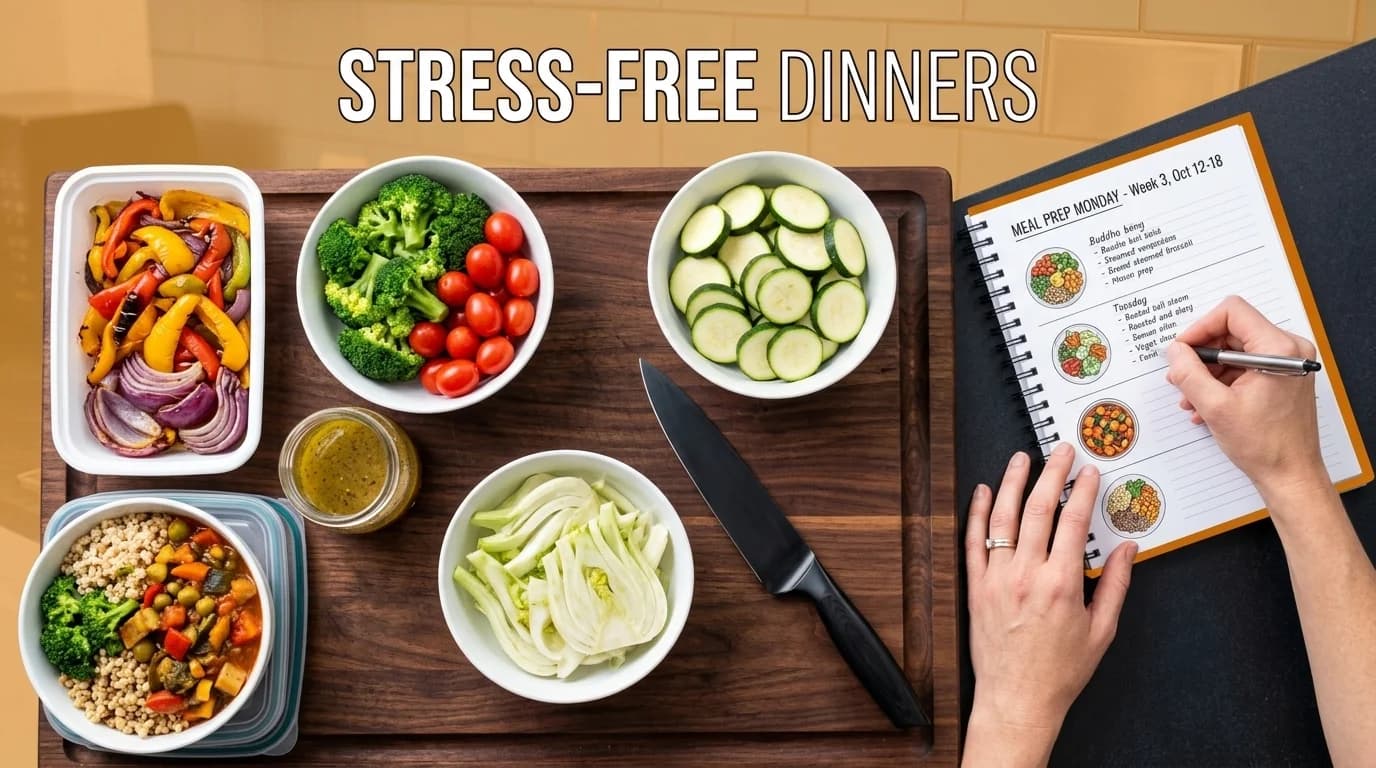
Meal planning isn't a diet. It's a system. And systems beat motivation every time, because motivation runs out by Wednesday.
Research backs this up. People who plan meals eat a more varied, nutritious diet than those who decide on the fly. They also spend less money at the grocery store and waste significantly less food. When every ingredient has a purpose, nothing gets forgotten in the back of the crisper drawer.
The practical benefits compound fast:
- You're not making food decisions when you're hungry and tired
- You buy only what you need, which cuts the grocery bill
- Healthy options are already prepped, so they're the easiest choice
- You eat more variety because you actually think about it in advance
The four pillars of a good plan
Every solid clean eating meal plan is built on the same foundation. Miss one of these and the whole thing gets wobbly.
| Pillar | What it involves | Why it matters |
|---|---|---|
| Set your intention | Define one clear goal — energy, weight, muscle, or just eating less junk | Gives every food choice a filter |
| Build a smart plan | Map out meals for the week using recipes you already like | Removes the daily "what do I eat?" decision |
| Shop with purpose | Create a grocery list directly from your plan, organized by store section | Saves money, time, and prevents impulse buys |
| Prep for success | Chop, cook, and portion key ingredients ahead of time | Makes healthy the easiest option on busy nights |
The real value of meal planning isn't the food itself. It's reclaiming the mental energy you'd otherwise burn on 21 separate food decisions every week.
Setting goals that actually shape what you eat
"Eat healthier" isn't a goal. It's a wish. You need something specific enough to actually change what you put in your cart.
Pick one primary objective and plan around it:
- Muscle gain: High protein (1.6-2.2g per kg of bodyweight), carbs timed around workouts, calories in a slight surplus. Lean meats, eggs, Greek yogurt, quinoa.
- Sustained energy: Balanced meals with fiber, protein, and healthy fats to keep blood sugar stable. Avoids the 3 PM crash. Think salmon with roasted vegetables or chicken rice bowls.
- Weight management: Nutrient-dense foods with controlled portions. Soups, salads with protein, lean meat with steamed greens. Check how to calculate your daily calorie needs to set a realistic target.
- Dietary needs: If you're managing something like gluten sensitivity or a food allergy, the plan exists to help you feel good and avoid symptoms. Structure everything else around that.
Be honest about your real-life constraints
A plan built for someone with unlimited time and a big grocery budget won't work if you have neither. Before you pick a single recipe, answer these three questions:
- How much time can you actually cook on weeknights? If the honest answer is 20-30 minutes, one-pan dinners and the slow cooker are your best friends. Save multi-step recipes for the weekend.
- What's your weekly food budget? This decides whether you're buying chicken thighs or salmon fillets. Budget eaters should lean on beans, lentils, eggs, and seasonal produce — all of which are more nutritious per dollar than most packaged foods.
- Who else are you feeding? A household with picky eaters needs a different approach than cooking for one. "Build-your-own" nights — taco bars, pasta stations — let everyone customize without you cooking separate meals.
A ready-to-use 7-day healthy eating meal plan
This balanced meal plan runs at roughly 1,800-2,000 calories per day with a reasonable macro split (around 30% protein, 40% carbs, 30% fat). Adjust portions up or down based on your specific calorie target.
| Day | Breakfast (~400 cal) | Lunch (~500 cal) | Dinner (~600 cal) |
|---|---|---|---|
| Monday | Greek yogurt with berries and granola | Grilled chicken salad with olive oil dressing | Baked salmon, roasted broccoli, brown rice |
| Tuesday | Oatmeal with banana and almond butter | Lentil soup with whole-grain bread | Turkey meatballs with marinara over zucchini noodles |
| Wednesday | Scrambled eggs with spinach and whole-grain toast | Chicken quinoa bowl with roasted vegetables (leftovers) | Beef stir-fry with bell peppers and brown rice |
| Thursday | Smoothie: spinach, frozen mango, protein powder, almond milk | Black bean tacos with cabbage slaw and avocado | Baked chicken thighs with sweet potato and green beans |
| Friday | Cottage cheese with pineapple and flaxseed | Turkey wrap with hummus, cucumber, and mixed greens | Shrimp and vegetable sheet pan dinner with lemon |
| Saturday | Veggie omelette (2-3 eggs, peppers, onions, mushrooms) | Leftover shrimp over greens with tahini dressing | Homemade burrito bowls with ground turkey, rice, beans, salsa |
| Sunday | Whole-grain pancakes with fresh berries (no syrup) | Tomato lentil soup with crusty whole-grain bread | Roast chicken with roasted root vegetables and quinoa |
For a more detailed version with specific portions and calorie breakdowns, see our simple weekly meal plans guide.
Grocery list organized by category
This list covers the 7-day plan above. It's organized by store section so you can move through the aisles without backtracking. For a printable version with quantities, see our healthy meal prep grocery list guide.
Produce
- Spinach (2 large bags — for smoothies, eggs, and salads)
- Mixed greens (1 bag)
- Broccoli (1 large head or 12 oz frozen)
- Bell peppers (4, mixed colors)
- Zucchini (2 medium)
- Sweet potatoes (3 medium)
- Green beans (12 oz)
- Cabbage (small head, for slaw)
- Cucumber (2)
- Mushrooms (8 oz)
- Onions (3)
- Bananas (4-5)
- Mixed berries (fresh or frozen — 2 cups)
- Pineapple (fresh or canned in juice)
- Avocados (3)
- Lemons (3)
- Root vegetables for roasting (carrots, parsnips — 1 lb)
Protein
- Chicken breasts or thighs (3 lbs)
- Whole roasting chicken (1, around 4 lbs for Sunday)
- Ground turkey (1.5 lbs)
- Salmon fillets (2 portions)
- Shrimp (1 lb, peeled and deveined)
- Beef sirloin or flank steak (12 oz for stir-fry)
- Eggs (1 dozen)
- Greek yogurt (32 oz tub)
- Cottage cheese (16 oz)
Pantry and dry goods
- Brown rice (1 lb)
- Quinoa (1 lb)
- Rolled oats (1 lb)
- Dried or canned lentils (2 cans or 1 lb dried)
- Canned black beans (2 cans)
- Canned crushed tomatoes (28 oz, for marinara and lentil soup)
- Whole-grain bread (1 loaf)
- Whole-grain tortillas (1 pack)
- Granola (1 small bag)
- Almond butter (1 jar)
- Protein powder (your preferred type)
- Flaxseed (small bag)
- Hummus (1 container)
- Salsa (1 jar)
- Olive oil, tahini, soy sauce, sesame oil
Dairy
- Almond milk or milk of choice (half gallon)
- Cheese (for tacos and burrito bowls — 4 oz)
How to build a balanced plate
You don't need to count every gram of every macronutrient. But having a rough target helps you stay on track without obsessing. Here's a simple framework that works for most healthy eating goals:
| Macro | General target | Best sources | Why it matters |
|---|---|---|---|
| Protein | 25-35% of calories | Chicken, fish, eggs, Greek yogurt, lentils, tofu | Keeps you full, builds and maintains muscle |
| Carbohydrates | 35-45% of calories | Brown rice, quinoa, oats, sweet potato, legumes, fruit | Primary fuel source, provides fiber for gut health |
| Fat | 25-35% of calories | Olive oil, avocado, nuts, salmon, eggs | Hormone function, satiety, fat-soluble vitamins |
The plate method is an easy visual: half the plate is non-starchy vegetables, a quarter is lean protein, a quarter is complex carbs, with a thumb-sized portion of healthy fat. You don't need a food scale to make this work.
If you want to get into the details, our macro calculation guide walks you through setting specific targets based on your goals and body weight.
Building your personal recipe collection
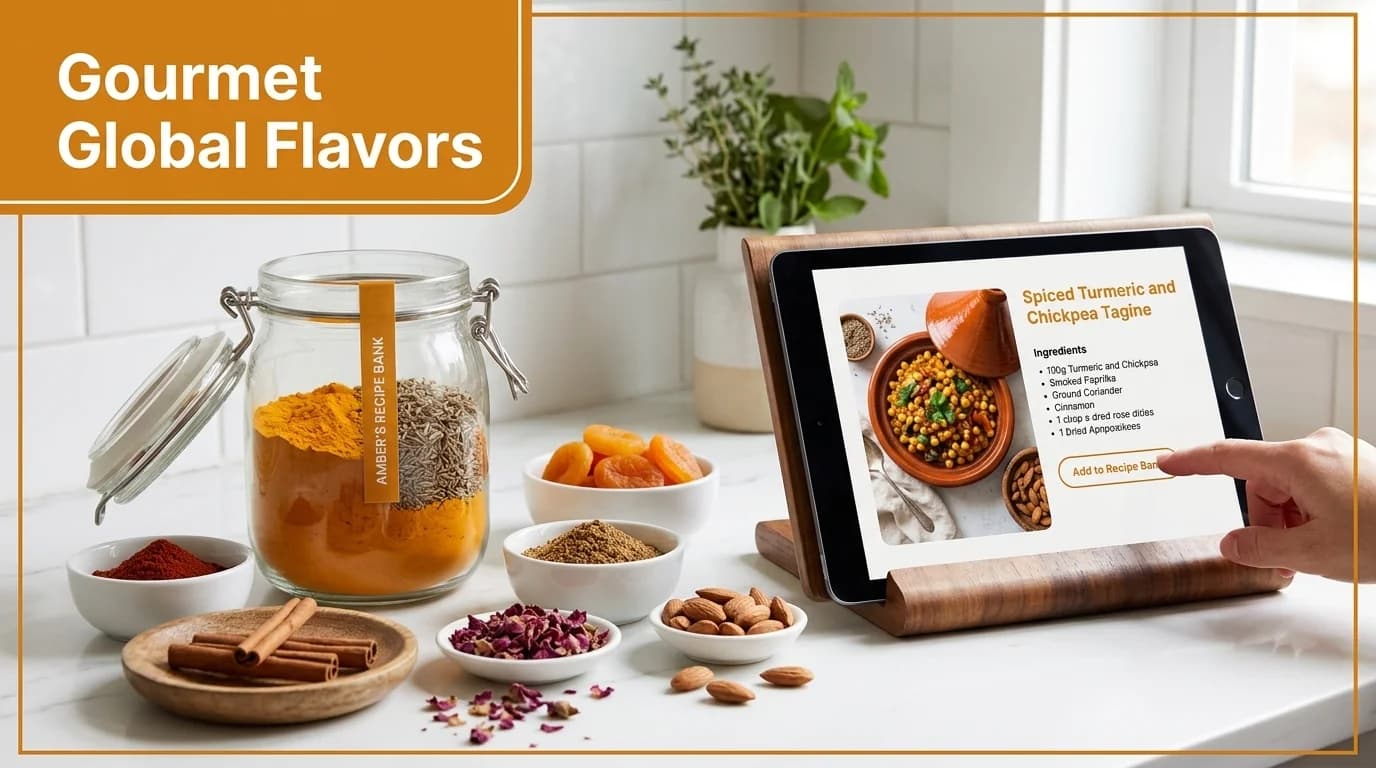
A good healthy weekly meal plan isn't built from seven brand-new recipes every week. That's exhausting. It's built from a rotating core of meals you already know and like — maybe 15-20 recipes total — with one or two new ones added every few weeks to keep things from getting stale.
Think of it as a wardrobe: reliable basics you wear all the time, with a few new pieces rotated in occasionally. The basics do the heavy lifting.
Organize recipes so you can actually find them
A folder of screenshots and saved bookmarks is just a messy pile. You need categories that match how you plan:
- By protein: Chicken, beef, fish, plant-based. Makes it easy to ensure variety across the week.
- By cooking time: Under 20 minutes, under 30 minutes, slow cooker, weekend projects. On a chaotic Tuesday, you need to be able to find the fast options immediately.
- By meal: Breakfast, lunch, dinner, snacks. Basic but essential for building out a full day without gaps.
Make ingredients do double duty
The biggest waste in meal planning is buying an ingredient for one recipe and then letting half of it go bad. Plan instead for ingredients to appear in two or three meals across the week.
| Ingredient | Meal 1 | Meal 2 | Meal 3 |
|---|---|---|---|
| Rotisserie chicken | Chicken fajita bowls | Buffalo chicken salad | Quick chicken noodle soup |
| Bell peppers | Sauteed for fajitas | Raw in a Cobb salad | Roasted with sausage |
| Canned black beans | Added to fajita bowls | Blended into black bean burgers | Side dish with rice |
| Spinach | Blended into a smoothie | Sauteed as a side for salmon | Base of a grilled chicken salad |
This thinking cuts grocery costs, reduces waste, and makes your shopping list shorter and simpler. For more on efficient grocery shopping for healthy eating, see our healthy meal planning guide.
Using digital tools to streamline planning
Browsing recipes manually, hand-writing shopping lists, and tracking macros in your head is a lot of work. Apps handle most of that automatically, which is why meal planning apps have seen a significant increase in use over the past few years.
The right tool depends on what you actually need:
- All-in-one planners like Paprika or Plan to Eat let you save recipes from any website, drag them onto a weekly calendar, and auto-generate a shopping list. They take a bit of setup but save the most time week-to-week.
- Discovery-focused apps like Yummly or Mealime are better if your problem is running out of ideas. They recommend recipes based on your preferences and dietary needs.
- Simple list apps like AnyList work fine if you already know what you're cooking and just need a shared grocery list. Free, simple, easy to share with a partner or family.
The best app is the one you'll actually open every week. Don't pay for features you'll ignore.
Features worth having
A recipe clipper that saves recipes directly from any website is close to essential — copying and pasting is tedious enough that you'll stop doing it. A smart grocery list that consolidates duplicate ingredients ("onions: 3" instead of listing onions three separate times) is the other big time-saver. Bonus if it sorts by store aisle.
For easy healthy meal planning, look for an app that lets you swap meals between days without rebuilding the whole list. Life happens — your plan needs to flex.
Mastering the art of smart meal prep
A plan on paper is just potential. The prep session is what converts it into actual meals in your fridge. Even two hours on Sunday makes an enormous difference for the rest of the week.
A realistic Sunday prep workflow
The goal isn't to cook seven gourmet dinners in advance. It's to have versatile components ready to assemble into different meals:
Hour 1: The foundation
- Start the grains: Get a pot of quinoa or brown rice going. Set it and forget it while you do other things.
- Roast vegetables: Chop broccoli, bell peppers, and sweet potatoes, toss with olive oil and seasoning, get them in a 400°F oven for 25-30 minutes.
- Prep raw ingredients: Wash salad greens, slice cucumbers, dice onions. Store in separate airtight containers.
Hour 2: Proteins and assembly
- Cook protein: Bake or grill chicken breasts, hard-boil six eggs, or marinate tofu. Pick two protein sources so you have variety.
- Portion and store: Divide grains, vegetables, and protein into individual containers for grab-and-go lunches.
- Clean as you go: It sounds obvious, but washing dishes between tasks makes the whole session feel less overwhelming.
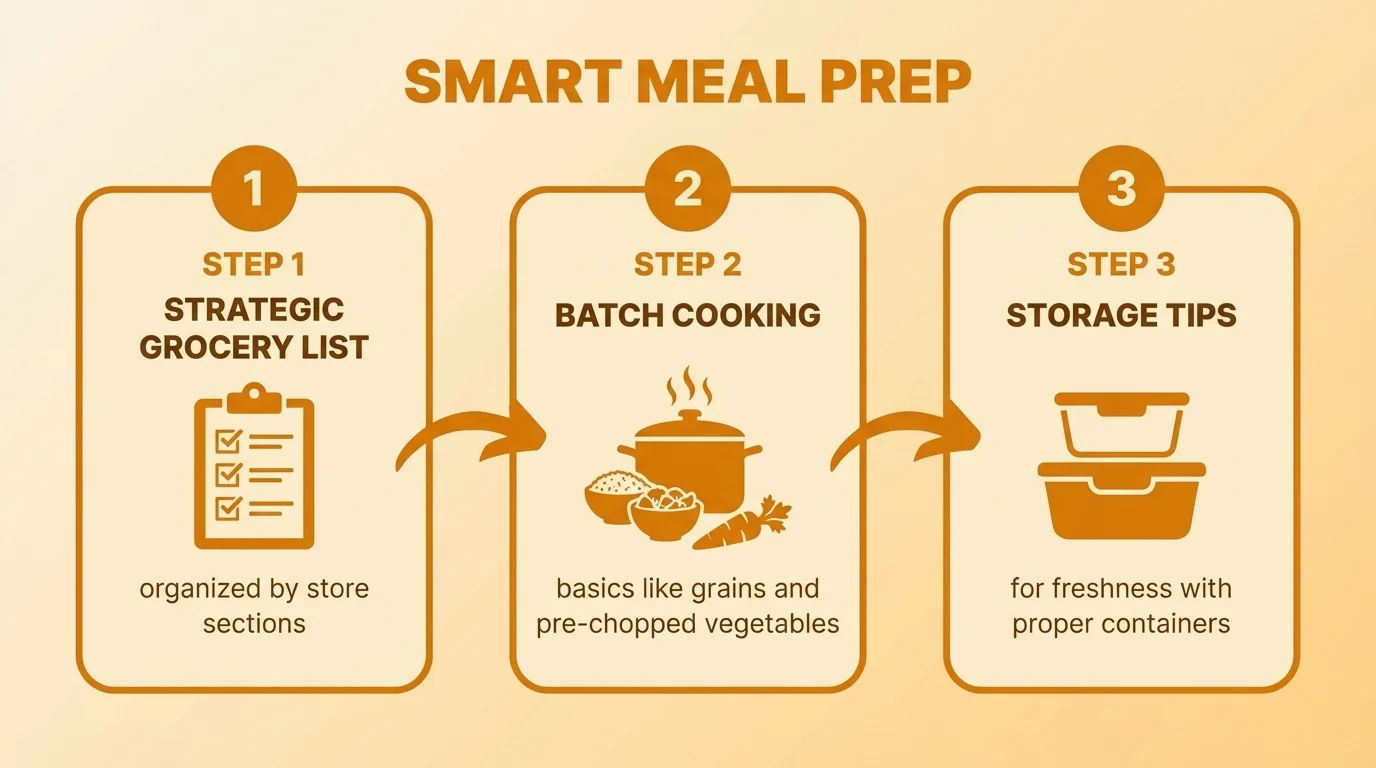
From plan to pantry: the strategic grocery run
Organize your list by store section to avoid backtracking and impulse buys:
- Produce first: Start here so fresh items spend the least time in your cart before refrigeration.
- Proteins and dairy next: Work around the store perimeter — meat, seafood, eggs, yogurt, and milk.
- Pantry staples last: Center aisles for canned goods, grains, oils, and spices.
Food storage basics
Use clear airtight containers so you can see what's in your fridge at a glance. Glass is worth the upfront cost: no staining, no odors, and it goes straight from fridge to microwave. Label everything with the date — prepped food is generally good for 4-5 days in the refrigerator. If you prepped on Sunday, anything not eaten by Thursday should go in the freezer.
How to stay consistent week after week
This is where most people fall off. Not because the plan is bad, but because consistency requires more than good intentions.
Plan for imperfection
Only plan dinners for five nights, not seven. This leaves two nights for leftovers, takeout, or dinner out without feeling like you've abandoned the plan. A plan that accounts for life is more likely to survive it.
Build in a free meal
A planned Friday pizza or Saturday brunch out isn't cheating — it's strategy. When you know the free meal is coming, you're less likely to abandon the whole week over one craving.
Rotate, don't repeat
Eating the same eight meals on repeat will eventually kill your motivation. Add one new recipe every week or two. Keep it simple — a new spice combination on your usual chicken, a different grain, a new sauce. Small novelty goes a long way.
Swap freely
If Monday's chicken dinner sounds better on Thursday, switch them. The goal is having healthy food available and ready — not following the schedule exactly. Rigidity is the enemy of long-term consistency.
For more strategies on building lasting food habits, see easy healthy meal plans — it includes specific strategies for making planning a weekly habit rather than a one-time project.
Common questions about weekly meal planning
Even experienced meal planners hit walls. Life throws a curveball, the routine gets boring, or motivation dips. The system needs to be able to handle that without falling apart.
How do I stay motivated every single week?
You won't always feel motivated. That's normal. The goal is a system that doesn't rely on motivation. Build in the wiggle room, track the small wins (calmer 5 PM, no afternoon energy crash), and accept that four good nights out of seven is a win, not a failure.
Consistency beats perfection. A week where you follow your plan four nights out of seven is still a significant improvement over no plan at all.
What's the best way to plan for a family with different tastes?
Component meals are your answer. Instead of one dish that someone will refuse, put out a spread of ingredients and let everyone build their own plate:
- Taco night: Seasoned ground turkey, tortillas, rice, plus toppings everyone picks themselves.
- Pasta bowls: A big batch of pasta, two sauces (marinara and pesto), and separate bowls of grilled chicken, meatballs, and vegetables.
- Personalized pizzas: Pita bread bases, sauce, cheese, and a topping bar. Everyone plays chef.
Should my weekly meal plan be super strict?
No. A plan that's too rigid fails on contact with real life. Think of it as a flexible framework: which meals are available this week, not which meal you're required to eat on which night. Swap days, account for leftovers, and give yourself two unplanned nights as a buffer.
FAQ
How Do I Stay Motivated Every Single Week?
This is the big one, isn't it? The honest truth is, you won't always feel motivated. And that's completely fine. The goal is to build a reliable system so you don't have to run on willpower alone. For this to work long-term, your plan has to feel like a support system, not a straitjacket.
What Is the Best Way to Plan for a Family with Different Tastes?
Planning meals for yourself is one thing. Planning for a household of picky eaters can feel like you're negotiating a peace treaty. My secret weapon for this is what I call the 'component meal' or the 'build-your-own' night. Instead of one main dish that someone is bound to dislike, you create a spread of ingredients that everyone can assemble themselves.
Should My Weekly Meal Plan Be Super Strict?
Definitely not. In fact, a plan that's too rigid is almost guaranteed to fail. It's fragile. Think of your meal plan as a flexible roadmap, not a set of ironclad rules. Life is messy and unpredictable, so your plan needs to be able to bend.
How many calories should a healthy weekly meal plan include?
It depends on your body, activity level, and goals. A general starting point is 1,800-2,200 calories per day for most adults maintaining weight. For weight loss, a 300-500 calorie daily deficit is sustainable. If you're unsure of your number, check our guide on how to calculate your daily calorie needs before building your plan.
Can I meal plan on a tight budget and still eat healthy?
Absolutely. The key is leaning on inexpensive, nutrient-dense staples: dried lentils, canned beans, eggs, frozen vegetables, oats, and in-season produce. A rotisserie chicken costs around $8-10 and provides protein for 3-4 different meals. Buying whole foods rather than pre-packaged convenience items is almost always cheaper and more nutritious.