A solid vegetarian weekly meal plan doesn't start with a complex recipe. It starts with a stocked pantry, a short Sunday session, and meals that actually connect to each other across the week. This guide covers all of that: a full 7-day plan with approximate calories, a grocery list by category, how to hit your protein targets, and what to tweak when the week goes sideways.
Setting Up Your Kitchen for Vegetarian Success
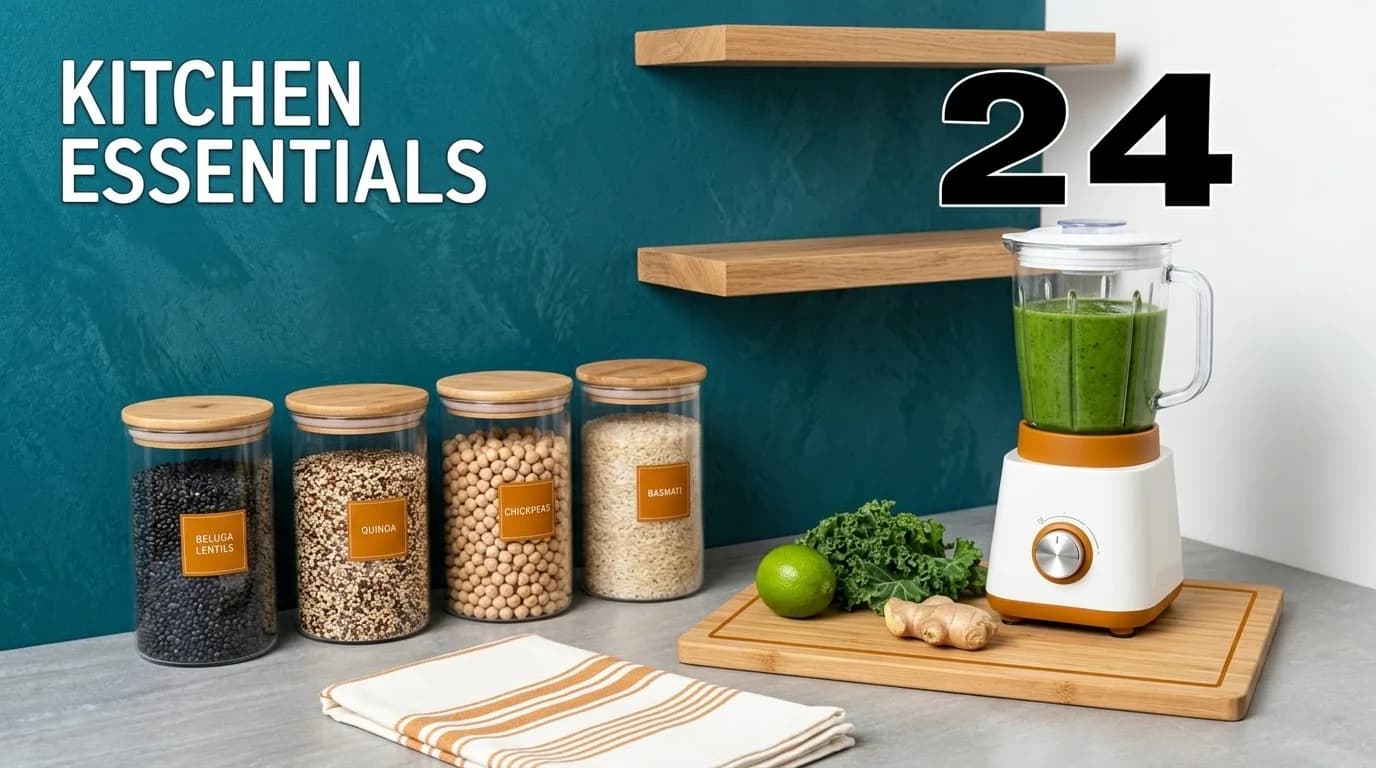
The friction points that derail most people aren't about willpower. They're logistical: nothing thawed, no protein in the fridge, no idea what to make at 6pm. A well-stocked pantry removes most of those friction points before they happen.
Stocking your vegetarian pantry
These are the items worth keeping on hand permanently. With them around, you can build a complete meal from scratch without a store run:
- Legumes: Canned or dried lentils, chickpeas, and black beans. They're the protein backbone of most vegetarian cooking and take 90 seconds to rinse out of a can.
- Whole grains: Quinoa, brown rice, oats, and whole-wheat pasta. Cook a big batch on Sunday and pull from it all week.
- Nuts and seeds: Almonds, walnuts, chia seeds, and flaxseeds. A tablespoon of chia adds 3g of protein and 5g of fiber to a smoothie with zero effort.
- Canned goods: Diced tomatoes, coconut milk, and vegetable broth. These are the base for quick curries, soups, and sauces when you have no time to think.
The global veggie meals market was valued at around $15 billion in 2026. Most of that growth is coming from convenience — people want plant-based food that doesn't require a culinary degree. A stocked pantry is your home version of that.
Tools that actually matter
You don't need much. A high-speed blender handles soups, sauces, and smoothies. Airtight glass containers make prepped ingredients last longer than plastic. A large sheet pan lets you roast a full week's worth of vegetables in one go.
The mindset shift that helps most: stop thinking recipe-first and start thinking component-first. A protein (lentils), a carb (quinoa), a vegetable (roasted broccoli), and a sauce (tahini) — combine those four things and you have a meal. Mix them differently tomorrow and you have a different meal.
Composting fits naturally into this setup too. Once you stop throwing away vegetable scraps, you'll notice how much less waste a plant-forward kitchen produces. Understanding what kitchen scraps can be composted is a small habit that compounds over time.
Your 7-Day Vegetarian Weekly Meal Plan
This plan is built around three principles: leftovers that carry forward, a protein source at every meal, and variety across cuisines so it doesn't feel repetitive. Calories are approximate based on standard portion sizes.
If you want a plan built specifically around your goals, calorie target, or food preferences, Kitchendary's AI generates a complete vegetarian weekly meal plan in about 60 seconds — no manual math required.
Full 7-day meal plan with calories
| Day | Breakfast (~cal) | Lunch (~cal) | Dinner (~cal) | Daily total |
|---|---|---|---|---|
| Monday | Greek yogurt with berries and granola (380) | Leftover veggie lasagna (420) | Black bean burgers with roasted sweet potato wedges (620) | ~1,420 |
| Tuesday | Oatmeal with walnuts, chia seeds, and banana (410) | Sweet potato and black bean taco salad using Monday's leftovers (390) | Sesame ginger tempeh stir fry with broccoli and peppers over rice (580) | ~1,380 |
| Wednesday | Avocado toast on whole grain with everything bagel seasoning and two eggs (450) | Leftover tempeh stir fry (380) | Coconut chickpea curry with roasted vegetables over extra quinoa (610) | ~1,440 |
| Thursday | Green smoothie with spinach, banana, Greek yogurt, and almond milk (340) | Mediterranean quinoa salad with leftover quinoa, cucumber, olives, and feta (430) | Lentil bolognese over whole-wheat pasta (590) | ~1,360 |
| Friday | Scrambled tofu with spinach and cherry tomatoes (360) | Leftover lentil bolognese (390) | Veggie quesadillas with black beans, spinach, and cheese (540) | ~1,290 |
| Saturday | Whole grain pancakes with fruit and maple syrup (480) | Big green salad with chickpeas, avocado, and lemon vinaigrette (420) | Peanut miso ramen with soft-boiled egg and leftover vegetables (620) | ~1,520 |
| Sunday | Granola with plant milk and mixed berries (350) | Leftover ramen broth with added tofu and noodles (380) | Shakshuka with poached eggs in tomato pepper sauce and crusty bread (560) | ~1,290 |
Notice how Monday's leftover sweet potatoes reappear in Tuesday's taco salad, and Wednesday's extra quinoa becomes Thursday's grain bowl base. That's intentional. It cuts your active cooking time by about 40% compared to making every meal from scratch.
For a deeper look at weekly vegetarian meals with more recipe detail, see our vegetarian meal plan weekly guide. If muscle gain is your goal, the vegetarian meal plan for muscle gain adds more specific protein and calorie targets.
Adapting the plan to your situation
The plan above is a template, not a prescription. Here's how to bend it without breaking it:
- Swap proteins freely: Tofu, tempeh, lentils, and beans are interchangeable in most curries, tacos, and stir fries. Use whatever you have.
- Use seasonal vegetables: What's cheap and in season always tastes better than imported produce that's been sitting in cold storage for two weeks.
- Keep breakfast simple: If you already have a breakfast routine that works, don't change it. The plan won't fall apart because you eat the same smoothie every morning.
- Add snacks if needed: If 1,400 calories feels light, add a mid-afternoon snack: a handful of almonds and an apple adds roughly 250 calories and 6g of protein.
How to get enough protein each day
Protein is the question everyone asks about vegetarian eating, and it's a fair one. The concern isn't really about whether plant foods contain protein — they do, in abundance. The issue is that most people don't plan for it deliberately, so they end up with protein-light meals and wonder why they're hungry two hours later.
The target for most active adults is around 0.7–1g of protein per pound of body weight. For someone at 150 lbs, that's roughly 105–150g per day. Here's what that actually looks like in practice:
| Food | Serving size | Protein | Easy to add to... |
|---|---|---|---|
| Greek yogurt (full fat) | 200g | 17g | Breakfast, smoothies, dips |
| Tempeh | 100g | 19g | Stir fries, grain bowls, tacos |
| Firm tofu | 150g | 16g | Scrambles, curries, soups |
| Cooked lentils | 200g | 18g | Bolognese, soups, salads |
| Cooked chickpeas | 200g | 15g | Curries, roasted as snacks, hummus |
| Eggs (2 large) | 2 eggs | 12g | Shakshuka, scrambles, avocado toast |
| Edamame | 150g | 18g | Salads, snacks, stir fries |
| Hemp seeds | 30g (3 tbsp) | 10g | Smoothies, oatmeal, any bowl |
The practical rule: build every meal around at least one of these. Breakfast with Greek yogurt, lunch with chickpeas, dinner with lentils or tempeh. That alone gets most people to 60–80g without tracking anything closely.
For higher protein targets — athletes, people in a muscle-building phase, or anyone over 180 lbs — the high-protein vegetarian meal plan goes deeper on this. The vegetarian protein meal prep guide covers batch-cooking proteins efficiently.
How to meal prep for a vegetarian week
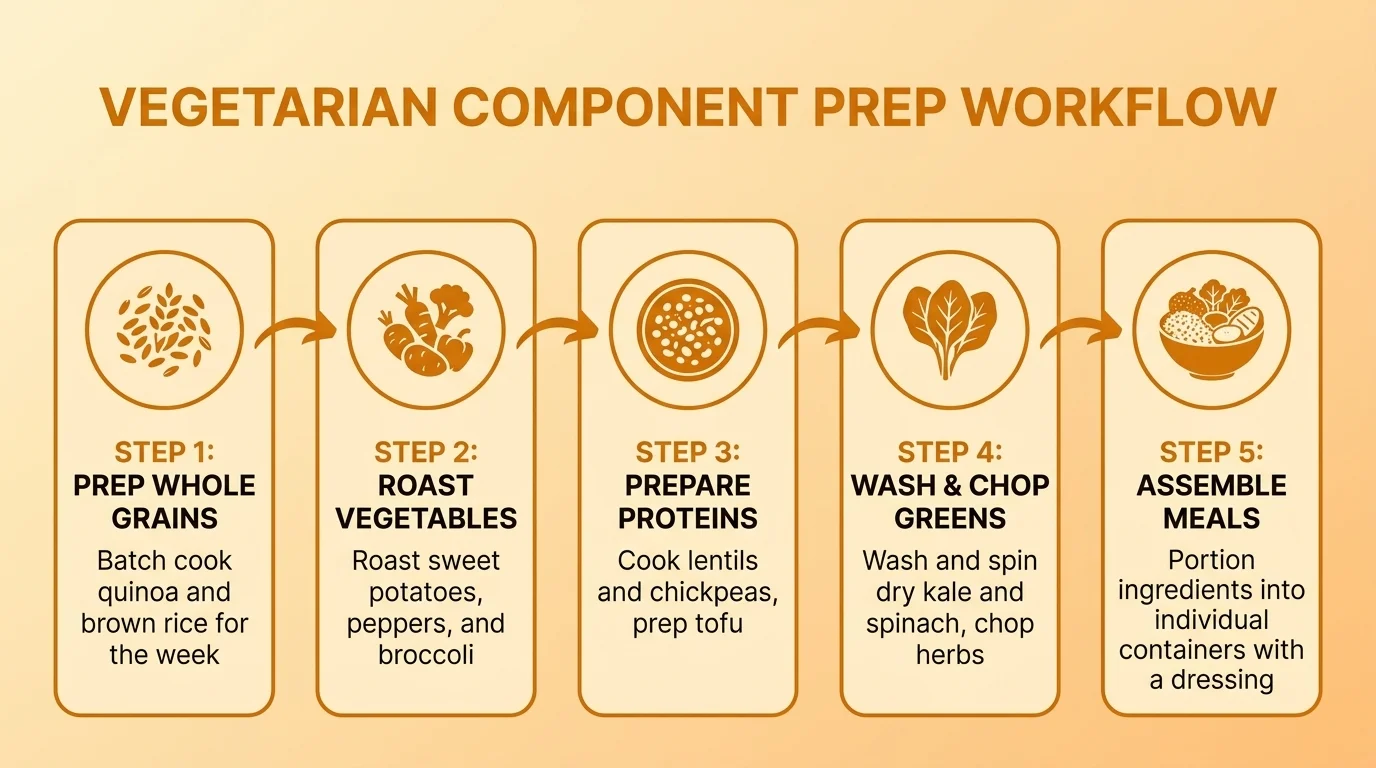
There are two schools of thought here. The first is full meal prep: cook five identical lunches on Sunday, portion them into containers, done. The second is component prep: cook the individual building blocks and assemble meals throughout the week.
Component prep wins for most people because identical meals get boring fast, and wasted food is a real cost. Here's how the two approaches compare:
| Approach | Prep time (Sunday) | Variety during the week | Food waste risk | Best for |
|---|---|---|---|---|
| Full meal prep | 2–3 hours | Low (same meals repeated) | Medium (boredom = wasted food) | People who don't mind repetition |
| Component prep | 60–90 minutes | High (mix and match daily) | Low | Most people, families, picky eaters |
What to prep in 90 minutes on Sunday
- Grains: Cook a large pot of quinoa or brown rice. Both keep in the fridge for 5 days and work in bowls, salads, or as a side. Brown rice takes 45 minutes; quinoa takes 15.
- A batch protein: Either simmer a pot of lentils (20 minutes, no soaking needed) or marinate and bake a block of tempeh (30 minutes). This becomes 3–4 dinners or lunches.
- Roasted vegetables: Fill a sheet pan with whatever you have — sweet potatoes, broccoli, cauliflower, bell peppers — toss with olive oil and salt, roast at 425°F for 25 minutes. They're good hot or cold for 4 days.
- A sauce or dressing: Blend tahini, lemon juice, garlic, and water into a dressing. Or mix peanut butter, soy sauce, lime, and a little sesame oil. Either one transforms a plain grain bowl into something you'll actually want to eat.
Keep wet and dry ingredients separate until you eat. Dressing a salad in the morning leaves you with a soggy mess by noon. Pack sauces in a small separate container — it takes ten seconds and saves the meal.
Invest in airtight glass containers. They don't stain, don't absorb smells, and a paper towel tucked in with leafy greens absorbs extra moisture and keeps them fresh 2–3 days longer.
For more prep techniques and batch cooking ideas, the healthy meal prep grocery list guide covers this in detail.
Keeping your vegetarian weekly meal plan fresh week to week
The biggest reason people abandon meal planning isn't effort — it's boredom. Eating the same five meals every week for a month gets old fast. A few simple rotations prevent that without requiring you to discover new recipes every Sunday.
Four ways to add variety without extra work
- Rotate one cuisine per week: Pick a loose culinary theme and apply it to your usual ingredients. Mexican week: black beans, cumin, lime, jalapeño. Mediterranean week: chickpeas, lemon, oregano, feta. Asian week: tofu, soy sauce, ginger, sesame. Same proteins and vegetables, completely different flavor profile.
- Swap your grain every two weeks: If you always use quinoa, try farro (chewy, nutty), barley (hearty, works great in soups), or couscous (done in 5 minutes of soaking). The dish structure stays the same; the texture changes.
- Rotate two or three sauces: Tahini dressing, peanut sauce, and pico de gallo cover most cuisines. Mastering three sauces is more useful than knowing thirty recipes.
- One new vegetable per week: If you always buy broccoli and spinach, add one unfamiliar vegetable each week. Kohlrabi in a slaw, bok choy in a stir fry, fennel roasted alongside sweet potatoes. It's low commitment and gradually expands what you're comfortable cooking.
If you're cooking for kids or a mixed household, the meal planning for beginners guide covers how to structure a week that satisfies everyone without cooking separate meals.
Building your vegetarian shopping list
Going to the store without a list organized by section wastes time and money. You backtrack across the store, buy things you don't need, and forget the one item the whole meal depends on. Organize by store zone and you can move through in one pass.
Weekly shopping list for this plan
This covers all seven days of the plan above for one person, with some overlap between meals built in.
Produce
- Baby spinach (large bag)
- Mixed berries (fresh or frozen)
- 2 bananas
- 2 avocados
- 1 bag broccoli florets
- 2 large sweet potatoes
- 2 bell peppers (mixed colors)
- 1 head of garlic
- 1 medium onion
- Cherry tomatoes (1 pint)
- 1 lemon
- Cucumber
- Kalamata olives (small jar)
Protein and dairy
- Greek yogurt (large tub, plain full fat)
- 6 large eggs
- 1 block firm tofu (400g)
- 1 block tempeh (200g)
- Shredded mozzarella or cheddar (for quesadillas)
- Feta cheese (small block)
Pantry (stock up, not weekly)
- Canned chickpeas (2 cans)
- Canned black beans (2 cans)
- Green or brown lentils (dried, 500g bag)
- Quinoa (500g)
- Whole-wheat pasta (500g)
- Canned diced tomatoes (2 cans)
- Coconut milk (1 can)
- Vegetable broth (1 carton)
- Tahini
- Soy sauce
- Sesame oil
- Miso paste
- Peanut butter
- Curry powder or paste
- Whole grain bread or ramen noodles
- Whole grain tortillas (6-pack)
Essential vegetarian pantry staples at a glance
| Category | Essential items | Example uses |
|---|---|---|
| Legumes | Canned or dried chickpeas, black beans, lentils, kidney beans | Chilis, curries, hummus, veggie burgers, salads |
| Whole grains | Quinoa, brown rice, oats, whole-wheat pasta, barley | Grain bowls, side dishes, oatmeal, pasta salads |
| Canned goods | Diced tomatoes, coconut milk, vegetable broth, tomato paste | Soups, stews, sauces, curries |
| Healthy fats | Olive oil, nuts (almonds, walnuts), seeds (chia, flax, pumpkin) | Dressings, roasting, snacking, smoothie boosters |
| Spices and flavor | Garlic, soy sauce, nutritional yeast, dried herbs, miso | Seasoning every dish — don't skip these |
Don't skip the frozen aisle. Frozen berries and mango work just as well as fresh in smoothies. Frozen corn, peas, and spinach are nutritionally comparable to fresh and last for months. They're not a compromise; they're a practical backup that prevents last-minute takeout orders.
For a complete approach to budget-friendly grocery shopping for vegetarian and vegan eating, the vegan meal plan with grocery list has a detailed breakdown of what to prioritize when money is tight.
Getting the right nutrients on a plant-based diet
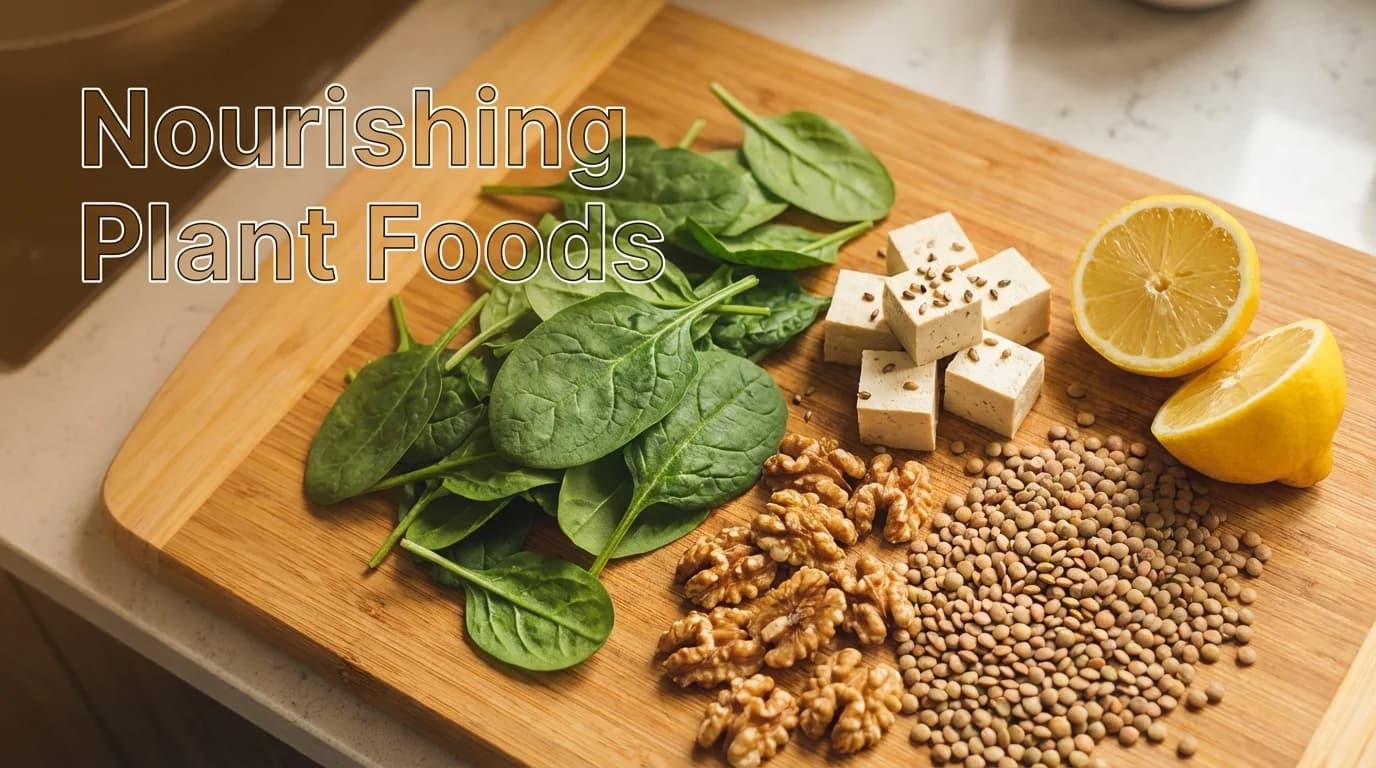
A vegetarian diet can cover almost every nutritional base. The almost matters. A few nutrients need deliberate attention — not because they're impossible to get from plants, but because people simply don't think about them until something feels off.
Nutrients to watch and where to get them
- Protein: The plan above averages 70–90g per day without any special effort. See the protein section above for specifics.
- Iron: Lentils, spinach, pumpkin seeds, and fortified cereals are solid sources. The trick is pairing them with vitamin C — a squeeze of lemon over a lentil salad increases iron absorption by up to six times.
- Omega-3 fatty acids: Flaxseeds, chia seeds, walnuts, and hemp seeds cover the ALA form. For EPA and DHA (what fish provides), an algae-based supplement is the most reliable option.
- Vitamin B12: This one's non-negotiable for vegetarians eating no animal products. Fortified plant milks, nutritional yeast, and eggs help, but a B12 supplement is the simplest solution.
- Calcium: Dairy covers this easily if you eat it. For lower-dairy variations, tofu set with calcium sulfate, fortified plant milks, and dark leafy greens all contribute.
- Zinc: Pumpkin seeds, hemp seeds, legumes, and whole grains. Soaking or sprouting legumes before cooking improves zinc absorption.
Smart food pairings that improve absorption
It's not just what you eat — it's what you eat together. A few pairings make a noticeable difference:
- Iron + vitamin C: Lemon over lentils, orange juice with iron-fortified cereal, tomatoes with spinach
- Fat-soluble vitamins (A, D, E, K) + fat: Drizzle olive oil on roasted vegetables, add avocado to salads
- Calcium + vitamin D: Fortified plant milk (often contains both), or dairy products eaten with time in sunlight
A squeeze of lemon over a spinach salad isn't just flavor. Vitamin C can increase iron absorption from plant sources by up to six times — one of the clearest examples of nutrition through food combination rather than supplementation.
Questions about vegetarian meal planning
A few practical questions come up almost every time someone starts a vegetarian weekly meal plan. Social situations are one of them. Most restaurants in 2026 have solid vegetarian options or can modify a dish. Checking the menu before you go takes two minutes and removes all the decision anxiety at the table.
There are now over 1.5 billion vegetarians worldwide, and with that scale has come a genuine improvement in what's available: better products, more cookbooks, wider menu options. If vegetarian eating felt limited five years ago, it's a different situation now.
How do I keep my meals from getting boring?
Master a few base recipes and vary the details. A black bean base works for tacos on Monday, a grain bowl on Wednesday, and quesadillas on Friday. The protein doesn't change; the format and seasoning do.
- Rotate your grains: Swap quinoa for farro, barley, or couscous. Same dish structure, different texture.
- Explore global spices: Lentils with turmeric and cumin are an Indian dal. The same lentils with oregano and rosemary are Italian-style soup. Two dishes, one ingredient.
- Keep three sauces on rotation: Tahini dressing, peanut sauce, and a simple tomato-based sauce cover most cuisines. Having these ready in the fridge changes everything.
What about protein and feeling full?
Put a protein source at every meal and the hunger problem mostly disappears. The foods that make this easiest:
- Legumes: Lentils, chickpeas, black beans — 15–18g protein per 200g serving
- Soy products: Tofu, tempeh, and edamame are complete proteins (contain all essential amino acids)
- Eggs and dairy: Eggs (6g each), Greek yogurt (15–17g per 200g), cottage cheese (25g per 200g)
- Seeds: Hemp seeds (10g per 30g), chia seeds (5g per 30g) — easy to add to anything
A well-built vegetarian weekly meal plan isn't about restriction. It's about making sure the right foods are there when you need them. The planning removes the hard part; eating becomes straightforward.
FAQ
How Do I Keep My Meals From Getting Boring?
Let's be honest, meal fatigue is real. No one wants to eat the same sad salad every day. The trick I've learned is to master a handful of 'base' recipes and then get creative with variations. A simple black bean burger, for instance, can feel like a totally new meal with a switch-up in spices or a different sauce.
What About Protein and Feeling Full?
This is probably the number one question people ask. The fear of being hungry all the time or not getting enough protein is a huge concern, but it's totally manageable. Plant-based proteins are everywhere, and they work. The key is making sure you have a solid protein source with every single meal. This helps keep you satisfied and your energy levels stable.
Can I follow this vegetarian weekly meal plan if I'm also trying to lose weight?
Yes. The plan averages around 1,800-2,000 calories per day, which puts most people in a mild deficit. To trim it further, reduce portion sizes on grains and skip the cheese in the quesadillas. Focus on high-volume, lower-calorie foods like leafy greens, broth-based soups, and lentils to stay full without going over your target.
How do I handle vegetarian meal planning when cooking for a family that isn't fully vegetarian?
Build meals around a neutral base that works for everyone: rice, pasta, roasted vegetables, tacos. Then offer proteins on the side so non-vegetarians can add chicken or beef to their plate while you stick with tofu, beans, or eggs. Most of the meals in this plan work exactly that way.