It's a common myth that you can't pack on serious muscle without meat. A well-designed vegetarian meal plan for muscle gain rests on a few core pillars: enough total calories, a high protein target drawn from diverse plant sources, and consistent meal timing. That's it. Get those three things right and the absence of chicken breast is irrelevant.
The Foundation for Building Muscle Without Meat
Most skepticism about plant-based muscle building comes from one place: protein quality. The concern isn't wrong — many plant proteins are lower in leucine and have lower digestibility than animal sources. But "lower" doesn't mean "insufficient." It means you need to be deliberate.
A properly structured vegetarian meal plan for muscle gain isn't just workable — it often comes loaded with fiber, micronutrients, and anti-inflammatory compounds that support recovery in ways a chicken-heavy diet typically doesn't.
Success comes down to three principles:
- Caloric surplus: To build new muscle tissue, you need to eat more than you burn. A modest surplus of around 300-500 calories above your daily maintenance gives your body the raw material to grow without piling on unnecessary fat.
- High protein intake: Aim for 1.6 to 2.2 grams of protein per kilogram of body weight. That range is where research consistently shows muscle protein synthesis is maximized.
- Protein distribution: Spreading intake across 4-5 meals throughout the day keeps amino acids available when your muscles need them most — not just at dinner.
What the science actually says
A 2021 clinical trial found no meaningful difference in muscle protein synthesis between men on vegan diets and those eating meat — as long as both groups consumed adequate total protein. The key variable was quantity, not source.
The focus should be on quantity and variety. Combining different plant sources — lentils with quinoa, tofu with beans — gives you the complete amino acid profile your muscles need. For practical pre-built options, the high-protein vegetarian meal plan is a good reference point.
The real challenge isn't a lack of protein options. It's a lack of planning. A successful vegetarian approach requires a deliberate strategy to hit your targets day after day.
Core components of a vegetarian muscle-gain diet
| Macronutrient | Role in muscle gain | Key vegetarian sources |
|---|---|---|
| Protein | Repairs and builds muscle tissue after exercise | Lentils, chickpeas, tofu, tempeh, Greek yogurt, eggs |
| Carbohydrates | Fuel for intense workouts and muscle glycogen replenishment | Quinoa, oats, brown rice, sweet potatoes, whole grains |
| Fats | Hormone production and meeting calorie targets | Avocado, nuts, seeds (chia, flax), olive oil, nut butters |
Calculating your personal fuel for growth
Generic meal plans don't work because your body isn't generic. If you're serious about plant-based muscle building, you need your own numbers — not someone else's.
Start with your Total Daily Energy Expenditure (TDEE) — the calories you burn across the full day. Add 300-500 calories on top of that. Too big a surplus and you gain fat faster than muscle; too small and growth stalls. The modest approach works better for most people and keeps recomp manageable.
How to calculate your protein target
The formula is simple: multiply your body weight in kilograms by 1.6 (minimum) and 2.2 (upper end). That's your daily protein window.
If you weigh 175 lbs (about 79.5 kg), here's what that looks like:
- 79.5 kg × 1.6 g = 127g (effective minimum)
- 79.5 kg × 2.2 g = 175g (optimal upper end)
Shoot for the middle of that range to start. Adjust after 3-4 weeks based on how your training and body composition respond. For a deeper look at the numbers, the guide on how to calculate macros walks through the full process.
Balancing carbs and fats
Once protein is locked in, carbs and fats cover the remaining calories. Carbohydrates fuel heavy lifting and replenish muscle glycogen — aim for 45-55% of total daily calories. Fats support testosterone and nutrient absorption — aim for 20-30% of total daily calories. Avocados, nuts, seeds, and olive oil are your staples here.
These numbers are a starting point, not a rigid rulebook. Track for a week, check your gym performance and scale trend, then adjust accordingly.
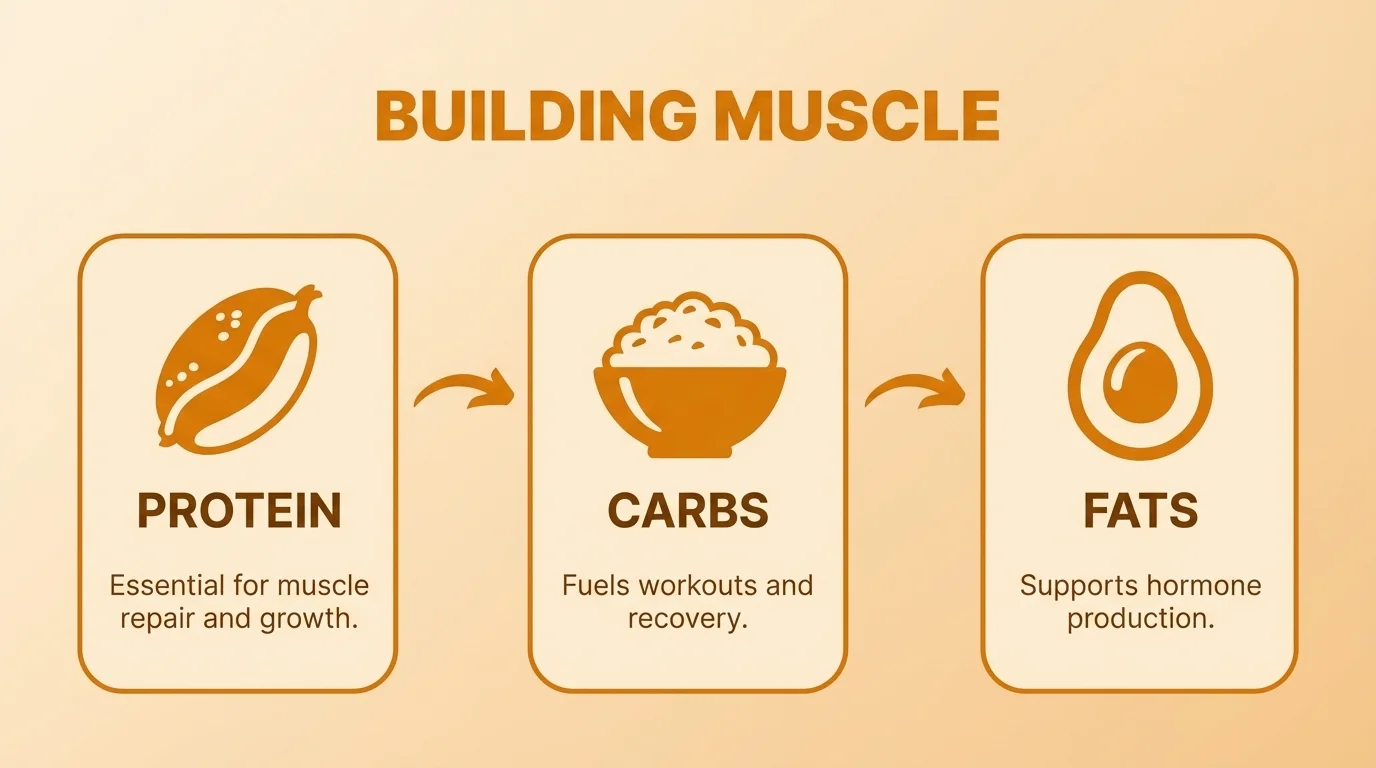
Recent research on natural bodybuilders found that even high-level vegan athletes averaged 1.6 grams of protein per kilogram during bulking phases. But that number often dropped during cutting, showing just how much consistent planning matters for protecting muscle. You can read the full research here.
Your high-protein vegetarian pantry
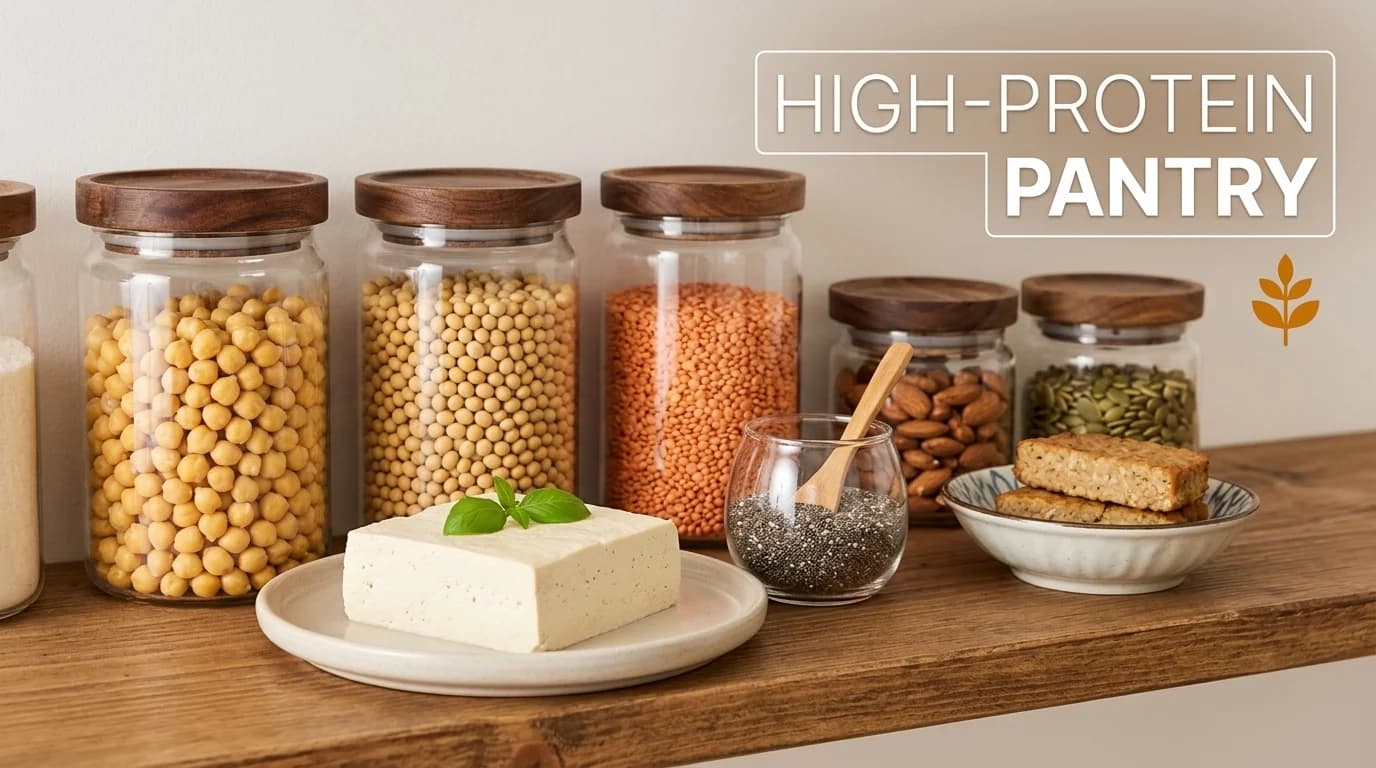
A well-stocked pantry is what makes a vegetarian high protein meal plan actually doable on a Tuesday night when you're tired. The goal is versatile, protein-dense ingredients that make hitting your macros feel automatic rather than effortful.
Powerhouse legumes and beans
Legumes are the workhorse of plant-based muscle building. Cheap, filling, and genuinely high in protein. Stop treating them as side dishes — on this plan, they're the main event.
A cooked cup of lentils delivers about 18 grams of protein plus a solid dose of iron. Chickpeas come in around 15 grams per cup and work in everything from salads to curries to roasted snacks.
- Lentils (brown, green, red): Brown and green hold their shape well for salads and stews. Red lentils cook down creamy — ideal for soups and dals.
- Chickpeas: Essential for grain bowls, hummus, and roasting with spices for a high-protein crunch.
- Black beans and kidney beans: The backbone of burritos, chilis, and veggie burgers — protein plus complex carbs in one ingredient.
Soy-based complete proteins
When it comes to protein quality, soy stands apart from most of the plant kingdom. It's one of the very few plant sources with a complete amino acid profile — all nine essential amino acids your body can't produce on its own.
Tofu takes on whatever flavor you cook it with. Press firm or extra-firm tofu before cooking and it holds up to baking, grilling, or scrambling. Tempeh has a firmer, chewier texture and a nuttier taste — great in stir-fries or as a sandwich protein. Edamame is the convenience option: steam, add salt, done.
A 2022 meta-analysis confirmed that soy protein performed on par with milk protein for supporting muscle synthesis. That matters a lot for anyone building a vegetarian bulking diet.
Don't underestimate soy. Its complete amino acid profile and research backing make it one of the most valuable tools in a vegetarian athlete's diet.
Dairy and eggs
If you include dairy and eggs, you have access to some of the most bioavailable protein sources available — and they require almost no prep. Greek yogurt (strained) can pack up to 20 grams of protein per cup and contains casein, a slow-digesting protein that feeds muscles overnight. Cottage cheese delivers a similar protein punch. Each large egg provides around 6 grams of high-quality protein plus choline and vitamin D.
Nuts, seeds, and whole grains
These aren't your primary protein sources, but they add up. Quinoa is worth calling out specifically: it's a complete protein with about 8 grams per cooked cup, not just a carb base. Oats offer around 6 grams per serving. Hemp seeds pack an impressive 31 grams per 100g and work sprinkled on yogurt, blended into smoothies, or added to oatmeal.
Top vegetarian protein sources ranked
| Food source (100g serving) | Protein (grams) | Complete protein? | Best for |
|---|---|---|---|
| Hemp seeds | ~31g | Yes | Topping on salads, yogurt, smoothies |
| Tempeh | ~20g | Yes | Stir-fries, sandwiches, crumbled as a ground meat sub |
| Firm tofu | ~17g | Yes | Scrambles, baking, grilling, stir-fries |
| Eggs (large) | ~12.5g | Yes | Quick meals, breakfast, hard-boiled snacks |
| Greek yogurt (0%) | ~10g | Yes | Snacks, smoothies, sauces, breakfast bowls |
| Lentils (cooked) | ~9g | No | Soups, stews, salads, veggie burgers |
| Chickpeas (cooked) | ~8.5g | No | Salads, curries, hummus, roasted snacks |
| Quinoa (cooked) | ~4.5g | Yes | Grain bowls, salads, side dishes |
Combining incomplete proteins throughout the day covers all your amino acid needs. Rice and beans at lunch, lentils at dinner, Greek yogurt as a snack — you don't need every meal to be a complete protein. Your body pools amino acids across the day.
A complete 7-day vegetarian meal plan for muscle gain
Below is a full week structured around roughly 2,500-2,800 calories and 160-175g protein daily for a 175 lb (79.5 kg) person in a moderate surplus. Adjust portions up or down based on your calculated targets. Each day follows the same framework: protein at every meal, carbs timed around training, healthy fats filling the gaps.
For generating a plan personalized to your exact weight and goals, Kitchendary's meal planning for muscle gain guide walks through the full setup.
| Day | Breakfast | Lunch | Snack | Dinner | Approx. calories / protein |
|---|---|---|---|---|---|
| Monday (Training) | Tofu scramble + spinach + whole-grain toast | Quinoa bowl: black beans, corn, avocado, lime-tahini dressing | Protein smoothie: soy milk, protein powder, banana | Lentil and vegetable stew + brown rice | ~2,650 cal / 168g protein |
| Tuesday (Rest) | Greek yogurt parfait: berries, chia seeds, almonds | Leftover lentil stew | Cottage cheese + sliced peaches | Baked tempeh + roasted sweet potatoes + steamed broccoli | ~2,500 cal / 160g protein |
| Wednesday (Training) | Protein oats: rolled oats + protein powder + peanut butter | Chickpea salad sandwich on whole-wheat + carrot sticks | 2 hard-boiled eggs + apple | Black bean burgers on whole-wheat buns + large salad | ~2,600 cal / 165g protein |
| Thursday (Rest) | 3-egg omelette: mushrooms, spinach, feta | Tempeh grain bowl: farro, roasted veg, tahini sauce | Handful of almonds + string cheese | Red lentil dal + basmati rice + raita | ~2,550 cal / 162g protein |
| Friday (Training) | Cottage cheese pancakes: 1 cup cottage cheese, 2 eggs, oats, blended | Greek salad: cucumber, tomato, olives, feta, chickpeas | Protein smoothie: Greek yogurt, frozen berries, hemp seeds | Stir-fried tofu + edamame + brown rice + soy-ginger sauce | ~2,700 cal / 172g protein |
| Saturday (Training) | Overnight oats: oats, chia, soy milk, peanut butter, banana | Quinoa and black bean stuffed peppers | Roasted chickpeas + Greek yogurt dip | Tempeh tacos: corn tortillas, black beans, guacamole, salsa | ~2,750 cal / 170g protein |
| Sunday (Rest) | Veggie frittata: 4 eggs, zucchini, tomatoes, goat cheese | Lentil soup + whole-grain bread | Apple + almond butter | Tofu tikka masala + basmati rice | ~2,500 cal / 158g protein |
This plan keeps variety high so you don't get bored, and uses deliberate leftovers (Tuesday lunch is Monday's dinner) to cut cooking time mid-week. For structured meal prep recipes built around these foods, the vegetarian protein meal prep guide has detailed batch-cooking instructions.
Common mistakes vegetarians make when trying to build muscle
Most people who struggle with plant-based muscle building aren't failing because vegetarian diets can't work. They're failing because of a few avoidable errors. Here's what to watch for.
- Undereating protein overall. Removing meat without deliberately replacing the protein is the most common mistake. You can't just eat more vegetables and expect your protein to stay on track. Every meal needs a dedicated protein source — tempeh, tofu, eggs, legumes, dairy.
- Relying on a single protein source. Eating only lentils every day leaves amino acid gaps. Variety across soy, legumes, grains, and dairy (or eggs) covers your full profile without obsessing over perfect combinations at every sitting.
- Eating at maintenance instead of a surplus. Muscle growth requires calories above what you burn. Many people track carefully and still aren't gaining because they're too conservative with portions. If the scale isn't moving up slowly, eat more.
- Ignoring creatine. Vegetarians naturally have lower muscle creatine stores because creatine is found almost exclusively in animal muscle. Supplementing with 3-5g of creatine monohydrate daily is one of the most evidence-backed moves you can make.
- Skipping protein at breakfast. Starting the day with oatmeal and fruit is fine, but if it's only 8-10g of protein, you're already behind. Add Greek yogurt, hemp seeds, or protein powder to your morning meal.
- Treating every day like a rest day calorie-wise. On training days your body benefits from slightly more carbs around your workout. Eating the same way on rest days and heavy training days leaves performance gains on the table.
Designing your weekly meal schedule
Stocking your pantry is one thing. Turning those ingredients into a consistent weekly structure is where the actual progress happens. The goal isn't perfection — it's a flexible framework that keeps your protein and calories on target without requiring you to think hard about every meal.
Think about your day in two categories: fuel and repair. Carbs before training fuel the work; protein and carbs after training start the repair. Everything else fills in around those two anchor points.
Structuring meals for maximum growth
Spreading protein across four to five meals a day — three main meals plus one or two snacks — keeps amino acids flowing to muscle tissue throughout the day. Trying to hit your protein goal in one or two large meals is less effective than spacing it out.
A simple daily structure that works:
- Breakfast: Start with protein to stop overnight muscle breakdown — tofu scramble, eggs, Greek yogurt, or protein oats.
- Lunch: A balanced plate: protein source + complex carbs + vegetables + healthy fat.
- Pre-workout snack: Light on fat, easy to digest — carbs with a small protein hit, 60-90 minutes before training.
- Post-workout meal: Protein-rich and carb-forward to replenish glycogen and start muscle repair. Target 20-40g protein here.
- Dinner: Final protein hit of the day, often with casein-rich options like Greek yogurt or cottage cheese if eaten close to bed.
Timing your nutrition around workouts
Pre-workout: complex carbs plus some protein gives sustained energy through tough sets. Oats with Greek yogurt, whole-grain toast with nut butter and a boiled egg — straightforward combinations work.
Post-workout is where most people underdeliver. Your muscles are primed to absorb nutrients. Aim for 20-40 grams of protein and fast-acting carbs within 1-2 hours. A protein shake right after the session followed by a real meal an hour later is a reliable approach. See the high-protein meal prep guide for post-workout meal ideas you can have ready in advance.
Your meal plan removes the daily decision-making that derails consistency. When lunch is already prepped and dinner is planned, you stay on track even on the days when motivation is low.
Meal prep strategies for real life
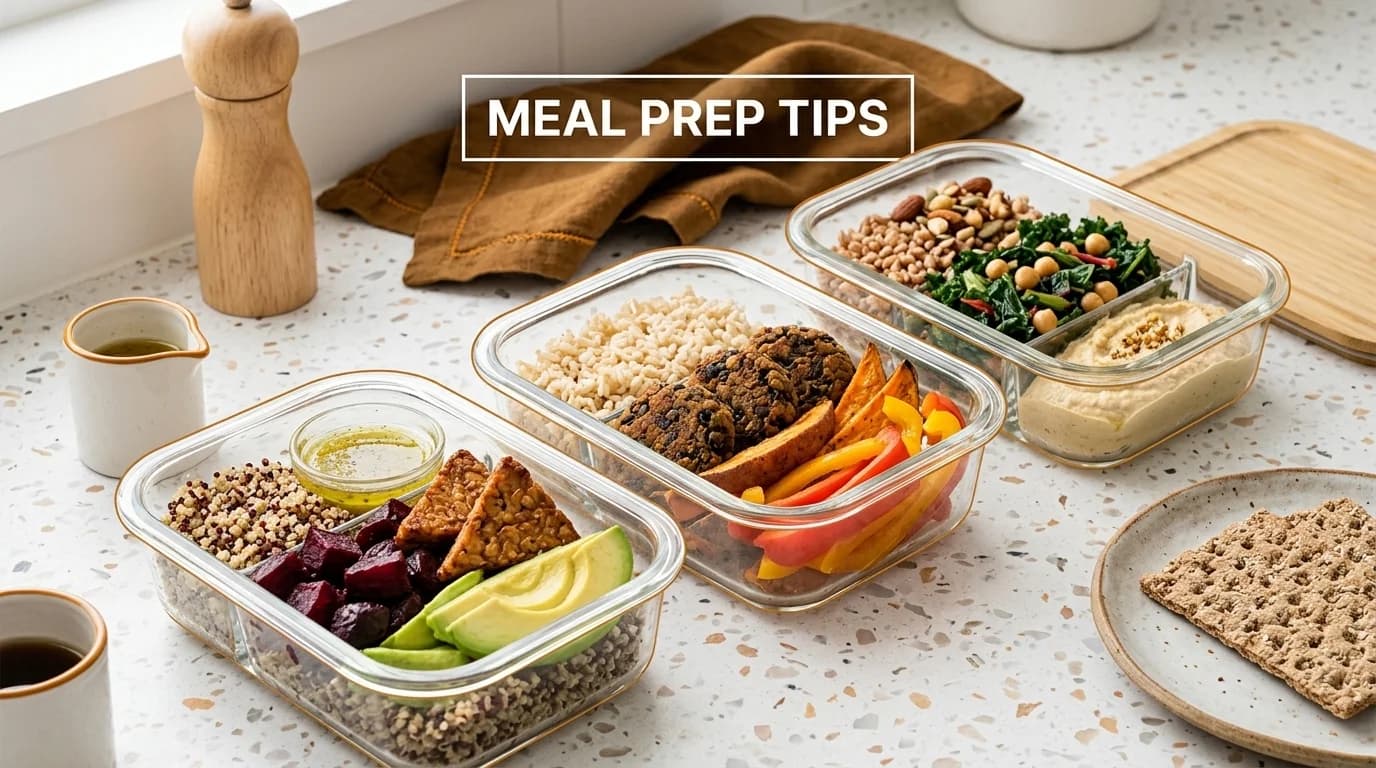
The best meal plan is useless if you don't follow it on Wednesday at 7pm when you're tired and hungry. That's the only test that matters. Meal prep is what bridges the gap between intention and execution.
It doesn't require your entire weekend. Two hours on Sunday covers most of the week. The payoff is that a high-protein vegetarian meal takes five minutes to assemble instead of forty-five.
Batch cooking the right way
Don't prep complete meals — prep components. A typical prep session covers three categories:
- Grains: A big pot of quinoa or brown rice. Refrigerates for 5 days and becomes the base for bowls, salads, and sides all week.
- Legumes: Cook lentils in vegetable broth for extra flavor, or rinse canned chickpeas and black beans. Ready to toss into anything on demand.
- Roasted vegetables: A sheet pan of broccoli, bell peppers, and sweet potatoes. They reheat fast and add texture and nutrition to any dish.
With these three things prepped, a Tuesday night dinner is assembly: grain base + legumes + roasted veg + sauce. Done. The vegetarian weekly meal plan guide shows how to rotate these components to keep meals from getting repetitive.
Strategic snacking for protein goals
Hitting 160-175g of protein daily without meat comes down to what you eat between meals. Snacks aren't optional filler — they're how you close the gap.
Prepare snack packs ahead of time. Portion out Greek yogurt with hemp seeds. Make small bags of roasted chickpeas and almonds. Keep hard-boiled eggs in the fridge. When hunger hits, you have something that moves you toward your goal instead of away from it.
Snacks are where most vegetarian athletes lose ground on their protein target. Plan them with the same intention as your main meals.
Eating out without losing ground
Restaurants don't have to derail you. Look up the menu before you arrive. Find the protein anchor — tofu, beans, tempeh, eggs — and build around it. Most restaurants will double a protein portion or swap sides if you ask.
Three rules that help:
- Scan for protein first. Find the main protein source on the menu before deciding anything else.
- Ask for simple swaps. Extra lentils in a salad, steamed veg instead of fries, tofu added to a bowl — most places accommodate without complaint.
- Box half at the start. Restaurant portions are often double what you need. Packing half before eating saves calories and gives you tomorrow's lunch.
When you combine batch cooking, planned snacks, and a fallback plan for eating out, you have a system that holds up in real life — not just on paper. For more on building that system, the guide on meal planning for the week covers habits that make consistency easier over time.
Common questions about building muscle on a vegetarian diet
Do I actually need protein powder?
No, you don't need it. But it helps.
Hitting 1.6 to 2.2 grams of protein per kilogram with whole foods alone takes careful planning and a lot of eating. On busy days it can feel nearly impossible. A protein shake delivering 20-30 grams of protein right after training is a convenient bridge — not a replacement for real food, just a useful tool in the toolkit.
What are the best complete vegetarian proteins?
A complete protein contains all nine essential amino acids your body can't make itself. Good vegetarian options with the full set:
- Soy-based foods: Tofu, tempeh, and edamame — the strongest category for plant-based muscle building.
- Quinoa: Not just a carb source — it's a complete protein, which makes it unusually valuable for grain bowls and meal bases.
- Dairy and eggs: If you include them, Greek yogurt, cottage cheese, and eggs are among the most bioavailable proteins available to vegetarians.
- Buckwheat and chia seeds: Useful additions that round out your amino acid intake across the day.
You don't need a complete protein at every single meal. Your body draws from amino acids consumed throughout the day. The classic rice-and-beans combination is a good example: two incomplete proteins that together cover the full profile.
How can I get enough creatine?
Creatine is found almost exclusively in animal muscle. Vegetarians typically have lower muscle creatine stores as a result — not zero, because the body synthesizes a small amount, but not enough to get meaningful performance benefits.
Supplementing with 3-5 grams of creatine monohydrate daily is one of the most evidence-supported decisions a vegetarian athlete can make. It's well-studied, safe, and delivers real strength and power improvements that food alone can't match.
Will I lose muscle if I go vegetarian?
No — provided you replace what you were getting from meat. The only scenario where muscle loss happens is if you remove meat without deliberately substituting the protein and calories. Track what you normally eat for a few days before switching. Know your numbers. Then replace meat with lentils, tofu, tempeh, beans, and dairy so your total intake stays consistent. Your muscles respond to protein and training stimulus — not to whether that protein came from a chicken or a chickpea.
FAQ
Do I Actually Need Protein Powder?
Honestly, no, you don't need it. But it sure does make things easier.
What Are the Best 'Complete' Vegetarian Proteins?
A 'complete protein' is just a food that has all nine essential amino acids your body can't make on its own. While a lot of plant foods are missing one or two, plenty of vegetarian options have the whole set.
How Can I Get Enough Creatine?
This is a really important question because creatine is mostly found in animal muscle. As a result, vegetarians and vegans tend to have lower levels stored in their muscles. Your body makes a little on its own, but not enough to really get the performance-boosting benefits.
Will I Lose Muscle If I Go Vegetarian?
Absolutely not—as long as you're smart about it. The only way you'll lose muscle is if you accidentally tank your calorie and protein intake by simply removing meat without replacing it properly.
How do I know if I'm eating enough to build muscle on a vegetarian diet?
Track your weight weekly. If it's not going up by 0.25-0.5 lbs per week, you're not eating enough. Also check your protein: aim for 1.6-2.2g per kg of body weight. Most vegetarians fall short not on variety, but on total protein volume.
Are there any nutrients vegetarian muscle-builders commonly miss?
Yes — creatine (supplement with 3-5g/day monohydrate), vitamin B12 (supplement or dairy/eggs cover it), zinc (pumpkin seeds, legumes), and iron (lentils, fortified foods, pair with vitamin C for absorption). These gaps are manageable but worth tracking.