Any solid bulking plan for skinny guys rests on one rule: you have to be in a consistent caloric surplus. If you feel like you’re already eating a ton but the scale isn’t moving, the hard truth is you’re still not eatingenoughto outpace your metabolism and actually build new muscle.
This guide is here to fix that.
Your Blueprint for Gaining Serious Mass
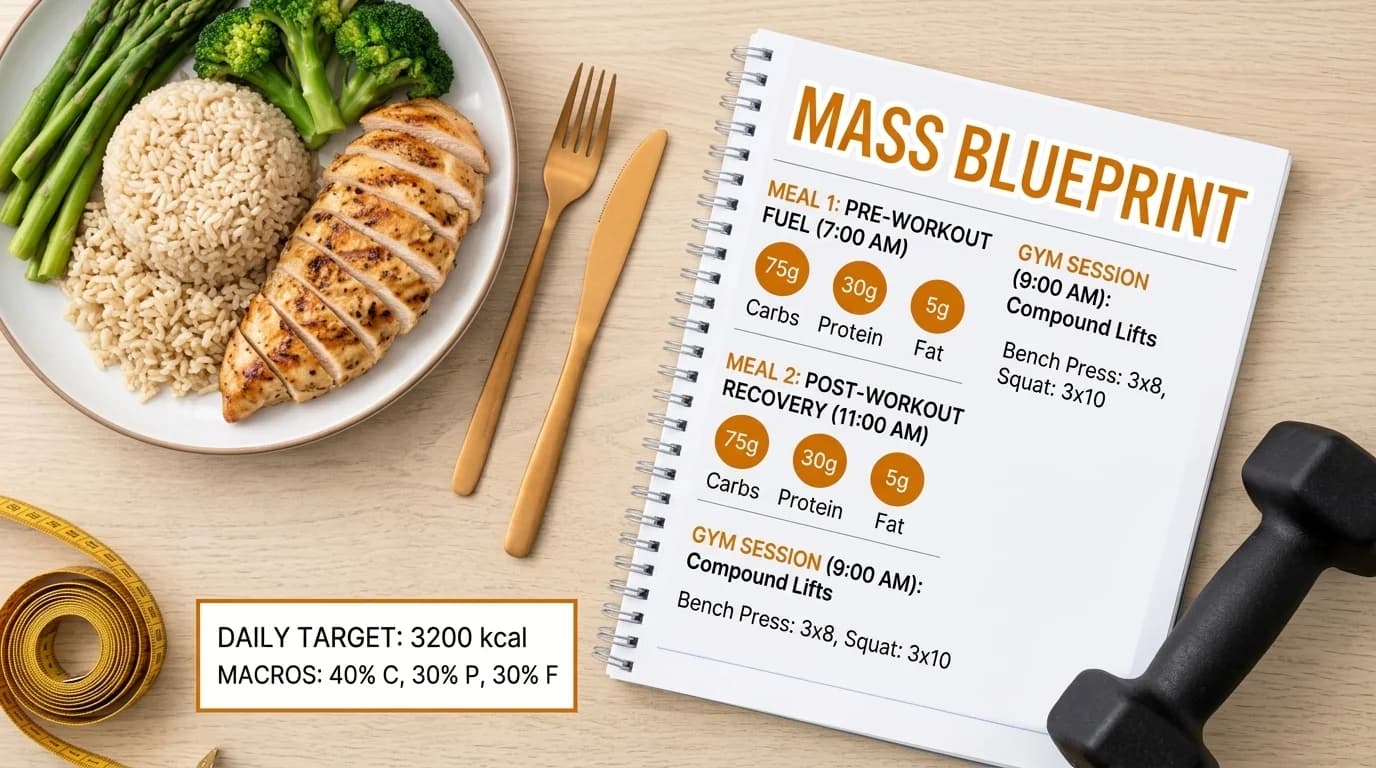
If you're a classic "hardgainer," you know the frustration all too well. You feel like you're shoveling down food and crushing it in the gym, but you're getting nowhere. It’s a story I hear all the time from skinny guys, and it often leads them to believe they just can't build muscle. That’s flat-out wrong.
The problem isn't your DNA. It's your approach.
"Just eat more" is terrible advice because it's vague and it doesn't work. Without a real plan, you're guessing. You might stuff yourself one day, then undereat the next without realizing it, wiping out any potential progress. The only way to break through that plateau is with consistent, deliberate eating.
A well-designed bulking plan removes the guesswork. It’s built to ensure you’re always consuming more calories than you burn, which is the only condition under which your body will build muscle. Your body needs a steady surplus of calories and macros — without them, the process stalls.
Why Structure Matters for Hardgainers
For a hardgainer trying to pack on size, a structured approach makes the difference between progress and spinning your wheels.
Here’s what a dedicated plan does for you:
- Forces a Caloric Surplus:It’s a numbers game. A plan guarantees you hit your daily calorie target day in and day out, which is the single most important factor for gaining weight.
- Masters Nutrient Timing:It strategically places nutrients around your workouts, giving you the fuel you need to perform and the building blocks you need to recover.
- Balances Your Macros:You'll finally get the right blend of protein to repair muscle, carbs to power your training, and healthy fats to keep your hormones in check.
- Creates Lasting Habits:Following a plan turns eating from a constant, nagging chore into a simple routine. Over time, that consistency becomes second nature.
For a skinny guy, eating until you're full just isn't enough. Your body is a calorie-burning furnace. A meal plan forces you to eat for your goal, not just for your appetite.
This guide is your roadmap away from the failed "see-food" diet. Step by step, from calculating your calorie needs to mapping out daily meals with sample menus, you’ll have a concrete system to follow.
Nailing Your Bulking Calories and Macros
This is where you figure out the fuel your body needs to actually build muscle. Generic online calculators give you a rough starting number, but you’ll need to verify it against real-world results over the first few weeks.
First things first, you need to find your starting line. This is yourTotal Daily Energy Expenditure (TDEE), which is just a fancy term for how many calories your body burns in a 24-hour period, including workouts. It’s your maintenance level. You can use a TDEE calculator online to get a pretty solid estimate.
Once you have that number, it’s time to add fuel to the fire by creating acaloric surplus. This is the single most important rule of gaining weight: you have to eat more than you burn. No exceptions.
How Big Should Your Caloric Surplus Be?
For hardgainers, it’s tempting to go all-in and eat everything in sight. Don’t. That’s a fast track to gaining fat you’ll just have to cut later. Smart bulking means aslightsurplus.
A good, conservative starting point is adding300-500 calorieson top of your TDEE.
So, if your maintenance is2,500 calories, your new bulking target is somewhere between2,800 and 3,000 caloriesa day. This gives your body just enough extra energy to build new muscle tissue without storing too much as fat.
Give it a couple of weeks and see what the scale says. If you're not gaining any weight, bump it up by another200-250 calories. If you're gaining too fast (more than a pound a week), dial it back a little. It’s an ongoing adjustment, not a one-time calculation.
Your Macros: The "What" Behind the Calories
Calories give you the energy to grow, but macros—protein, carbs, and fats—are what you’ll actually build that musclewith. Getting the right balance is what separates a successful bulk from just getting fat.
Protein:This is non-negotiable. Protein is literally the building block of muscle. When you lift weights, you create tiny tears in your muscle fibers. Protein is what your body uses to repair them, making them bigger and stronger.
Carbohydrates:Carbs are your primary fuel source. They power your workouts and replenish your muscles' glycogen stores afterward. Skimp on carbs and your gym performance drops noticeably.
Fats:Don't fear the fat! Healthy fats are essential for hormone production, especially testosterone, which is a key player in muscle growth. They're also incredibly calorie-dense, which is a huge help when you're trying to hit a high-calorie target.
A classic mistake I see skinny guys make is cramming protein shakes all day but forgetting about carbs and fats. If you don't eat enough carbs and fats, your body will start burning that expensive protein for energy—which completely defeats the purpose.
For a deeper dive into the science and math, check out this excellentguide on calculating your macros accurately. It's useful for getting your numbers dialed in before you start.
Sample Daily Macro Targets for a 3000-Calorie Bulking Plan
Here's what that looks like on a3,000-calorietarget, using a 40% carb, 30% protein, and 30% fat split. This breakdown works well as a starting point for lean gains.
| Macronutrient | Percentage of Calories | Total Calories | Grams per Day |
|---|---|---|---|
| Carbohydrates | 40% | 1200 | 300g |
| Protein | 30% | 900 | 225g |
| Fat | 30% | 900 | 100g |
Just remember: Carbs and protein have4 calories per gram, while fat has9 calories per gram.
Having these specific numbers—300gof carbs,225gof protein, and100gof fat—gives you a clear daily target. No guesswork required.
If crunching the numbers and tracking everything yourself sounds like a chore, you can always use our/loginto create a custom plan based on your exact targets. Either way, now you have a roadmap to follow.
Building Your Daily Meal Structure
Once you’ve nailed down your daily calorie and macro targets, the next challenge is fitting all that food into your day without feeling bloated or miserable.
Meal structure is what separates a bulk that lasts from one that fizzles out after a week.
One of the biggest mistakes guys make is trying to cram3,000+calories into three large meals. Your stomach can only handle so much at once, and forcing it leads to feeling sick and sluggish. Spreading calories across more meals is more manageable and more effective.
This infographic gives you a great visual on how to set up your bulking numbers from scratch.
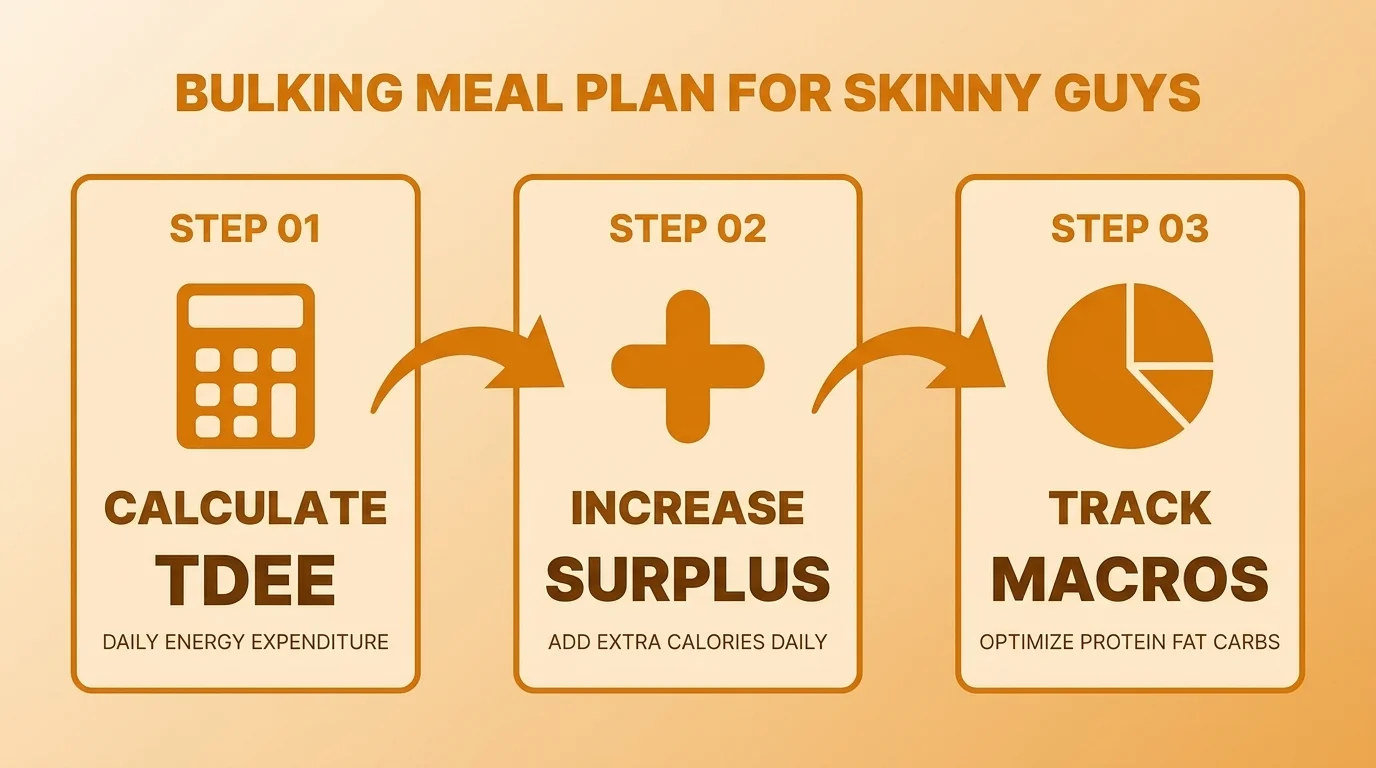
The logic is straightforward: start with your maintenance calories (TDEE), add a surplus for growth, then divide those calories across the right macros to fuel muscle building.
Frequent, Calorie-Dense Meals
For a skinny guy with a fast metabolism and a small appetite, eating more often is genuinely more effective than relying on three large meals. Aim forfive to six smaller, calorie-packed meals and snacksspread out every two or three hours.
Here’s why it works better for hardgainers:
- It Tames Your Appetite:Shoveling down 1,000+ calories in one sitting is a chore. But eating 500-600 calories? That’s way more manageable. It keeps you from ever feeling painfully stuffed.
- It Creates a Muscle-Building Environment:Constantly supplying your body with amino acids (from protein) and energy (from carbs and fats) keeps you in an anabolic, or muscle-building, state all day long.
- It’s Easier on Your Gut:Smaller meals are less of a shock to your digestive system. This means less bloating, less gas, and none of that lethargic feeling you get after a massive feast.
A solid starting point for many is shooting for around3,000 calories a day, with a macro split of roughly40%carbs,30%protein, and30%fat. By spreading this across six smaller meals every 2 to 2.5 hours, you give your body a constant, steady fuel source to build new muscle.
Timing Your Nutrients Around Your Workouts
Every meal matters, but the ones you eat before and after training have the most direct impact on performance and recovery.
Pre-Workout Meal (1-2 hours before you train):The goal here is simple: fuel. You want to top off your energy stores with carbs that are easy to digest, plus a solid hit of protein to get the muscle-building process started early. Stay away from anything too fatty or high in fiber right before a workout, as that can slow digestion and leave you feeling heavy in the gym.
- A good example:A bowl of oatmeal mixed with a scoop of whey protein and a handful of berries. Easy on the stomach, loaded with fuel.
Post-Workout Meal (Within 1-2 hours after you train):This is all about repair and recovery. After you’ve broken down your muscles, they’re screaming for nutrients. Give them what they need: fast-digesting protein to start the repair process and carbohydrates to restock the glycogen you just burned.
- A good example:A whey protein shake with a banana works well for a quick option. For a full meal, lean ground turkey and sweet potatoes hit all the right marks.
My Two Cents:Don't stress about chugging a protein shake thesecondyou finish your last rep. The old-school "anabolic window" is more like an "anabolic barn door." As long as you get a quality meal packed with protein and carbs in the couple of hours after you train, you're giving your body everything it needs to grow.
If you’re looking for more ways to pack in protein throughout the day,high-protein meal planscan give you concrete ideas and help you build a routine that sticks. Once the structure becomes habit, hitting your targets gets much easier.
A Sample 7-Day Bulking Meal Plan
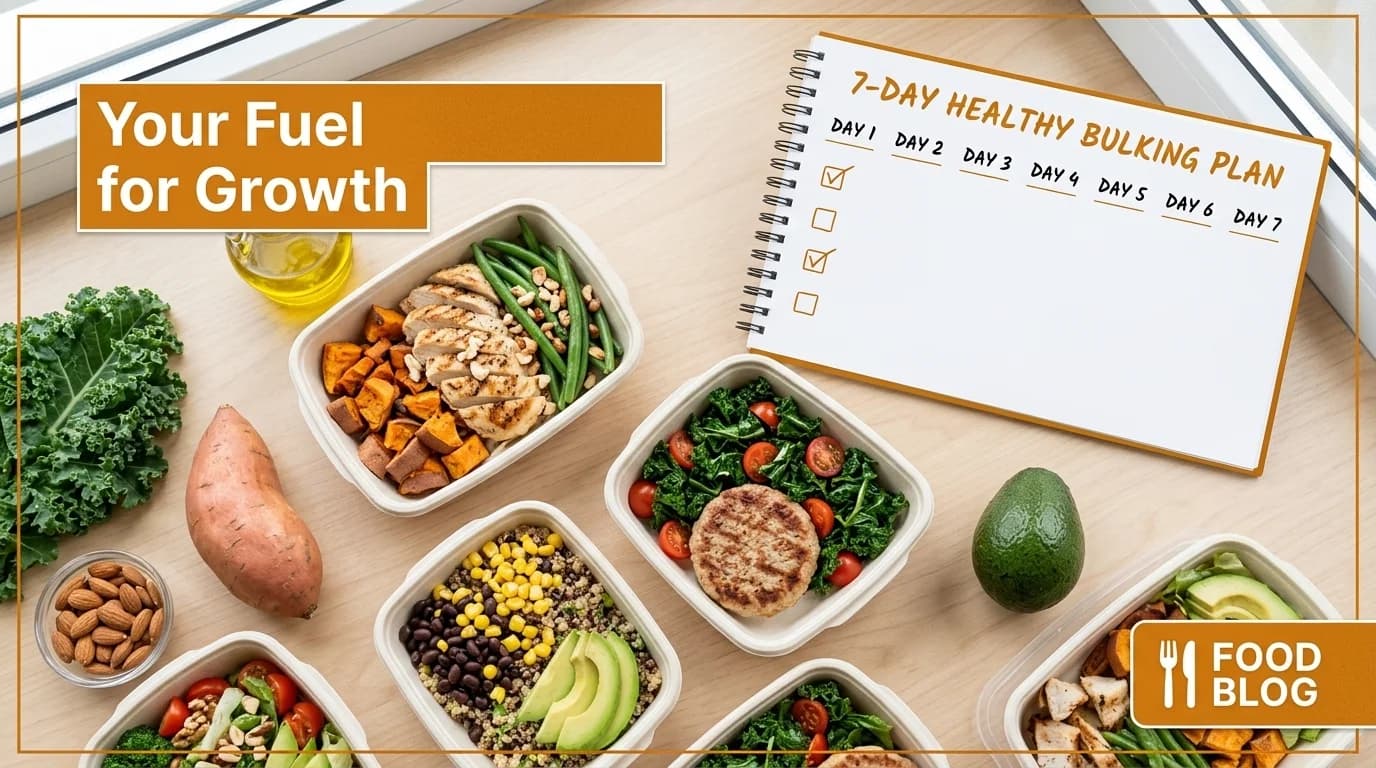
Theory and calculations are useful, but sometimes you just need to see what it looks like on a plate. Below is a practical seven-day blueprint aimed at hitting the3,000-3,500 calorierange.
Use it as a starting template. Swap out foods you don't like, adjust portions to your schedule, and treat it as a framework rather than a rigid prescription.
The meals lean heavily on affordable, nutrient-packed whole foods that are easy to prep in big batches. We're talking about staples like oats, eggs, chicken thighs, nuts, rice, and healthy oils. Remember, consistency is your best friend when it comes to gaining mass, and this plan is built to make that happen.
An Example Day of Eating (Approx. 3200 Calories)
Here’s a snapshot of a typical day. Each meal includes protein, complex carbs, and healthy fats, giving your muscles a steady supply of nutrients throughout the day.
| Meal | Food Items | Key Nutrients |
|---|---|---|
| Breakfast | 4scrambled eggs w/ cheese,1cup oatmeal w/ whey protein & almond butter | Protein, Complex Carbs, Healthy Fats |
| Snack 1 | 1cup full-fat Greek yogurt w/ walnuts & a banana | Protein, Fats, Simple Carbs |
| Lunch | 8 ozchicken thighs,1.5cups quinoa, steamed broccoli w/ olive oil | Protein, Complex Carbs, Fiber |
| Snack 2 | An apple and a handful of almonds | Fiber, Simple Carbs, Healthy Fats |
| Dinner | 8 ozground beef w/2cups whole wheat pasta & marinara sauce | Protein, Complex Carbs |
| Before Bed | Casein protein shake or a large glass of whole milk | Slow-Digesting Protein |
Frequency and food quality both matter. This structure keeps protein flowing to your muscles consistently so recovery doesn’t stall.
Your Full 7-Day Plan
Monday: Laying the Foundation
- Breakfast:Scrambled eggs (4whole) with cheese. Side of oatmeal (1cup dry) mixed with a scoop of whey protein and1tbsp of almond butter.
- Snack:Full-fat Greek yogurt (1cup) topped with a handful of walnuts and a sliced banana.
- Lunch:Large chicken thighs (8 oz) with quinoa (1.5cups cooked) and steamed broccoli drizzled with olive oil.
- Pre-Workout:A simple apple and a handful of almonds.
- Dinner:Lean ground beef (8 oz) with whole wheat pasta (2cups cooked) and marinara sauce.
- Before Bed:Casein protein shake or a large glass of whole milk.
Tuesday: Fueling with Healthy Fats
- Breakfast:High-calorie smoothie (2scoops whey,1cup whole milk,1/2cup oats,1/2avocado,1tbsp peanut butter).
- Snack:Full-fat cottage cheese (1cup) with sliced peaches.
- Lunch:Leftover ground beef and pasta from Monday. Seriously, meal prep will save you.
- Snack:2hard-boiled eggs and a handful of mixed nuts.
- Dinner:Baked salmon (8 ozfilet) with2medium roasted sweet potatoes and asparagus.
- Before Bed:Handful of cashews and a glass of milk.
This plan is a framework, not a prison. If you don't like salmon, swap it for another fatty fish like mackerel or a different protein source like steak. The goal is to hit your calorie and macro targets consistently with foods you actually enjoy.
Wednesday: Hump Day Refuel
- Breakfast:Oatmeal (1cup dry) cooked with whole milk, topped with berries, chia seeds, and a scoop of protein powder.
- Snack:Full-fat Greek yogurt with a drizzle of honey and a sprinkle of granola.
- Lunch:Leftover salmon and sweet potatoes. Pro tip: eat the fish cold over a bed of spinach to avoid that classic office microwave faux pas.
- Pre-Workout:Rice cakes topped with peanut butter.
- Dinner:Chicken and veggie stir-fry. Go with8 ozof chicken breast, load up on veggies, and serve it over a big portion of brown rice (2cups cooked). Use sesame oil for extra flavor and calories.
- Before Bed:Casein shake.
Thursday: Rinse and Repeat
To keep cooking manageable, mirror Monday. Cook double batches on Sunday and Wednesday and you won’t need to touch the stove on Thursday.
- Breakfast:Scrambled eggs and protein oatmeal.
- Snack:Greek yogurt with walnuts and banana.
- Lunch:Chicken thighs with quinoa and broccoli.
- Snack:Apple and almonds.
- Dinner:Ground beef with whole wheat pasta.
- Before Bed:Whole milk.
Friday: Finishing Strong
- Breakfast:The high-calorie protein smoothie from Tuesday.
- Snack:Cottage cheese with fruit.
- Lunch:Leftover ground beef pasta.
- Snack:Hard-boiled eggs and mixed nuts.
- Dinner:Homemade burgers using lean ground beef on whole wheat buns, with oven-baked sweet potato fries. Add cheese and avocado to push the calorie count up.
- Before Bed:Casein shake.
If you want to make this process even smoother, using aweekly meal plannercan help you customize everything, generate shopping lists, and make sure you never miss a meal.
Saturday: Active Recovery Fuel
- Breakfast:Protein pancakes (made with oat flour, eggs, and protein powder) topped with real maple syrup and fruit.
- Snack:A large handful of trail mix (nuts, seeds, dried fruit).
- Lunch:Leftover homemade burgers.
- Snack:Greek yogurt with a scoop of protein powder mixed right in.
- Dinner:A big bowl of chili made with ground turkey, beans, and tomatoes. Top it with cheese and a dollop of sour cream.
- Before Bed:A glass of whole milk.
Sunday: Prep for Success
- Breakfast:Large omelet (4eggs) packed with cheese, spinach, and diced ham, with a side of whole-grain toast and butter.
- Snack:A protein bar and a piece of fruit.
- Lunch:Leftover chili from Saturday.
- Snack:Handful of almonds and a banana.
- Dinner:Keep it simple but effective: a rotisserie chicken (eat about 8 oz, focusing on the dark meat), a hefty side of mashed potatoes, and green beans.
- Before Bed:Casein shake.
Essential Bulking Tips Beyond the Plate
https://www.youtube.com/embed/1MUqAHMY9Nk
Your meal plan is the fuel, but what you do outside the kitchen drives the actual results. Guys with solid plans still stall when they neglect recovery, training quality, and hydration.
Start with something simple: water. Your muscles are roughly75% water, so even mild dehydration cuts strength and slows recovery. Water also transports nutrients from food to working muscle tissue. Aim for at least a gallon a day. On training days, you’ll likely need more.
Lock In Your Recovery for Real Growth
Here’s a hard truth: you don’t build muscle in the gym. You build it when you rest.
Lifting weights just sends the signal to your body that it needs to get stronger. The actual repair and growth—the good stuff—happens while you're resting, especially when you’re asleep. This is when your body gets to work releasing hormones like testosterone and growth hormone.
Cutting corners on sleep is one of the fastest ways to stall progress. Aim for7-9 hours of solid sleepevery night. That’s when growth hormone and testosterone do their work, and there’s no workaround for it.
Eating well is pointless without the right training. Without a demand to grow, those extra calories will be stored as fat rather than converted to muscle. The driving mechanism here isprogressive overload: consistently giving your muscles a stronger stimulus than the last session.
In practice, that means:
- Adding a bit more weight to the bar over time.
- Squeezing out an extra rep or two with the same weight.
- Focusing on better form and control with every lift.
This constant demand is what forces adaptation. You can eat perfectly, but without a progressively challenging training program, the extra calories won’t translate into muscle.
Using Supplements to Your Advantage
Supplementssupplementa good diet and training plan. They don’t replace them. That said, for someone struggling to hit high calorie and protein targets daily, the right ones can genuinely help.
If you’re going to use anything, stick with what’s well-researched. The two most effective options for bulking are:
- Whey Protein:A fast-digesting protein that’s easy to add to shakes, oatmeal, or smoothies. Useful for hitting your daily protein target when whole food alone falls short.
- Creatine Monohydrate:One of the most studied supplements available. It helps muscles produce more energy during heavy lifting, allowing you to push slightly harder each session. Over time, that extra output adds up.
Your diet, training, and recovery do the real work. Supplements can make the process a bit more efficient, but they won't compensate for gaps in any of those three areas.
While food should remain your focus, it's worth reviewing ascience-backed guide to muscle growth supplement optionsto see what else might support your goals. They're accelerators, not a replacement for the basics.
Tracking Progress and Making Adjustments
Your meal plan is a starting point, not a fixed prescription. Your body adapts over time, so yourbulking meal plan for skinny guysneeds to adjust with it. Making small, deliberate tweaks along the way is what keeps progress moving.
So, what does good progress actually look like? You’re not trying to blow up overnight. Gaining 10 pounds in a week is a recipe for adding mostly fat, not muscle. A much smarter, more sustainable target is gaining about0.5 to 1 pound per week. This pace ensures most of what you're adding is the lean muscle you’re working so hard for.
Don't Just Trust the Scale
The number on the scale only tells you part of the story. It’s a blunt instrument—it can't tell the difference between muscle, fat, water, or that giant burrito you just ate. You should definitely weigh yourself consistently (first thing in the morning is best), but don't live and die by that number alone.
To get a true sense of your progress, you need to look at the whole picture.
- Progress Photos:Snap a few photos every 2-4 weeks. Get front, side, and back shots in the same room with the same lighting. Visual comparisons often reveal changes that the scale misses entirely.
- Body Measurements:Break out the flexible tape measure once a month. Track your chest, arms, waist, and thighs. Arms and chest growing while waist stays steady is a good sign the surplus is working as intended.
When to Tweak Your Calories
Your body signals when it's time for a change. Recognizing those signals early separates guys who push through plateaus from those who stall out.
Time to Eat More:If the scale hasn’t budged for two weeks straight and you feel like you've hit a wall with your lifts, that's a clear signal. Your metabolism has caught up to your intake. It’s time to add another200-300 caloriesto your daily total and see what happens over the next couple of weeks.
Time to Pull Back:On the flip side, if you're consistently gaining more than1.5 pounds per weekand your waist measurement is climbing a little too fast, you're probably in too big of a calorie surplus. Dial it back by200-300 caloriesa day to get things back under control.
This isn’t just theory; it's a proven method. I’ve seen countless skinny guys pack on 20-30 pounds of solid mass over a few months by sticking to a 500-750 calorie surplus and shooting for that1-1.5 pound per weeksweet spot. To get a better idea of what's achievable with a smart, adjustable plan, check out theseaverage bulking results for skinny guys.
Common Questions About Bulking
If you’re a naturally skinny guy just starting to bulk, questions are inevitable. Here are some of the most common ones worth addressing before you start.
So, How Long Should I Actually Bulk For?
A solid bulking phase usually runs3 to 6 months. That's enough time to put on noticeable muscle without letting body fat get out of hand.
A month or two is rarely enough to see meaningful results. Going much past six months, on the other hand, tends to lead to burnout and makes the eventual cutting phase harder to manage. Pay attention to your progress and how you feel, and adjust the timeline accordingly.
But What if I'm Never Hungry?
This is the classic hardgainer problem, isn't it? Feeling like you have to eat a mountain of food when your appetite is tiny. The trick isn't to force-feed yourself; it's to be smarter about your food choices by focusing oncalorie-dense foods.
- Start adding healthy fats to everything. Drizzle olive oil on your veggies, slice up an avocado for your chicken and rice, or throw a big spoonful of nut butter into your oatmeal.
- Drink your calories. A simple protein shake can become a mass-gaining powerhouse by blending in oats, a banana, or even a scoop of peanut butter.
- Break it up. Instead of three giant meals that leave you feeling bloated, aim for5-6 smaller, more manageable mealsthroughout the day.
This approach helps you hit your calorie targets without feeling bloated or miserable after every meal.
The goal isn’t to make eating a chore. Finding ways to add more calories without adding a ton of food volume is what makes a bulking plan sustainable over months, not just weeks.
FAQ
So, How Long Should I Actually Bulk For?
A solid bulking phase usually runs 3 to 6 months. That's enough time to put on noticeable muscle without accumulating too much fat in the process.
But What if I'm Never Hungry?
This is the classic hardgainer problem. Feeling like you have to eat a mountain of food when your appetite is small is genuinely difficult. The answer isn't to force-feed yourself — it's to be smarter about food choices by focusing on calorie-dense foods.