A low-sodium diet keeps your daily salt intake below 2,300 milligrams — roughly a teaspoon of table salt. That's it. No exotic ingredients, no complicated rules. The challenge is that most of the sodium Americans eat doesn't come from the salt shaker. It's already hiding in the food before you touch it.
This guide gives you the numbers, the swaps, a full 7-day meal plan, and the tactics you'll actually need when life takes you out of your own kitchen.
Why cutting back on sodium matters
You've heard "watch your salt" so many times it probably stopped registering. So let's make it concrete.
Sodium pulls water into your bloodstream. More sodium means more fluid, which means more pressure on artery walls. Over years, that persistent pressure damages blood vessels, strains the heart, and raises the risk of stroke. The American Heart Association estimates that reducing sodium intake to 1,500 mg per day could prevent around 1.2 million deaths from cardiovascular disease annually in the United States alone.
The more immediate effects are things you've probably already felt: the bloated, heavy feeling after a salty restaurant meal, or a wedding ring that suddenly won't come off. That's water retention — your body holding fluid to dilute excess sodium. Cut the sodium, and it clears up within days.
The World Health Organization has called sodium reduction one of the most cost-effective public health interventions available. Meeting its goal of a 30% global reduction could prevent an estimated 7 million deaths by 2030.
Decoding your daily sodium target
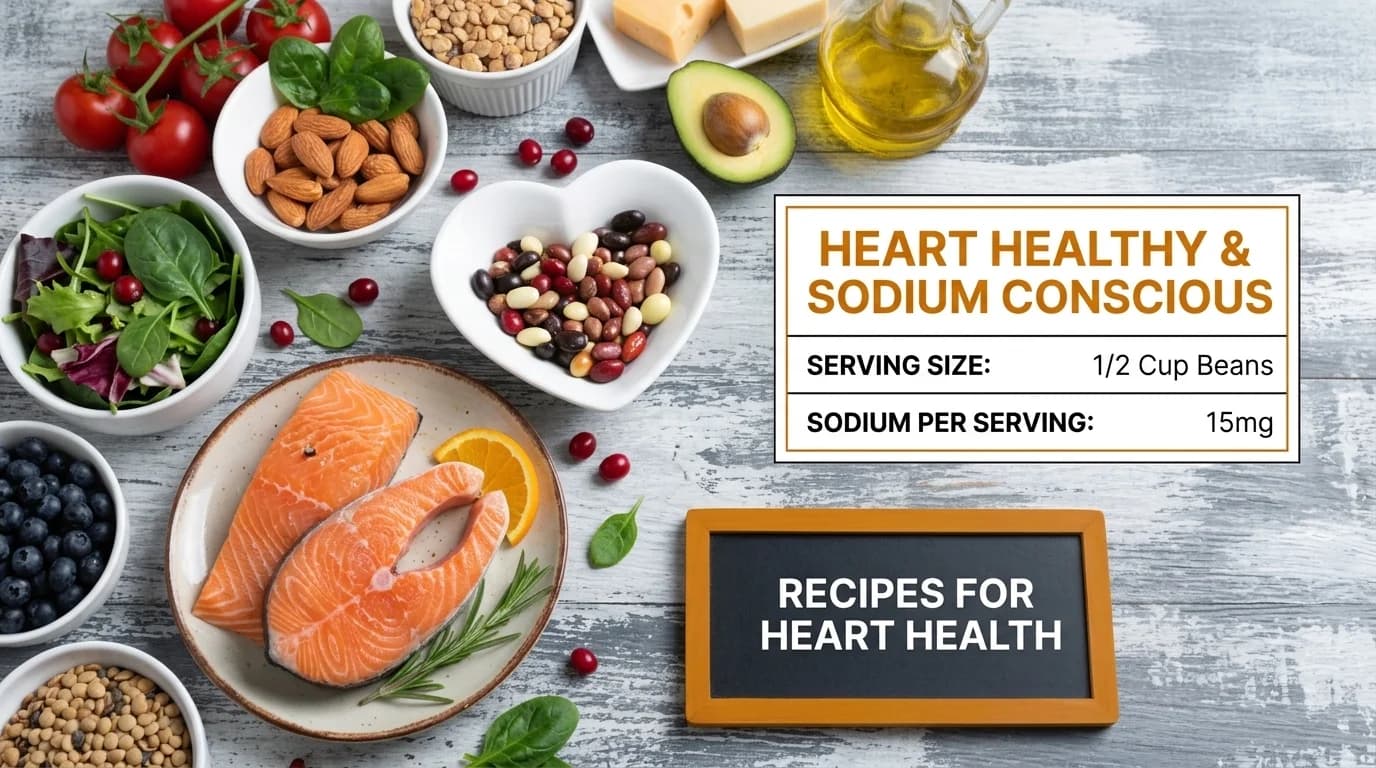
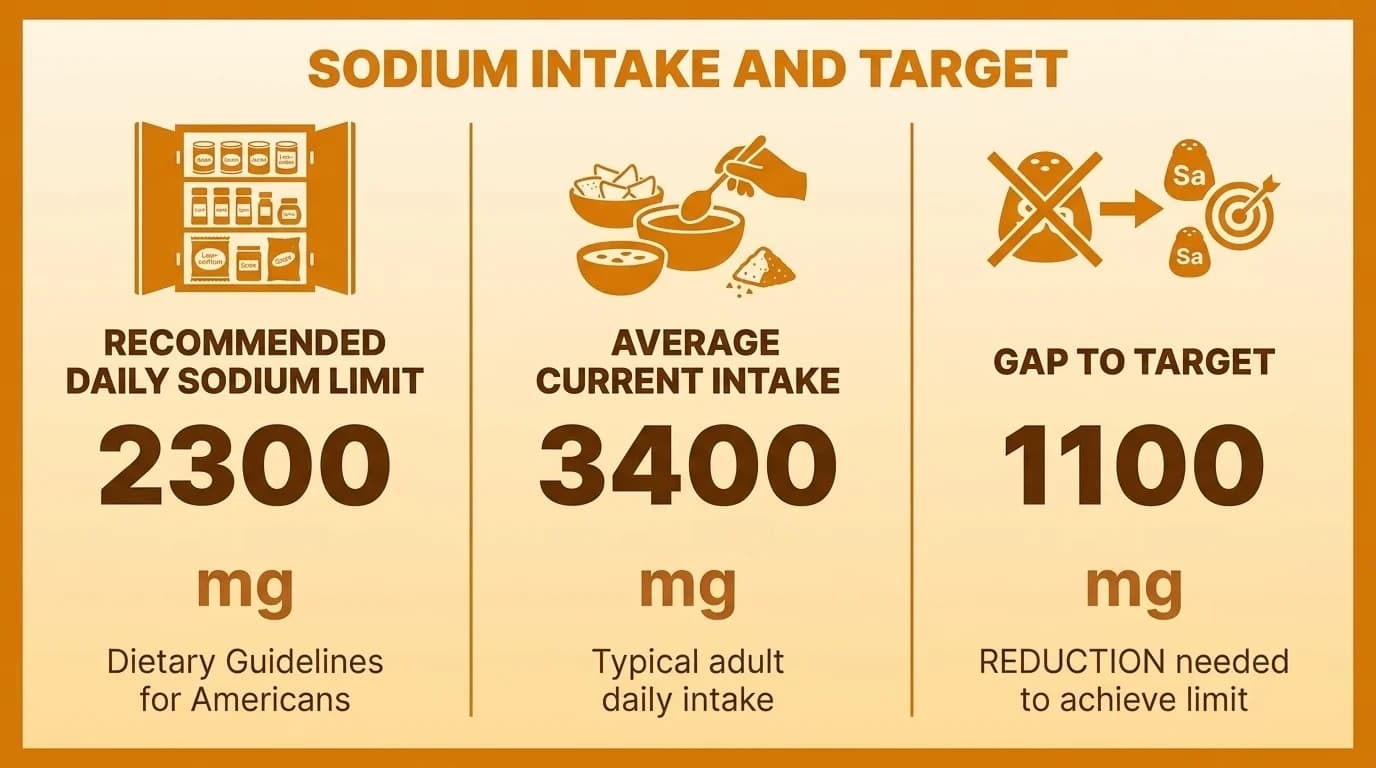
Two numbers come up constantly, and they're not the same thing:
| Guideline | Daily sodium limit | Who it applies to |
|---|---|---|
| General population (FDA / Dietary Guidelines) | 2,300 mg | Healthy adults |
| American Heart Association recommendation | 1,500 mg | Adults with hypertension, heart disease, or diabetes |
| World Health Organization | <2,000 mg | Global adult population |
| Chronic kidney disease (CKD) | 1,500 mg or less | As directed by physician |
The average American consumes around 3,600 mg per day — more than 50% above the upper limit. Globally, 99% of adults exceed WHO recommendations. The overage doesn't come from heavy-handed cooking. About 70% of dietary sodium in the US comes from packaged and restaurant foods.
Finding your personal target
These population guidelines are a starting point, not a prescription. Several factors shift your individual target:
- If you have hypertension, heart failure, or chronic kidney disease, your doctor will likely set a tighter limit — often 1,500 mg or below.
- Sodium sensitivity tends to increase with age. Blood pressure responds more sharply to sodium in older adults.
- Athletes who sweat heavily for multiple hours may have higher needs, but for most people a standard workout doesn't change the equation much.
If you have an existing health condition, get a specific number from your doctor or dietitian before you start. The general 2,300 mg target is fine for healthy adults building better habits.
Building a low-sodium kitchen
Willpower doesn't work long-term. Environment does. If your pantry is full of high-sodium defaults, you'll reach for them on busy nights every time. The fix isn't motivation — it's a one-time stock-up that removes the friction.
High-sodium pantry swaps
These are the specific swaps that make the biggest difference. A few of them are genuinely surprising.
| High-sodium item | Low-sodium swap | Approximate sodium saved |
|---|---|---|
| Regular soy sauce (1 tbsp) | Coconut aminos or low-sodium soy sauce | ~600–700 mg per tablespoon |
| Canned chicken broth (1 cup) | Low-sodium or unsalted broth | ~700–800 mg per cup |
| Jarred pasta sauce (½ cup) | No-salt-added crushed tomatoes + herbs | ~400–500 mg per serving |
| Pre-made seasoning packets | DIY spice blends (cumin, chili powder, paprika) | ~300–600 mg per use |
| Regular canned beans | No-salt-added, or rinse regular beans thoroughly | ~250–400 mg per half cup (rinsing removes ~40%) |
| Salted butter (1 tbsp) | Unsalted butter | ~90 mg per tablespoon |
| Canned tuna in brine | Canned tuna in water, no salt added | ~200–300 mg per can |
Bread is worth a special mention. It's the single largest source of sodium in the American diet — not chips, not fast food. A single slice of standard sandwich bread has 100–150 mg. Two slices plus deli meat for lunch can easily hit 1,000 mg before you add anything else. Look for bread with under 120 mg per slice, or switch to low-sodium wraps.
Reading nutrition labels properly
The % Daily Value column on food labels uses 2,300 mg as the reference. Anything above 20% DV per serving is considered high in sodium; 5% or below is low. Three things to watch:
- Check the serving size first. A can of soup might list 890 mg per serving but contain two servings — so the whole can is 1,780 mg.
- "Reduced sodium" means at least 25% less than the original product, not that it's actually low. It might still be high by absolute numbers.
- "Lightly salted" means at least 50% less than the original. More meaningful, but still check the actual milligram count.
Mastering flavor without salt
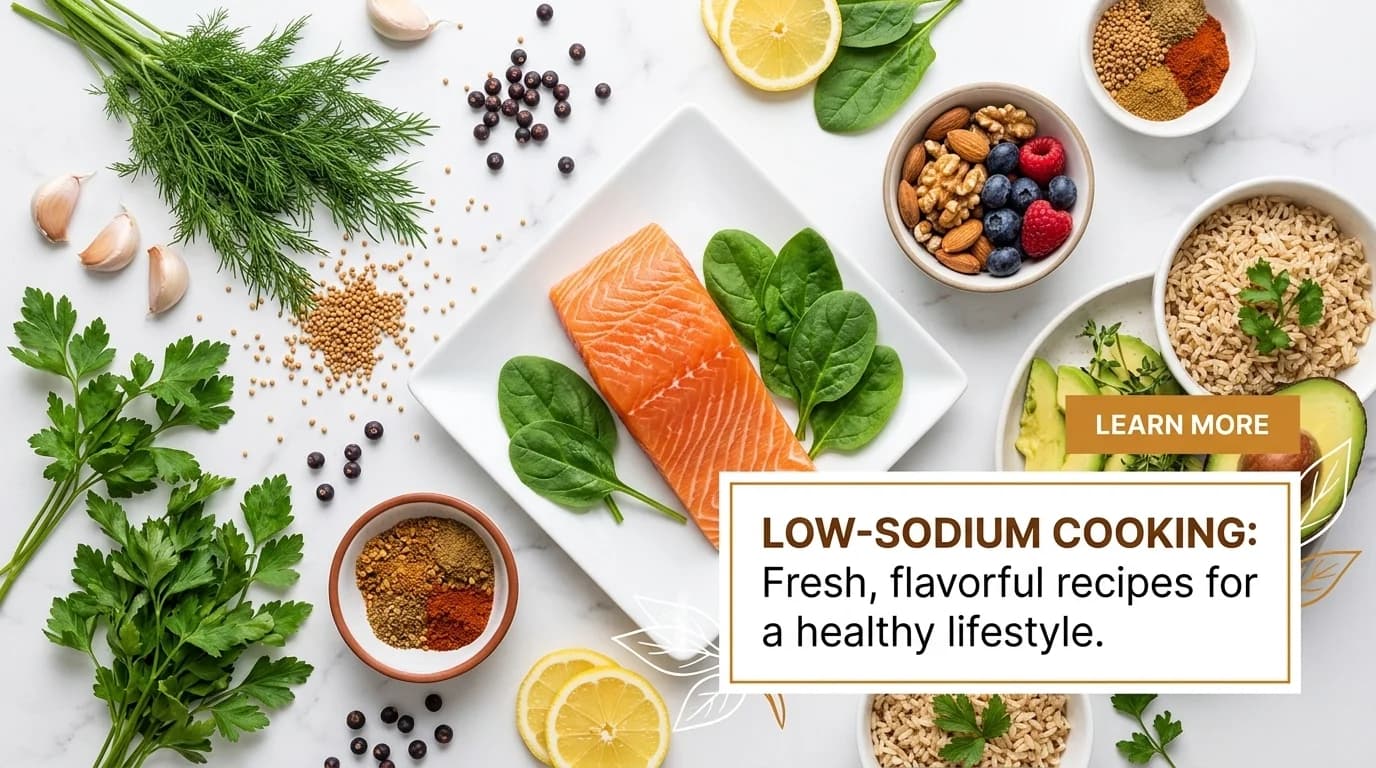
The fear that low-sodium food is boring is real — and for the first week or two, it might actually be a little true. Your taste buds are calibrated to a high-sodium baseline. But recalibration happens faster than most people expect. Within 3 to 4 weeks, most people find that previously normal foods start tasting genuinely over-salted.
In the meantime, here's how to actually make food taste good.
Aromatics: the foundation
Every restaurant dish starts with aromatics — onions, garlic, celery, carrots — cooked slowly in fat until they soften and turn sweet. This is the mirepoix base that builds depth before a single seasoning is added. It takes 8 to 10 minutes and it's the single most impactful technique in low-sodium cooking.
Shallots work beautifully for a milder, sweeter base. Leeks bring a subtle onion flavor that's less sharp. Bell peppers add color and a hint of sweetness. Getting this foundation right means you're building flavor, not just applying it.
Brightness and umami
Salt does two things: it enhances flavor and it suppresses bitterness. When you remove it, you need other tools to do those jobs.
- Acid — fresh lemon juice, lime, red wine vinegar, or apple cider vinegar — stimulates the same taste receptors as salt and makes every other flavor in the dish more vivid. Add it at the end of cooking, not the beginning.
- Umami — the savory fifth taste — comes from mushrooms, ripe tomatoes (especially roasted), nutritional yeast, and parmesan cheese in small amounts. A paste of blended sautéed mushrooms stirred into a stew or spread under chicken skin before roasting delivers a savory depth that makes you stop noticing what's missing.
- Fat carries flavor. A drizzle of good olive oil at the end of a dish makes it taste richer and more complete without adding any sodium.
Your spice rack rebuild
Pre-made seasoning packets are mostly salt. Taco seasoning, steak rubs, Italian seasoning blends — check the labels and you'll often find 300–400 mg of sodium per teaspoon. Making your own costs less and takes two minutes.
Essential salt-free spices worth having:
- Smoked paprika — adds smoky depth to meat, roasted vegetables, eggs
- Garlic powder and onion powder (pure, not garlic salt or onion salt)
- Cumin and coriander — warm and earthy, essential for Mexican and Indian cooking
- Dried oregano, thyme, basil, rosemary — for Mediterranean and Italian dishes
- Black pepper, white pepper, cayenne — heat without sodium
- Turmeric — mild flavor, strong color, anti-inflammatory properties
If you want help building meal plans around these ingredients, Kitchendary's meal from fridge tool can suggest recipes based on what you already have on hand — useful when you're trying to use up fresh herbs before they turn.
7-day low-sodium meal plan
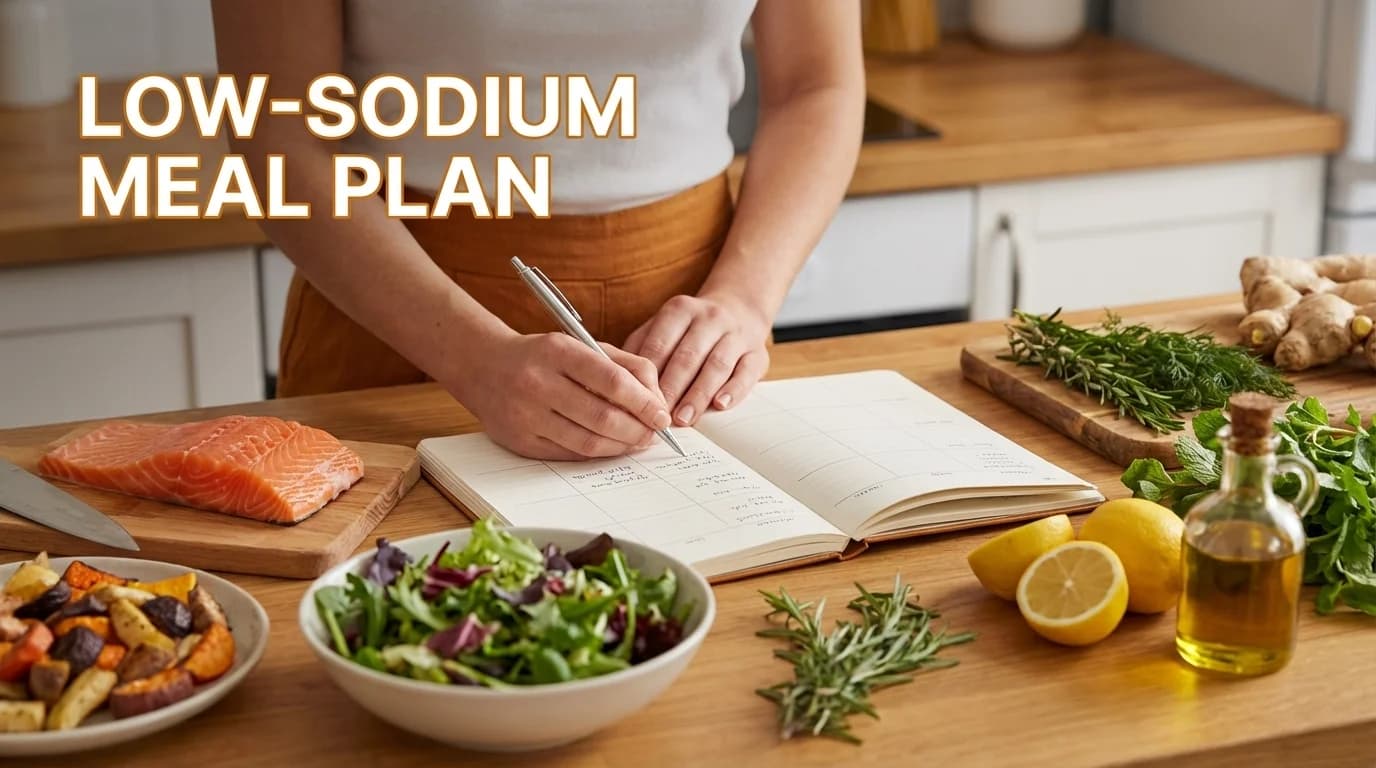
This is a sample plan, not a strict prescription. Swap the protein, change the vegetables, adjust portions to your appetite. The point is the pattern: whole foods, no-salt-added pantry staples, and cooking techniques that build flavor from the ground up.
Estimated sodium per day stays under 1,800 mg. Most days come in closer to 1,400–1,600 mg when you use no-salt-added canned goods and low-sodium broth.
Monday
- Breakfast: Oatmeal made with water or unsweetened almond milk, topped with fresh berries and cinnamon. No added salt.
- Lunch: Large spinach salad with grilled chicken breast, cucumber, bell peppers, and homemade lemon-herb vinaigrette (olive oil, lemon juice, garlic, dried oregano).
- Dinner: Baked salmon with fresh dill and lemon, roasted asparagus, and quinoa cooked in low-sodium broth.
- Snack: Apple with 1 tbsp unsalted almond butter.
Tuesday
- Breakfast: Plain Greek yogurt (check label — aim for under 80 mg sodium per serving) with sliced peaches and a handful of unsalted almonds.
- Lunch: Leftover salmon and quinoa from Monday. Reheat and add a squeeze of lemon.
- Dinner: Homemade turkey meatballs (use oregano, basil, garlic powder instead of salt) over zucchini noodles with no-salt-added tomato sauce.
- Snack: Carrot sticks with homemade hummus (blend chickpeas, lemon, tahini, garlic — skip added salt).
Wednesday
- Breakfast: Two eggs scrambled with sautéed spinach and mushrooms. Season with black pepper, garlic powder, and a splash of hot sauce (check label for low-sodium options).
- Lunch: Leftover turkey meatballs and zucchini noodles.
- Dinner: Chicken and vegetable stir-fry using low-sodium soy sauce (or coconut aminos), broccoli, snap peas, and carrots over brown rice.
- Snack: A small handful of unsalted mixed nuts.
Thursday
- Breakfast: Oatmeal with berries and cinnamon.
- Lunch: Spinach salad with grilled chicken and lemon-herb vinaigrette.
- Dinner: Leftover stir-fry from Wednesday. Add fresh scallions and a drizzle of sesame oil when you reheat it.
- Snack: Sliced cucumber with avocado and a squeeze of lime.
Friday
- Breakfast: Greek yogurt with peaches and almonds.
- Lunch: Low-sodium wrap filled with chickpeas (rinsed from no-salt-added can), shredded carrots, cucumber, and a yogurt-dill sauce.
- Dinner: Homemade pizza on a whole-wheat crust with no-salt-added crushed tomato sauce, fresh mozzarella (naturally lower in sodium than aged cheeses), and roasted vegetables.
- Snack: A banana or a small bowl of grapes.
Saturday
- Breakfast: Scrambled eggs with sautéed bell peppers and spinach.
- Lunch: Leftover pizza slice with a simple green salad.
- Dinner: Lean beef burgers on whole-wheat buns with lettuce, tomato, and onion. Skip the ketchup or use a no-salt-added version. Baked sweet potato wedges seasoned with smoked paprika.
- Snack: Fresh fruit or unsalted rice cakes.
Sunday
- Breakfast: Whole-wheat pancakes (use unsalted butter in the batter) topped with fresh berries and a small drizzle of pure maple syrup.
- Lunch: Leftover burger on a salad instead of a bun, or a bowl of homemade lentil soup made with low-sodium broth.
- Dinner: Roasted chicken with root vegetables (carrots, potatoes, parsnips) seasoned generously with rosemary, thyme, garlic, and black pepper. No added salt needed.
- Snack: Apple slices with unsalted almond butter.
Sunday prep tip: While the chicken roasts, cook a large batch of quinoa or brown rice for the week ahead. Make a double portion of lentil soup. Forty minutes of work Sunday evening saves you from making bad decisions at 6:30 pm on Tuesday.
If building and adjusting this kind of weekly plan manually sounds tedious, that's what Kitchendary's AI meal planner handles for you. Set your sodium goal, dietary preferences, and cuisine style — it generates a full 7-day plan with a grocery list in under a minute. You can also track sodium alongside calories and protein automatically.
Navigating real life: restaurants, events, and taste adjustment
Your kitchen is under control. The hard part is everything outside it.
Eating out
Restaurant food is built on salt. Sauces and marinades are often pre-made and arrive with the sodium already baked in — even the chef can't fully remove it. That said, you have more control than you think.
Before you go: look up the menu online. Most chains publish nutrition information. Even for independent restaurants, you can scan the menu and identify the safest options before you're sitting at a table making a rushed decision.
When you order:
- Ask for grilled, baked, or broiled preparations with no added salt or seasoning on the protein itself.
- Get all sauces and dressings on the side. This one move can cut 400–600 mg off a meal instantly.
- Ask for steamed or roasted vegetables with no added butter or sauce.
- If you have a health reason, it's fine to say so directly: "I need to watch my sodium for medical reasons — is it possible to have this prepared without added salt?" Most kitchens accommodate this without making it weird.
The safest restaurant categories: Japanese (sashimi, edamame, plain rice), Thai (request no fish sauce or MSG), and Mediterranean (grilled fish, vegetables, hummus without pita bread). The hardest: Chinese-American takeout, fast food, and anything described as "house-seasoned" or "smothered."
Social gatherings and family meals
Potlucks are actually easier than restaurants because you have a built-in move: bring a dish you can eat freely. A quinoa salad with roasted vegetables, a platter of herb-marinated chicken, or a black bean dip with raw vegetables always lands well and gives you a guaranteed safe option.
For sit-down family dinners, a quick heads-up to the host beforehand is usually enough. Keep it casual — you don't need to explain your entire medical history, just "I'm trying to watch my sodium, so I might skip a couple of dishes, but I'm excited to be there." Most people are fine with this and appreciate the advance notice.
The taste adjustment period
Food will taste bland at first. This is a physiological response, not a sign you're doing it wrong. Years of high-sodium eating dulls the sensitivity of your taste buds — specifically, the sodium channels in your tongue become less responsive over time.
The recalibration usually takes 3 to 4 weeks. After that, most people report the opposite problem: food that used to taste normal now tastes aggressively salty. Restaurant food starts tasting like seawater. This is actually a useful signal that your palate has reset.
While you're waiting for that to happen, lean hard on acid (lemon, vinegar), heat (pepper, chili flakes), and aromatics (garlic, shallots). These stimulate your taste receptors differently than sodium and can fill the gap.
A day in the life: what 1,800 mg of sodium actually looks like
Abstract numbers are hard to internalize. Here's a concrete breakdown of a day that stays comfortably under 1,800 mg with normal, enjoyable food:
| Meal | Food | Estimated sodium |
|---|---|---|
| Breakfast | 1 cup oatmeal (unsalted) + berries + coffee | ~10 mg |
| Snack | 1 apple + 1 tbsp unsalted almond butter | ~2 mg |
| Lunch | Large chicken salad with lemon-herb dressing + slice of low-sodium bread | ~380 mg |
| Snack | Greek yogurt (plain, ~65 mg) + banana | ~66 mg |
| Dinner | Baked salmon (natural sodium) + roasted vegetables + quinoa in low-sodium broth | ~480 mg |
| Seasoning & cooking | Olive oil, lemon, garlic, herbs, 1 tsp low-sodium soy sauce | ~120 mg |
| Total | ~1,058 mg | |
That's a full day of satisfying, varied food with nearly 1,250 mg of buffer before hitting 2,300 mg. You could add a glass of tomato juice (about 650 mg) and still come in under target. The headroom is real — it just requires cooking from whole ingredients rather than opening packages.
Want to track your actual sodium without logging everything manually? Kitchendary's AI meal planner tracks sodium, calories, and macros automatically as you plan meals — so you see where you stand before you cook, not after.
FAQ
How quickly will I see results on a low-sodium diet?
Most people notice reduced bloating and water retention within 3 to 7 days of cutting sodium. Blood pressure improvements typically take 2 to 4 weeks of consistent lower intake. The timeline varies depending on your starting sodium level, hydration, and overall diet.
Is sea salt or Himalayan pink salt better than table salt on a low-sodium diet?
No. Sea salt, kosher salt, and Himalayan pink salt all contain roughly the same amount of sodium by weight as regular table salt — about 2,300 mg per teaspoon. The trace minerals in pink salt are present in amounts too small to have any meaningful health benefit. For a low-sodium diet, the type of salt matters much less than the quantity.
What foods are surprisingly high in sodium?
Bread is the single biggest source of dietary sodium in the United States — not chips or fast food. Other stealth sources include cottage cheese (around 400 mg per half cup), canned tomatoes, vegetable juices, deli meat, and most restaurant soups. Reading labels is the most reliable way to catch hidden sodium.
Can I use a meal planning app to help stick to a low-sodium diet?
Yes — and it makes a real difference. Kitchendary's AI meal planner lets you set dietary preferences including low-sodium goals, then builds a full 7-day plan with an auto-generated grocery list. You can track sodium alongside calories and macros, so you always know where you stand.
Do I need to track sodium forever, or just at the start?
Most people find that tracking closely for 4 to 6 weeks is enough to build awareness and new habits. After that, you'll instinctively know which foods to avoid and which swaps to make. Occasional check-ins — especially after eating out or traveling — help you recalibrate without turning every meal into a math exercise.