A meal plan for weight loss that actually works comes down to one thing: eating fewer calories than you burn. Not by a dramatic amount. Not by skipping meals or cutting entire food groups. A small, consistent deficit of about 300–500 calories per day is enough to lose roughly one to two pounds a week — and it's the kind of pace your body can handle without triggering intense hunger or metabolic slowdown.
This guide walks you through exactly how to set that up: finding your calorie target, building meals that keep you full, a real 7-day sample plan, and the practical stuff that keeps people on track long-term. No supplements required.
Step 1: Find your calorie target
Before you touch a recipe or grocery list, you need a number. Your daily calorie goal is the foundation everything else is built on.
Your target is based on your Total Daily Energy Expenditure (TDEE) — the calories your body burns on a given day including activity. Subtract 300–500 from that number and you have your deficit. You can use the Kitchendary TDEE calculator to get a personalized estimate in under a minute.
If you'd rather get a baseline the old-fashioned way: track what you normally eat for three to five days without changing anything. That average is your maintenance. Then subtract.
Cutting calories too aggressively — say, 1,000 a day — tends to backfire. Energy crashes, muscle loss, and intense cravings make it hard to sustain. A smaller deficit is slower, but you actually stick with it.
Sample daily calorie targets for weight loss
These are rough starting estimates based on activity level. Your actual number depends on your height, weight, and age — but this gives you a ballpark.
| Activity level | Women (approx.) | Men (approx.) |
|---|---|---|
| Sedentary (desk job, minimal exercise) | 1,400–1,600 cal | 1,800–2,000 cal |
| Lightly active (exercise 1–3 days/week) | 1,600–1,800 cal | 2,000–2,200 cal |
| Moderately active (exercise 3–5 days/week) | 1,800–2,000 cal | 2,200–2,400 cal |
| Very active (exercise 6–7 days/week) | 2,000–2,200 cal | 2,400–2,600 cal |
These ranges already account for a 300–500 calorie deficit from maintenance. Check back in after two weeks and adjust if the scale hasn't moved — your real number may be slightly different from the estimate.
Step 2: Get your macros in order
Calories matter most. But where those calories come from affects how hungry you are, how much muscle you hold onto, and how much energy you have. That's where macros come in.
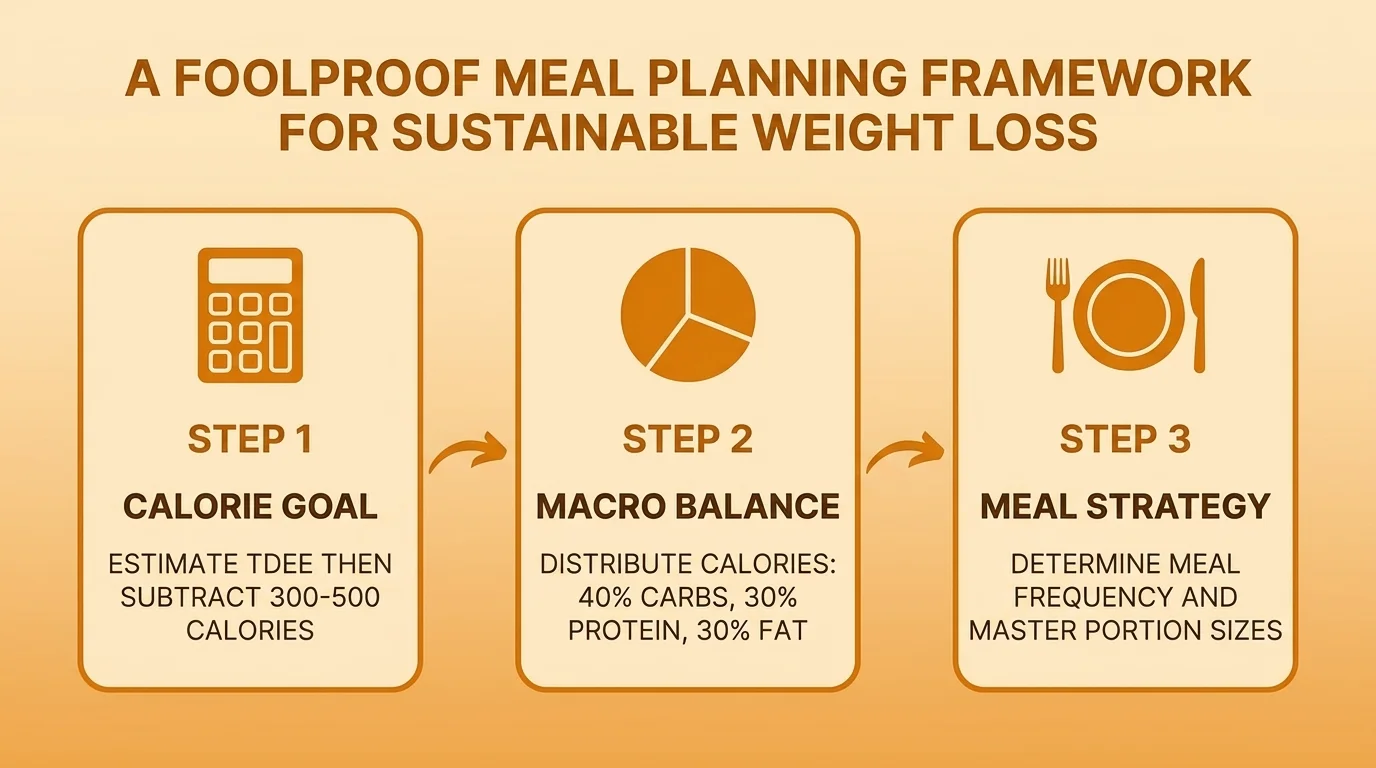
A solid starting split for weight loss is 40% carbohydrates, 30% protein, and 30% fat. At 1,800 calories, that works out to roughly:
- 180g carbohydrates (oats, rice, sweet potatoes, fruit)
- 135g protein (chicken, fish, eggs, lentils, Greek yogurt)
- 60g fat (olive oil, avocado, nuts, fatty fish)
Protein is the most important lever. It keeps you full longer than carbs or fat, and it protects muscle mass while you're in a deficit. If you hit your protein target and everything else is roughly in range, you're doing well. Use the calorie and macro calculator to get numbers tailored to your specific goal.
What counts as good protein for weight loss?
| Food | Serving size | Protein | Approximate calories |
|---|---|---|---|
| Chicken breast (cooked) | 150g | ~46g | ~250 cal |
| Canned tuna (in water) | 1 can (142g drained) | ~33g | ~150 cal |
| Greek yogurt (plain, 2%) | 200g | ~18g | ~130 cal |
| Eggs | 2 large | ~12g | ~140 cal |
| Lentils (cooked) | 200g | ~18g | ~230 cal |
| Cottage cheese (low-fat) | 200g | ~22g | ~180 cal |
| Salmon fillet (cooked) | 150g | ~33g | ~310 cal |
Step 3: Build your plate the right way
You've got your numbers. Now you need to turn them into actual food. The plate method skips the math entirely and works just as well for most people.
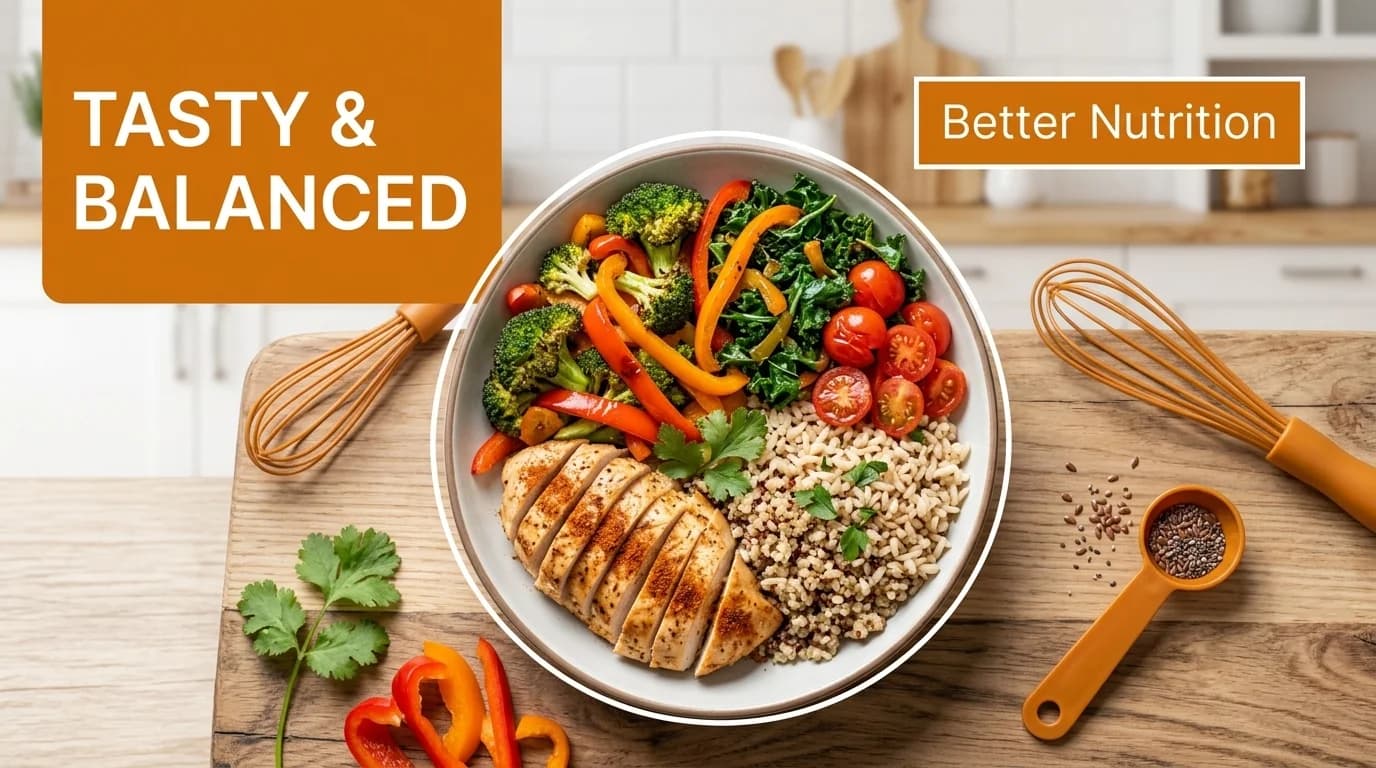
Divide your plate visually into three sections at every meal:
- Half the plate: non-starchy vegetables. Broccoli, leafy greens, bell peppers, cucumber, asparagus, zucchini. These are high in fiber and water, low in calories. They add volume so you actually feel full.
- One quarter: lean protein. Chicken, fish, tofu, lentils, eggs. Non-negotiable for satiety and preserving muscle while losing fat.
- One quarter: complex carbohydrates. Brown rice, quinoa, sweet potato, whole-wheat pasta. These provide energy and keep blood sugar stable rather than spiking it.
Add a small amount of healthy fat — a drizzle of olive oil, a few slices of avocado, a sprinkle of nuts — and you've got a genuinely complete meal. No food scale required.
Plate method vs. calorie counting: which is better?
| Approach | Best for | Effort level | Accuracy |
|---|---|---|---|
| Plate method | Beginners, people who hate tracking | Low | Moderate (can still overeat calorie-dense foods) |
| Calorie counting | People who want precise control | High | High (when done honestly) |
| Macro tracking | People with specific body composition goals | High | High |
| Portion control by hand | People eating out frequently | Low-medium | Low-moderate |
Neither approach is wrong. The one you'll actually use consistently is the right one.
Step 4: The 7-day meal plan
This is a starting point, not a prescription. Swap anything that doesn't appeal to you — the structure matters more than the specific meals. Notice how it reuses ingredients across the week to cut down on prep time and grocery spend.
| Day | Breakfast (~350 cal) | Lunch (~450 cal) | Dinner (~450 cal) | Snack (~175 cal) |
|---|---|---|---|---|
| Monday | Oats with berries and a tablespoon of almond butter | Grilled chicken salad with olive oil and lemon | Turkey meatballs with zucchini noodles and tomato sauce | Apple with almond butter |
| Tuesday | 2 scrambled eggs, handful of spinach, slice of rye toast | Leftover turkey meatballs over brown rice | Baked cod with roasted broccoli and lemon | Greek yogurt (plain) |
| Wednesday | Greek yogurt with granola and sliced banana | Quinoa bowl with black beans, corn, avocado, lime | Chicken and vegetable skewers with tzatziki | Handful of walnuts |
| Thursday | Protein smoothie: banana, spinach, protein powder, milk | Leftover chicken skewers in a whole-wheat wrap | Red lentil soup with a side of cucumber slices | Hard-boiled egg with hot sauce |
| Friday | Avocado on whole-wheat toast, 1 egg poached | Tuna salad in lettuce wraps with cherry tomatoes | Lean beef stir-fry with broccoli and brown rice | Cottage cheese with cucumber |
| Saturday | Protein pancakes with fresh berries | Hummus plate with raw veggies and a boiled egg | Turkey burger (lettuce wrap) with sweet potato wedges | Carrots and hummus |
| Sunday | Cottage cheese with mixed fruit | Leftover beef stir-fry over cauliflower rice | Roast chicken thighs with roasted root vegetables | Rice cakes with peanut butter |
At roughly 1,400–1,425 calories total per day (three meals plus one snack), this sits in the deficit range for most moderately active adults. Add a second snack if your target is higher. If you want a plan generated specifically around your calorie goal, food preferences, and schedule, Kitchendary builds one in under 60 seconds.
A typical day in practice
Here's what Wednesday might actually look like, from waking up to the end of the day:
- 7:30am: Greek yogurt with granola and a sliced banana. Takes two minutes. No cooking.
- 10:30am: Small handful of walnuts at your desk. Keeps you from arriving at lunch ravenous.
- 12:30pm: Quinoa bowl with black beans, frozen corn (microwaved), half an avocado, lime juice, and a pinch of cumin. Prep time is about seven minutes if the quinoa is already cooked.
- 7:00pm: Chicken skewers you prepped on Sunday, warmed up in five minutes, with a dollop of tzatziki from the fridge.
Total active cooking on Wednesday: maybe 15 minutes. This is what strategic prep buys you.
Step 5: Make meal prep actually work
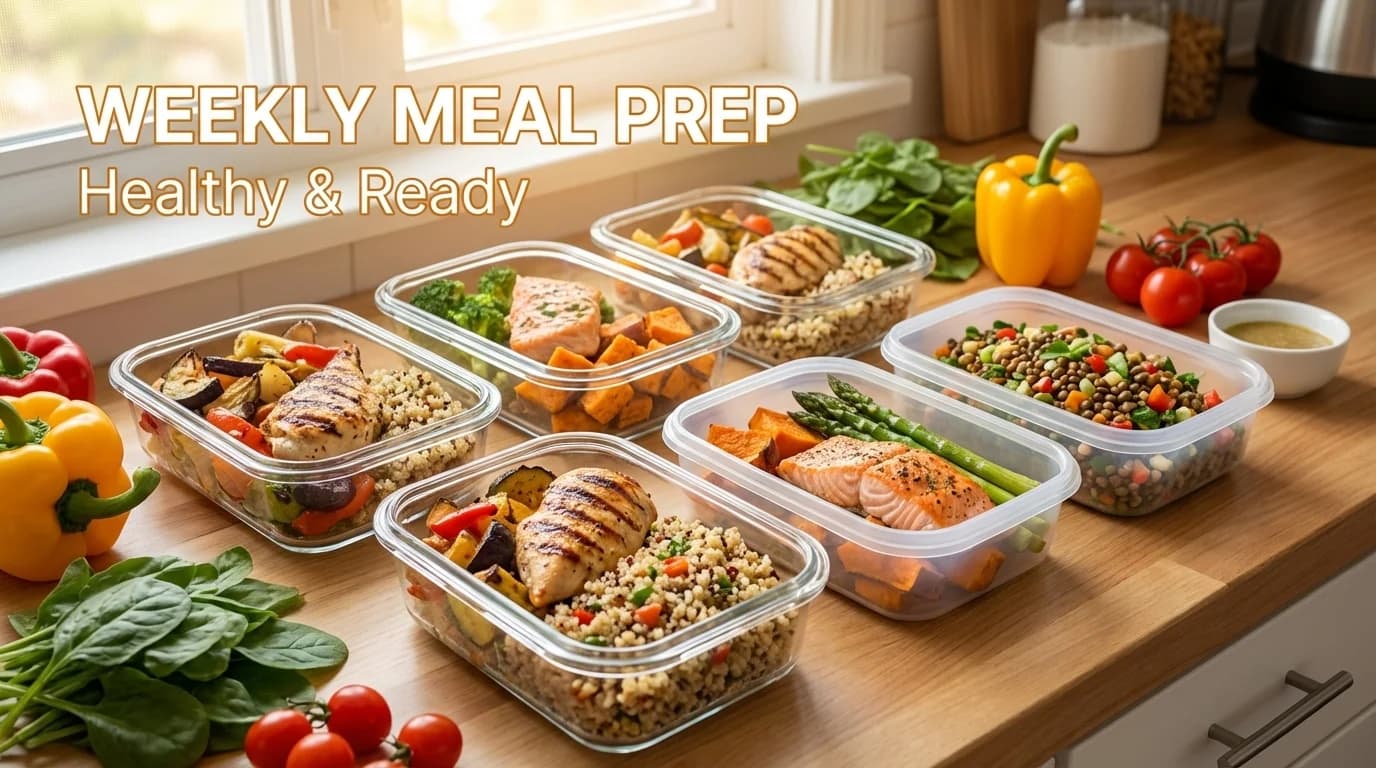
A meal plan only works if the food is actually ready when you're hungry. That's the entire point of prep. It doesn't have to consume your weekend — an hour of focused effort on Sunday sets you up for most of the week.
Three approaches that actually work for different lifestyles:
- Batch cooking staples. Cook a large pot of grains (quinoa, brown rice), roast two trays of vegetables, and grill or bake a batch of protein. Mix and match all week. This is the lowest-overhead option and the easiest to start with.
- Fully assembled meals. Pre-portion complete meals into containers. More upfront work, but zero decision-making during the week. Good for people who find themselves too tired to assemble things after work.
- Ingredient prep only. If you like cooking fresh, just do the boring parts ahead of time: chop vegetables, measure out spices, marinate protein overnight. Cuts nightly cooking from 30 minutes to about 10.
The real value of prep isn't the time you save — it's the decision you made in advance. On a tired Tuesday night, you're not choosing between your meal plan and delivery. The healthy option is already in the fridge.
Three things that make prep sessions go smoothly:
- Build your grocery list directly from your meal plan before you shop. Never wing it at the store.
- Use airtight containers. Glass ones work in the oven and microwave both, which saves dishes.
- Pick one consistent prep window each week and treat it like an appointment. Sunday afternoons work for most people, but Saturday morning is fine too.
If you have leftovers in the fridge but aren't sure what to make with them, the Kitchendary meal from fridge tool gives you recipe ideas based on whatever you actually have on hand.
Overcoming the obstacles that derail most people
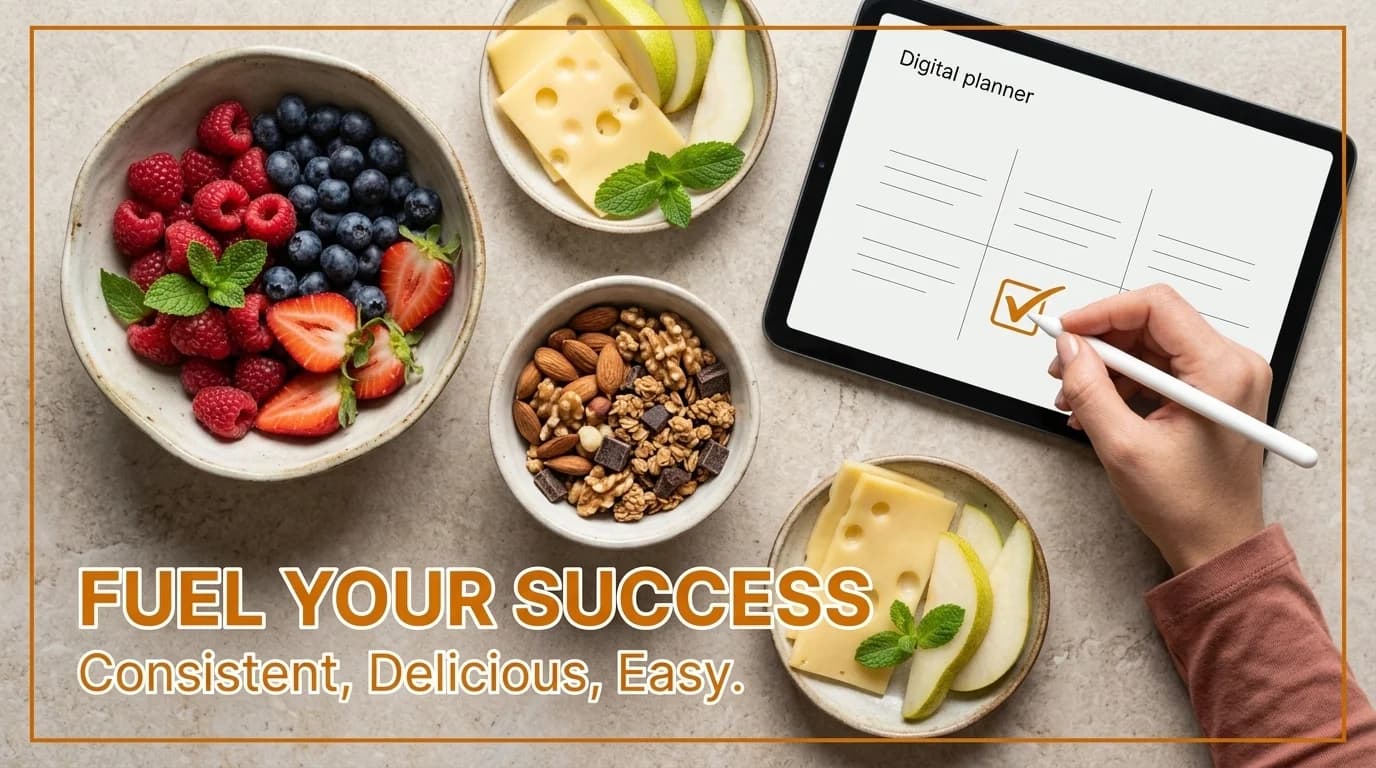
A perfect week is rare. Birthday dinners happen. Work gets chaotic. You get sick and eat crackers for three days. The goal isn't to eliminate these disruptions — it's to handle them without letting one bad week turn into a complete reset.
Eating out without blowing your plan
Restaurants aren't the enemy. A few adjustments make eating out manageable:
- Check the menu before you go. Deciding when you're not hungry yet is always easier than deciding when you're starving and the bread basket is already on the table.
- Ask for sauces on the side. Restaurant portions of dressing and sauce can add 200–400 calories without you noticing.
- Build around protein and vegetables. Most menus have a grilled fish, a steak, or a chicken dish. Ask for a double serving of vegetables instead of fries. Restaurants do this all the time — just ask.
- Eat a small protein-rich snack before a party or event. A handful of almonds or a Greek yogurt 30 minutes before takes the edge off hunger and makes it easier to pace yourself.
When the scale stops moving
Plateaus happen to almost everyone after four to eight weeks. Your body has adapted. This is biology, not failure.
Common fixes, in order of least to most disruptive:
- Check that portions haven't crept up. This is the most common culprit — what started as 150g of chicken is now 220g.
- Add 15–20 minutes of walking per day. Small increases in movement add up to a meaningful weekly deficit.
- Recalculate your TDEE. As you lose weight, your maintenance calories drop. What created a 400-calorie deficit three months ago may now be closer to 200.
- Drop calories by 100–150 per day. A minor adjustment, not a dramatic cut.
The non-scale wins worth tracking
The scale measures water retention, food in your stomach, muscle gain, and fat loss all at once — it's a noisy signal. Pay attention to the quieter ones too:
- Clothes fitting differently (specifically around the waist)
- Better energy through the afternoon without needing caffeine
- Sleeping more soundly
- Shorter recovery time after exercise
- Fewer food cravings and hunger spikes
These show up before the scale catches up. They're also the changes that actually improve your daily life — and they're worth noting when they do.
FAQ
Can I still eat my favorite foods on a weight loss meal plan?
Yes. Restricting everything you enjoy is the fastest way to quit. The 80/20 approach works well for most people: eat mostly whole, nutrient-dense foods, and leave room for the things you actually like. One pizza slice doesn't erase a week of progress. Consistency over months is what moves the needle, not perfection on any given day.
What if I stop seeing results after a few weeks?
Plateaus happen to almost everyone. As you lose weight, your body needs fewer calories to maintain itself, so what worked at the start may not be enough to keep progress moving. Try recalculating your calorie target, adding a short walk each day, or checking that portion sizes haven't crept up. Usually a small tweak — not a complete overhaul — is all it takes.
Do I need expensive health foods to lose weight?
No. Some of the most effective weight loss foods are the cheapest ones: eggs, canned fish, dried lentils, frozen vegetables, oats, and bananas. The biggest cost of a healthy diet is time, not money. Batch cooking staples once a week keeps costs low and removes the daily temptation to order takeout.
How much protein should I eat per day for weight loss?
A common target is 0.7–1 gram of protein per pound of body weight. At 1,800 calories, that works out to roughly 120–160 grams for a 160-pound person. Higher protein intake helps preserve muscle while in a deficit and reduces hunger more effectively than carbs or fat do. If tracking macros feels too tedious, aim to include a palm-sized portion of protein at every meal.
Is it better to eat three meals a day or six smaller ones?
Research doesn't favor one over the other for fat loss. What matters is total daily calories and protein. Three meals works well for most people because it's simpler to plan and track. Some people do better with an extra snack or two to avoid going too long without eating and then overeating at the next meal. Pick the pattern you can sustain, not the one that sounds most scientific.