Weight loss meal prep for beginners comes down to three things: plan 3-4 simple meals, write a grocery list, and block 90 minutes on Sunday to cook in batches. Lean proteins, complex carbs, and a lot of vegetables do most of the heavy lifting — they fill you up without blowing your calorie target. Once that structure is in place, healthy eating stops being a daily decision and becomes your default.
This guide covers everything you need to get started — from calculating your targets and building your first meal plan, to a step-by-step Sunday prep session and a realistic 5-day plan you can use this week. No fancy recipes, no expensive equipment.
Why is meal prep important for weight loss?
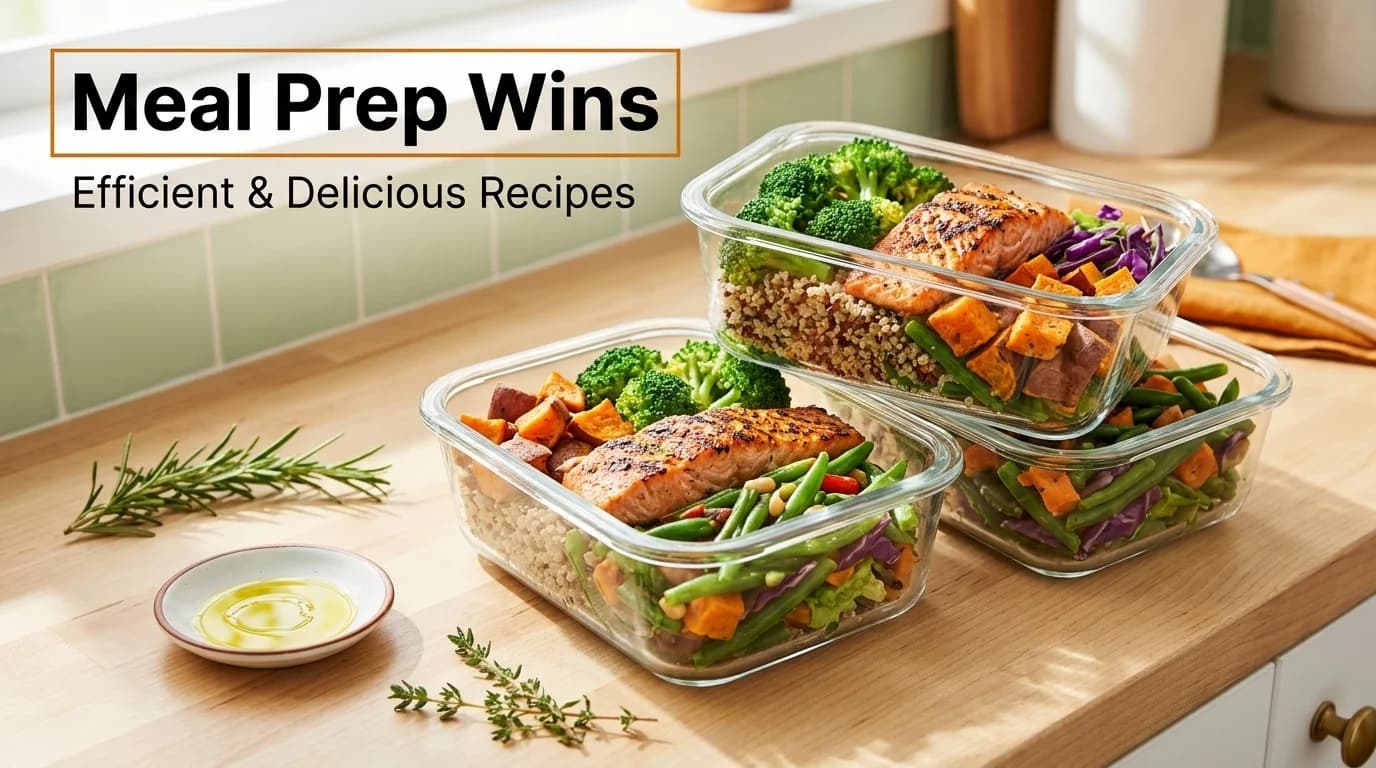
Meal prep is a defense system, not a diet. The real enemy of weight loss isn't bad willpower — it's the 6 PM moment when you're exhausted, hungry, and the takeout app is right there. When cooked food is already waiting in your fridge, that moment loses its power.
The three things meal prep actually fixes:
- Portion control: You decide exactly how much protein, carbs, and fat go into every meal — at a calm moment before you're hungry, not while standing in front of the fridge starving.
- Consistency: Eating on a regular schedule keeps blood sugar stable, which means fewer energy crashes and less snacking between meals.
- Time and money: One prep session saves 3-4 hours of weeknight cooking. Shopping with a list cuts impulse buys and food waste simultaneously.
A recent IFIC survey found that 52% of Americans followed a specific eating pattern in the past year, and 43% said weight loss was their main motivation. Read the full research on food and health trends.
Before anything else, get your personal calorie target. A calorie deficit calculator gives you a concrete number to build your plan around — far more useful than a generic "eat less" approach.
How do I create my first meal plan for weight loss?
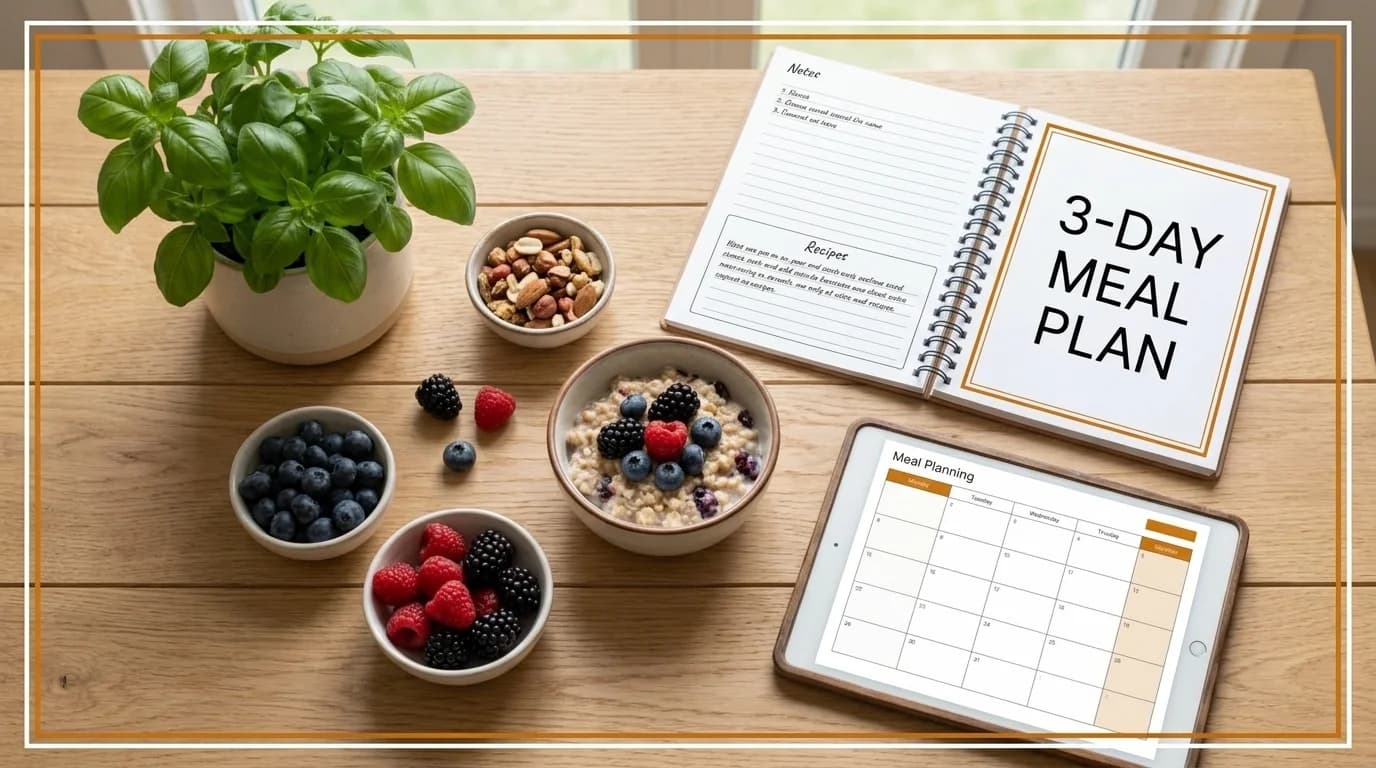
Most people get stuck here because they try to plan every meal for seven days and immediately feel overwhelmed. Don't do that. Start with three days. A simple, repeatable structure beats a perfect plan you abandon by Tuesday.
Calculate your calorie and macro targets first
Weight loss requires a calorie deficit — consuming less than you burn. That's not a restriction mindset; it's just math. The trick is finding a deficit you can actually sustain (typically 300-500 calories below your maintenance level).
Once you have your calorie goal, macronutrients determine the quality of that deficit:
- Protein: The most important macro for weight loss. It keeps you full, preserves muscle, and has the highest thermic effect (your body burns more calories digesting it). Aim for 0.7-1g per pound of bodyweight. Sources: chicken breast, fish, eggs, Greek yogurt, tofu, lentils.
- Carbohydrates: Your main fuel source. Go for complex carbs — quinoa, sweet potatoes, oats, brown rice — for energy that doesn't spike and crash.
- Fats: Essential for hormones and satiety. Avocados, nuts, olive oil, and fatty fish cover this well. Don't cut fat too aggressively — it backfires on hunger.
Use a calorie and macro calculator to get your specific numbers in a few minutes. Also worth reading: our guide on how to calculate a calorie deficit if you want to understand the math behind it.
Structure your meals with the 3+1 model
Three main meals and one snack. That's it for your first few weeks. The point isn't rigidity — it's creating a reliable pattern so you're never caught off guard and reaching for whatever's convenient.
A simple structure eliminates the daily "what should I eat?" headache. That question, asked when you're already hungry, is where most plans fall apart.
For more detail on building your first plan, see our guide on easy meal plans for weight loss.
Starter 5-day meal plan (~1,500 calories/day)
Here's a practical beginner plan for Monday through Friday. Every meal uses simple ingredients, and the structure intentionally reuses what you cook on Sunday. Calories are approximate.
| Day | Breakfast (~350 cal) | Lunch (~450 cal) | Dinner (~550 cal) | Snack (~150 cal) |
|---|---|---|---|---|
| Monday | Overnight oats with berries and chia seeds | Sheet pan chicken with roasted broccoli and quinoa | Sheet pan chicken leftovers + extra veg | Greek yogurt with a handful of almonds |
| Tuesday | Scrambled eggs with spinach and whole-wheat toast | Quinoa salad with chickpeas and feta | Turkey meatballs with zucchini noodles | Apple slices with peanut butter |
| Wednesday | Overnight oats with berries and chia seeds | Turkey meatball leftovers with brown rice | Lentil soup (batch cooked Sunday) | Hard-boiled egg and cucumber slices |
| Thursday | Scrambled eggs with spinach and whole-wheat toast | Lentil soup leftovers + side salad | Baked cod with sweet potato and green beans | Greek yogurt with a handful of almonds |
| Friday | Overnight oats with berries and chia seeds | Baked cod leftovers with quinoa and spinach | Chicken stir-fry with bell peppers and brown rice | Small protein bar (~150 cal) |
Notice the pattern: overnight oats appear three mornings (make a batch Sunday), leftovers show up at lunch the next day, and the lentil soup stretches across two meals. That's the whole system — cook once, eat twice.
Want a ready-made grocery list to go with this? Our healthy meal prep grocery list guide breaks it down by category.
What does a simple 3-day starter plan look like?
If five days feels like too much to start, here's a stripped-down 3-day version at around 1,600 calories. The goal is proof of concept — building your confidence before scaling up.
| Day | Breakfast | Lunch | Dinner | Snack |
|---|---|---|---|---|
| Day 1 | Overnight oats with berries and chia seeds | Leftover lemon herb chicken and veggies | Sheet pan lemon herb chicken and veggies | Greek yogurt with almonds |
| Day 2 | Scrambled eggs with spinach and whole-wheat toast | Quinoa salad with chickpeas and feta | Turkey meatballs with zucchini noodles | Apple slices with peanut butter |
| Day 3 | Overnight oats with berries and chia seeds | Leftover turkey meatballs | Lentil soup (batch cooked) | Small protein bar |
What gear and groceries do you actually need?
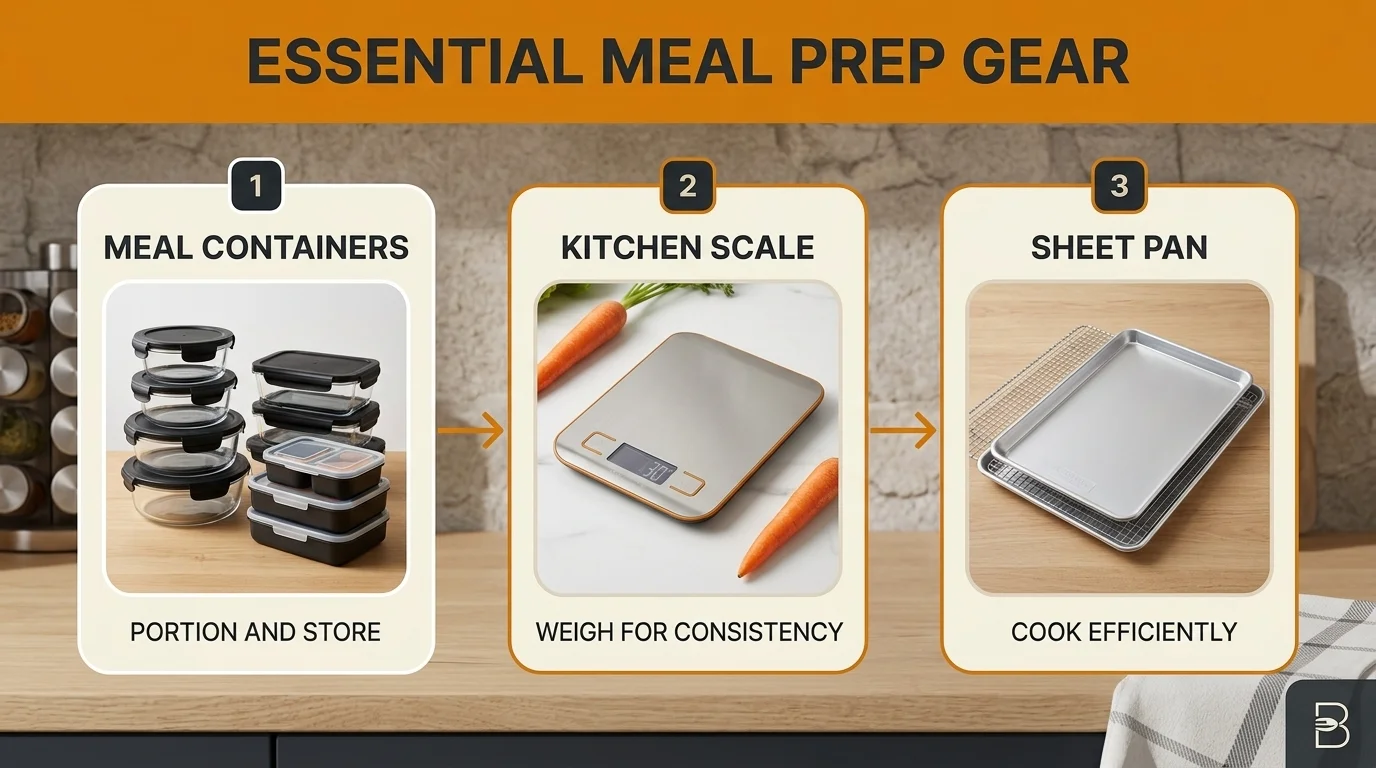
You don't need a chef's kitchen. You need a few things that work reliably and don't annoy you every time you use them.
Essential equipment vs. nice to have
| Item | Essential or nice to have? | Why it matters |
|---|---|---|
| Glass meal prep containers (5-6) | Essential | Microwave-safe, stain-resistant, last for years. Cheap plastic warps and smells. |
| Large baking sheet (half sheet pan) | Essential | Roast a week's worth of protein and veg in one go. Single most-used piece of equipment. |
| Kitchen scale | Essential | Eyeballing portions is one of the most common reasons calorie targets fail. A scale takes 5 seconds and removes all guesswork. |
| Medium saucepan | Essential | For cooking grains and soups in bulk. |
| Instant Pot or slow cooker | Nice to have | Hands-off batch cooking for proteins and stews. Useful once you're past week 2. |
| Mandoline slicer | Nice to have | Speeds up vegetable prep. Not necessary when starting out. |
| Food processor | Nice to have | Good for sauces and dips, but a knife works fine for beginner recipes. |
A food scale isn't about being obsessive. It's about being accurate. Guessing portion sizes is one of the fastest ways to stall weight loss progress even when you're eating "clean."
Build a smart grocery list
Going to the store without a list means you'll forget something and buy things you don't need. Organize your list to match the store layout — produce, then dry goods, then refrigerated — so you're not doubling back.
- Lean proteins: Chicken breast, turkey mince, salmon or cod fillets, eggs, Greek yogurt. For plant-based: tofu, lentils, chickpeas.
- Complex carbs: Quinoa, brown rice, sweet potatoes, oats. Buy in bulk bags — it's dramatically cheaper per serving.
- Vegetables: Broccoli, bell peppers, spinach, zucchini, carrots. These hold up well after cooking and work in almost any meal.
- Healthy fats: Avocados, almonds or walnuts, chia seeds, extra virgin olive oil.
You can also use tools that figure out what to cook based on what's already in your kitchen. The meal from fridge tool is useful on weeks when you have random ingredients you need to use up.
Your first Sunday prep session: a step-by-step 90-minute guide
This is what easy weight loss meal prep actually looks like in practice. Block 90 minutes on Sunday afternoon. That's all you need for your first session.
Before you start, pull everything out of the fridge and get your containers ready. A messy setup costs more time than the cooking itself.
| Time | What you're doing | Why this order |
|---|---|---|
| 0-10 min | Preheat oven to 400°F. Season chicken breasts with olive oil, salt, garlic powder, and paprika. Get a pot of water boiling for grains. | Longest tasks go first. You're not waiting around — the oven and stove are working while you do everything else. |
| 10-25 min | Chop broccoli, bell peppers, and zucchini. Toss with olive oil and salt on your large baking sheet. Slide chicken and veg into the oven. Add quinoa or brown rice to the boiling water. | Everything is in the oven and on the stove. Your active work for the next 25 minutes is light. |
| 25-45 min | While the oven runs, assemble overnight oats in jars (oats, milk, chia seeds, berries). Hard-boil a batch of eggs on the second burner. Portion out snack bags — almonds, sliced cucumber. | No-cook and quick tasks fill the passive cooking window. You're making 3-4 days of breakfasts and snacks right now. |
| 45-60 min | Pull chicken and veg from the oven. Start lentil soup on the stovetop (canned lentils cut this to 20 minutes). Drain and rinse the cooked grains. | The oven is freeing up. Soup can simmer while you handle the next steps. |
| 60-80 min | Let everything cool on the counter (do not put hot food straight into containers). Wash and prep any fresh salad greens or raw veg for the week. | Cooling is non-negotiable — it prevents condensation, sogginess, and bacterial growth. |
| 80-90 min | Assemble and label containers. Refrigerate meals for days 1-3. Freeze anything for day 4-5 if needed. | Done. Five days of meals, snacks, and breakfasts — finished before Sunday evening. |
That's it for week one. You'll find this gets faster once the process is familiar. By week three, most people are down to 60-70 minutes.
How to scale up after the first few weeks
Once you've done two or three Sunday sessions and the routine feels comfortable, it's time to expand slightly. Not dramatically — the point is sustainable progress, not jumping to seven-day plans immediately.
Here's a simple progression:
- Week 1-2: Three-day plan with 2-3 recipes. Focus on getting the process down, not variety. Same meals are fine.
- Week 3-4: Extend to five days. Add one new recipe. Try cooking two proteins in the same session (e.g., chicken in the oven while turkey cooks on the stovetop).
- Month 2: Introduce a mid-week mini-prep on Wednesday — 20 minutes to replenish snacks, prep a quick protein, and refresh any veg that's running low. This closes the freshness gap for the second half of the week.
- Month 3+: Seven-day planning with ingredient overlap across multiple meals. At this stage you're thinking like a chef, not a first-timer.
See the full beginner progression guide: meal prep for beginners and meal prep tips for beginners.
What is an efficient cooking session plan?
The two-hour goal isn't about rushing. It's about multitasking with purpose instead of cooking one thing at a time and waiting around. Your oven, stovetop, and counter space can all run simultaneously.
The order of operations is always the same: slowest things first.
- Fire up the oven: Chicken and heartier veg (broccoli, sweet potatoes, bell peppers) go in first. They need 25-35 minutes and require minimal attention.
- Start grains: Quinoa or brown rice on the stovetop while the oven runs. Set a timer and walk away.
- Fill the downtime: Chop fresh veg for salads, portion snacks, assemble overnight oats, mix any dressings.
- Cool completely before packing: This is the step most beginners skip. Hot food in sealed containers creates condensation, which makes everything soggy and accelerates spoilage.
Food safety and storage
Bacteria multiplies fast at room temperature. The practical rule: cooked food should be in the fridge within two hours of finishing cooking. Don't leave it out on the counter to cool for three hours — spread it across a few containers and put them somewhere with airflow to speed things up.
One tip worth internalizing: Keep dressings, sauces, and anything wet in separate small containers. Add them right before eating. It takes five seconds and makes a huge difference in how good your food tastes on day three.
Meal prep storage guide
| Food item | Refrigerator (days) | Freezer (months) | Reheating tip |
|---|---|---|---|
| Cooked chicken/beef | 3-4 | 2-3 | Microwave with a damp paper towel or reheat on the stovetop. |
| Cooked fish | 2-3 | 1-2 | Oven or air fryer at low heat — microwave makes fish rubbery. |
| Roasted vegetables | 4-5 | 3-4 | Air fryer or oven to restore crispiness. |
| Cooked grains (rice, quinoa) | 4-6 | 2-3 | Sprinkle with water before microwaving to add moisture back. |
| Soups and stews | 3-4 | 3-4 | Stovetop for best texture — microwave works fine too. |
| Hard-boiled eggs | 5-7 (in shell) | Not recommended | Best eaten cold. Don't microwave in shell. |
Most cooked proteins last 3-4 days refrigerated. If you've prepped for a full week, freeze anything you won't eat by Thursday. It takes two seconds to move a container and keeps the food safe and fresh.
Can technology actually make beginner meal prep for weight loss easier?
The honest answer is: yes, for the planning part. The hardest part of meal prep isn't cooking — it's the 20 minutes of figuring out what to cook, checking what calories that adds up to, and building a grocery list that doesn't leave you buying duplicates.
AI meal planning tools handle that upfront work. Kitchendary generates a complete 7-day meal plan in under 60 seconds based on your calorie targets, dietary preferences, and what cuisines you actually like. The grocery list is automatically built from the plan and organized by store section.
What a personalized plan actually includes
The useful features aren't the flashy ones. What matters day-to-day:
- Diet filters that actually work: Vegan, keto, gluten-free, dairy-free — the system adjusts every recipe without you manually substituting ingredients.
- Ingredient exclusions: Hate cilantro? Allergic to shellfish? Set it once, never see those ingredients again.
- Ingredient overlap across meals: The AI plans meals that reuse ingredients, so you buy one bunch of kale and it shows up in three different meals instead of buying three different vegetables that each go bad after one use.
- Quick recipe filters: Filter for meals under 30 minutes when you're busy. The plan adapts to your week, not the other way around.
The global diet and nutrition app market was valued at USD 9.46 billion in 2023 and is projected to reach USD 40.07 billion by 2032. See the industry growth data. The adoption curve is steep because the tools genuinely save time.
If you're also experimenting with eating windows or time-restricted feeding alongside your meal prep, check out our intermittent fasting calculator for guidance on how to structure meals around your schedule.
FAQ
How do I keep my meals from getting boring?
The best way to avoid boredom is to prep ingredients, not just full meals. Cook batches of protein, carbs, and veggies, then mix and match them differently each day. Using different sauces and spices is another easy way to change the flavor profile without much extra work.
What about snacks and cravings?
Prepping snacks is just as important as prepping meals. Portion out healthy options like almonds, Greek yogurt, or hard-boiled eggs into grab-and-go containers. This prevents mindless grazing and ensures you have a smart choice ready when hunger strikes.
How do I handle eating out or social events?
A meal plan should be flexible enough for real life. Check the restaurant's menu online beforehand to pick a healthy option, and don't be afraid to ask for simple swaps like a side salad instead of fries. One meal out won't derail your progress; just get back on track with your next planned meal.
How long does beginner meal prep take each week?
Your first session will probably run 90 minutes to 2 hours. Once you have a few weeks under your belt and know your go-to recipes, most people get it down to 60-75 minutes. The time investment shrinks fast as the process becomes automatic.
Do I need to prep all 7 days at once?
Not at all. Starting with 3-4 days is plenty for beginners. Prep Sunday for Mon-Wed, then do a quick 20-minute top-up on Wednesday evening for the rest of the week. This keeps food fresher and makes the Sunday session feel much less daunting.