A cutting diet is a targeted approach to fat loss built around acaloric deficit. The goal is to lose fat without sacrificing the muscle you've worked to build. Starving yourself doesn't work — you need to get your calorie count right, balance your macros, and pay attention to when you eat.
Building the Foundation of Your Cut
Before writing a grocery list or looking up recipes, you need to lay the groundwork. "Eating less" is not a plan — it's a fast track to losing muscle and getting frustrated. A proper cut is a more deliberate process. The goal is to nudge your body into a fat-burning state while giving it reason to hold onto lean muscle mass.
Getting this foundation right is what determines whether your cut lasts two weeks or twelve.
This infographic breaks down the essential steps to get you started.
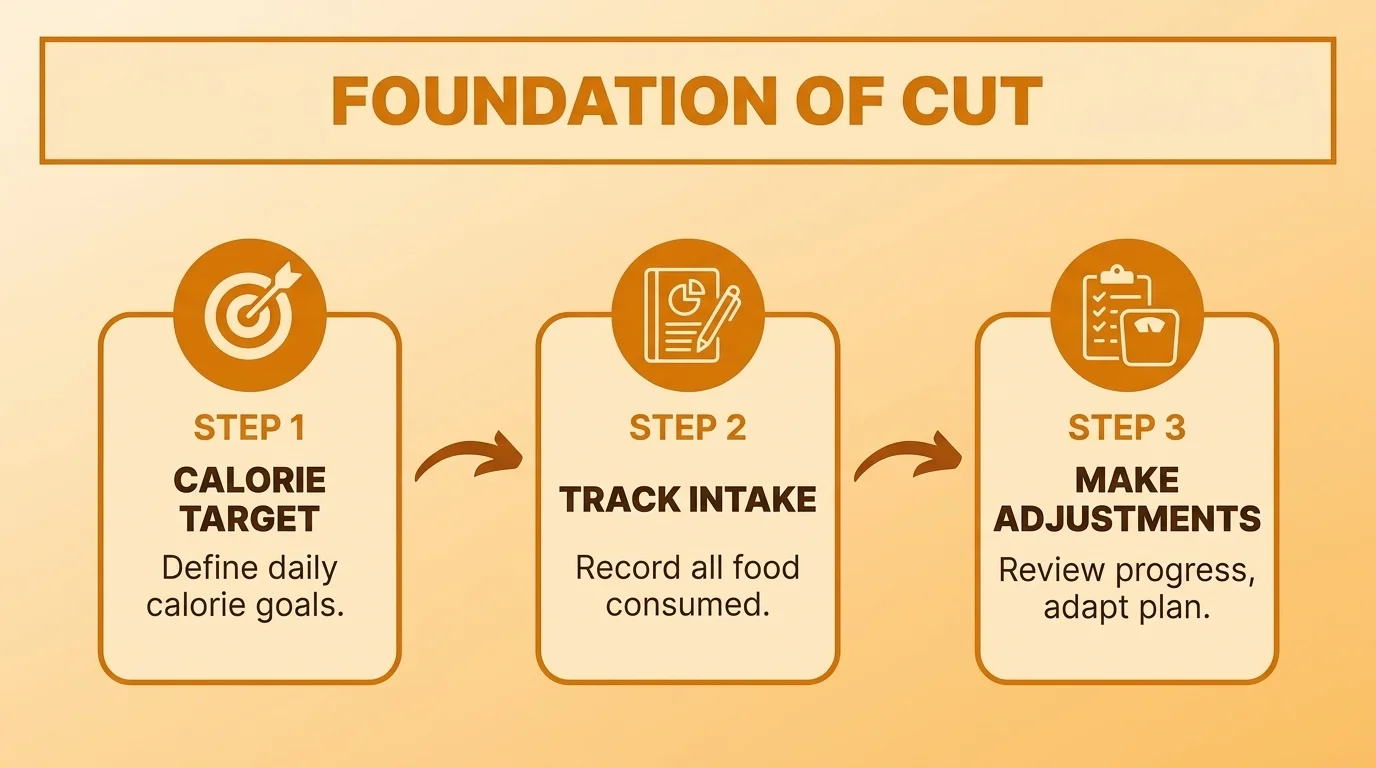
Seeing the entire process — from setting your goals to planning your meals — shows how each step connects to the next.
The Science of a Caloric Deficit
Every fat loss plan rests on one principle: thecaloric deficit. You need to consistently eat fewer calories than your body uses for energy. When your body doesn't get enough fuel from food to power everything from your workouts to basic functions, it taps into stored energy — primarily body fat.
But creating this deficit requires balance. Slashing calories drastically backfires. For most people, a moderate deficit of around300-500 caloriesbelow daily maintenance is the right range. This encourages your body to use fat for fuel without triggering a starvation response, which can slow your metabolism and cause muscle loss.
Setting Realistic and Sustainable Goals
One of the biggest pitfalls is setting wildly unrealistic goals. Trying to drop ten pounds in a week isn't just unhealthy — it's a guaranteed path to burnout. A safe, sustainable rate of fat loss is about1-2 pounds per week.
Instead of fixating on the scale, set goals based on your performance and habits.
- Be Consistent:Aim to hit your calorie and protein targets six out of seven days a week. Consistency beats perfection.
- Maintain Performance:Preserving your strength in the gym is a strong indicator that you're holding onto muscle. Focus on that.
- Stick to the Plan:Commit to your cutting diet for a set timeframe, like 12 weeks, before making major changes.
A well-structured cut isn't a sprint; it's a marathon with a clear finish line. Your mindset and goal-setting are just as important as the food on your plate.
Three Fundamentals of an Effective Cut
Every effective cut depends on three things. Get these right and the rest falls into place.
- Precise Calorie Control:This is non-negotiable. You have to know your numbers. Figure out your maintenance calories and your target deficit so you're consistently in a position to lose fat.
- Smart Macronutrient Ratios:Not all calories are equal. A high-protein diet is essential for holding onto muscle. Carbs fuel your workouts, and healthy fats support hormone function.
- Strategic Nutrient Timing:While total daily intake matters more,whenyou eat can make a difference. Timing your carbs around workouts, for example, can give you a noticeable boost in performance and recovery.
Once you have these in place, you can build a plan that fits your body and your schedule.
Dialing in Your Personal Calorie and Macro Needs
A one-size-fits-all cutting plan might get you started, but it won't carry you to the finish line. True progress comes from tailoring your nutrition toyourbody. Your age, activity level, and metabolism all play a role — so stop guessing and build a blueprint that actually fits.
Start by figuring out yourTotal Daily Energy Expenditure (TDEE). This is the total number of calories you burn each day — from intense workouts down to basic functions like breathing. It represents your baseline for maintenance calories, or what you need to eat to stay at your current weight.
There are plenty of free TDEE calculators online. Plug in your details and you'll get a solid estimate to work from.
Creating the Right Caloric Deficit
Once you know your TDEE, you can set a calorie target that signals your body to burn fat without triggering the muscle-loss response that comes with extreme restriction.
For most people, a deficit of300-500 caloriesbelow your TDEE hits the right balance. This gentle reduction encourages your body to use fat stores for energy without triggering muscle loss or a stalled metabolism.
So if your TDEE is2,500 calories, your cutting target would land somewhere between2,000 and 2,200 caloriesper day. This approach typically produces steady fat loss of about1 pound per week. A typical cutting phase runs anywhere from4 to 24 weeks, giving you enough time to make meaningful progress while protecting muscle.
Setting Your Macronutrient Targets
Calories are just one part of the equation.Wherethose calories come from — your macronutrients (protein, carbs, and fats) — is what actually changes your physique. The right macro split preserves muscle and fuels your workouts.
Getting your macros right is the difference between simply losing weight and changing your body composition. Protein is your primary defense against muscle loss during a cut.
Here's how to set up your macros.
1. Make Protein Your Priority
Protein is the most important macro when you're cutting. It protects lean muscle mass, keeps you feeling full, and slightly raises your metabolism because your body burns more calories digesting it.
- Your Goal:Aim for1.0 to 1.2 grams of protein per pound of your target body weight.
- Example:If your goal is to be a lean 180 pounds, shoot for180-216 grams of proteinevery day. For meal ideas to hit that number, see our guide tohigh-protein meal plans.
2. Don't Fear the Fat
Cutting fats too low is a common mistake. Dietary fats are essential for hormone production, including testosterone, which is important for maintaining muscle mass.
- Your Goal:Allocate20-30% of your total daily caloriesto healthy fats.
- Example:On a 2,200-calorie diet, that's 440-660 calories from fat. Since fat has 9 calories per gram, you're looking at about49-73 grams of fatper day.
3. Fill the Gaps with Carbs
Carbohydrates are your body's preferred fuel source, especially for hard workouts. After setting your protein and fat targets, the remaining calories go to carbs.
- Your Goal:Use your remaining calories for carbohydrates.
- Example:Here's how it works with our 2,200-calorie plan:
- Protein: 180g x 4 cal/g = 720 calories
- Fat: 60g x 9 cal/g = 540 calories
- Remaining Calories for Carbs: 2,200 - 720 - 540 = 940 calories
- Total Carbs: 940 calories / 4 cal/g =235 grams of carbohydrates
Once you have your personal numbers, you may find your favorite recipes don't quite fit your new targets. Knowing how toscale recipeslets you adjust meals to hit your macros precisely, keeping your diet both effective and enjoyable.
Stocking Your Kitchen For Cutting Success
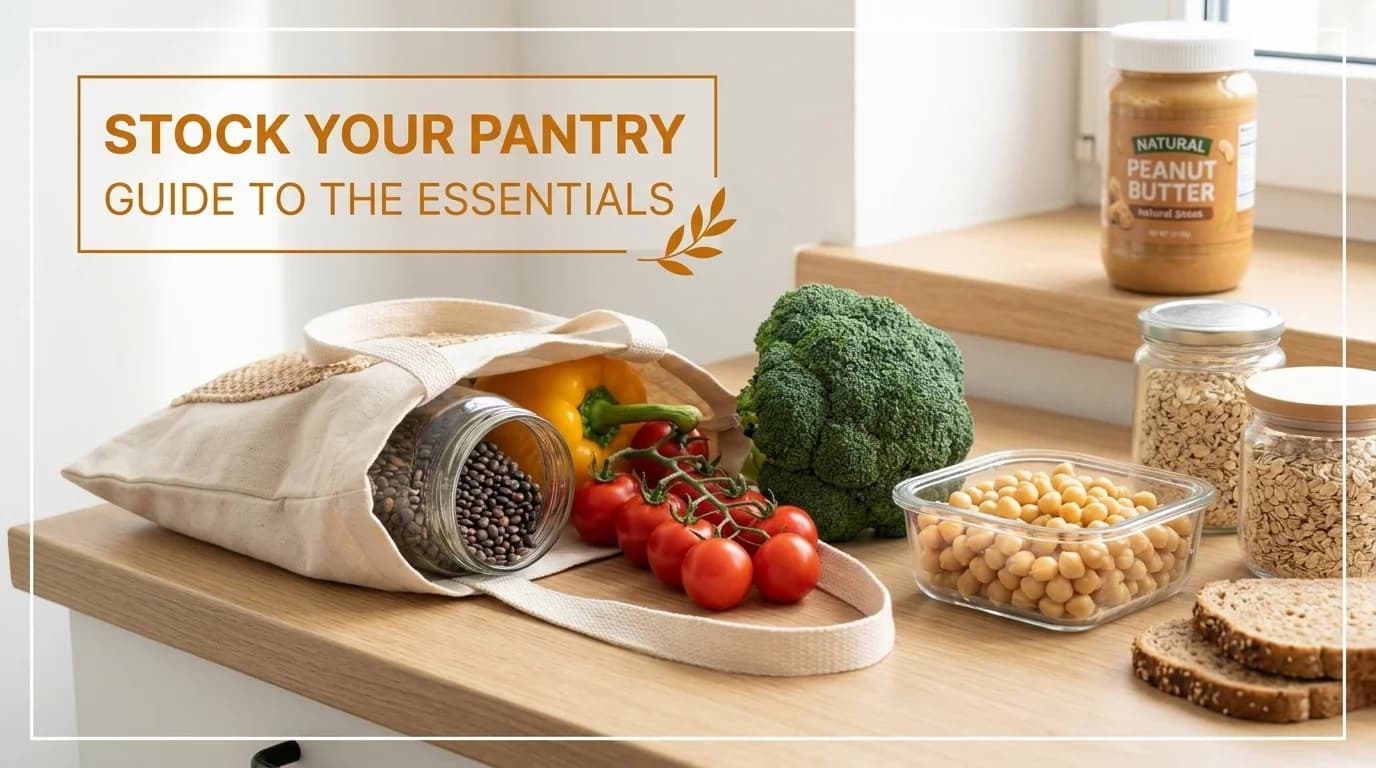
You've got your numbers — your personal calorie and macro targets are set. Now comes the practical part: turning those numbers into actual food. A successful cut isn't won through willpower alone. It's won in the kitchen.
Having the right foods on hand makes sticking to your plan much easier, long before hunger has a chance to send you in the wrong direction.
The research is consistent on this: restriction alone doesn't work. A better frame is filling your kitchen with foods that do a lot of nutritional work per calorie, so you're not constantly white-knuckling it between meals.
Building Your High-Protein Arsenal
Protein is your most important tool during a cut. It holds onto hard-earned muscle while you strip away fat. Your grocery list should lean heavily on lean, high-quality protein sources that give you the most nutrition per calorie.
Variety matters here. Eating the same thing every day is a recipe for boredom and falling off the plan. A mix of animal and plant-based proteins keeps meals interesting and ensures you're getting a full spectrum of amino acids.
Here are the staples worth keeping on hand:
- Lean Meats:Chicken breast, turkey breast, and lean ground turkey (93/7or leaner) are versatile and easy to prep in bulk.
- Fish:Salmon is a solid choice for its omega-3s, and canned light tuna is a quick, cheap protein source.
- Dairy & Eggs:Plain Greek yogurt, cottage cheese, and whole eggs are worth having every week. They work for breakfast, snacks, or adding protein to savory dishes.
- Plant-Based Options:Lentils, chickpeas, black beans, and tofu are high in both protein and fiber, which helps keep you full for longer.
Choosing Smart Carbohydrates For Energy
Carbs are not the enemy. Your body runs on them, especially during hard workouts. The difference is choosing therightkind — complex, slow-burning carbs that give you steady energy without a crash.
Timing matters here too. Eating most of your carbs in the window around your workout, both before and after, puts that fuel to work immediately for performance and recovery.
On a deficit, the type of carbs you eat — and when you eat them — affects both performance and how you feel day to day. Complex carbs timed around training make a noticeable difference.
Stock up on these:
- Whole Grains:Rolled oats, quinoa, and brown rice provide sustained energy.
- Starchy Vegetables:Sweet potatoes and butternut squash are filling and hold their own as a side dish.
- Legumes:Beans and lentils do double duty — fiber-rich carbs plus a solid dose of protein.
- Fruits:Berries, apples, and bananas are useful for a quick pre-workout energy boost. If you're running tighter on carbs, alow-carb plancan give you some ideas.
Incorporating Healthy Fats For Hormonal Health
Cutting fat intake too low is one of the more common mistakes people make. Healthy fats are essential for keeping your hormones in check, absorbing certain nutrients, and sustaining energy levels.
Focus on unsaturated fats from whole-food sources. They make your food taste better and help you stay satisfied, which makes the whole process more manageable over time.
- Avocados:A good source of monounsaturated fat and fiber. Works in almost anything.
- Nuts and Seeds:Almonds, walnuts, chia seeds, and flax seeds are nutritionally dense. Watch your portion sizes since the calories add up quickly.
- Oils:Extra virgin olive oil for salads and dressings, avocado oil for cooking since it handles heat better.
Cooking at home more often is part of the deal. If you're upgrading your kitchen setup, aguide to healthy cooking pansis worth reading.
Here's a quick-reference table of the essentials for your next grocery run.
Essential Foods for Your Cutting Diet
| Protein Source | Carbohydrate Source | Healthy Fat Source |
|---|---|---|
| Chicken/Turkey Breast | Rolled Oats | Avocado |
| Salmon/Tuna | Brown Rice | Almonds/Walnuts |
| Lean Ground Beef/Turkey | Quinoa | Olive Oil |
| Eggs/Egg Whites | Sweet Potatoes | Chia/Flax Seeds |
| Greek Yogurt/Cottage Cheese | Berries/Apples | Natural Peanut Butter |
| Tofu/Tempeh | Lentils/Chickpeas | Olives |
Combine items from these columns and you have the raw materials for a week's worth of varied, high-protein meals that fit your targets.
A Flexible 7-Day Cutting Meal Plan Example
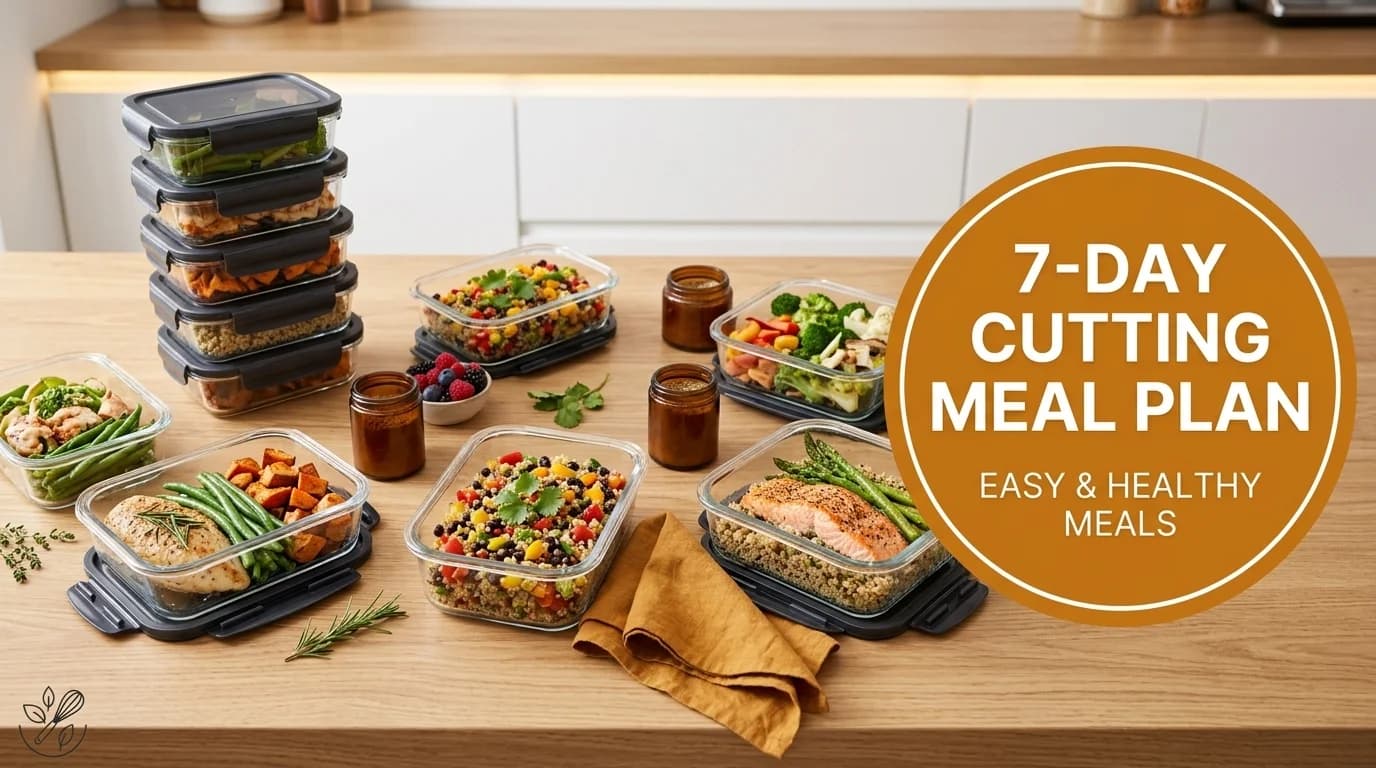
Now that the strategy is clear, here's what it looks like on a plate. Knowing what to do and actually doing it are two different things, so a concrete starting point helps.
The sample week below is built around a2,000-calorietarget, which works for a lot of people as a starting point.
Don't treat this as a rigid script. Use it as a template — a source of ideas you can adjust based on your food preferences, schedule, and specific macros. Swap chicken for fish, broccoli for asparagus, quinoa for brown rice. The more you make it your own, the easier it is to stick to.
Pay attention to how meals are structured across the day and how macros are balanced. That's the pattern worth repeating.
Day 1: Monday
Start the week with simple, clean meals that are straightforward to prep.
- Breakfast (450 calories):Scrambled eggs (3 whole, 2 whites) with a handful of spinach and half an avocado. Serve with a slice of whole-wheat toast.
- Lunch (500 calories):6 oz grilled chicken breast, 1 cup of cooked quinoa, and a mixed greens salad with a light vinaigrette.
- Dinner (550 calories):6 oz baked salmon with a cup of roasted broccoli and one medium sweet potato.
- Snack (500 calories):A protein shake (1 scoop whey in water), an apple, and a handful of almonds (about1 oz).
Day 2: Tuesday
Build on yesterday with some new flavors while keeping the macros right on track.
- Breakfast (400 calories):1 cup of plain Greek yogurt mixed with a half-cup of berries and a tablespoon of chia seeds for healthy fats and fiber.
- Lunch (550 calories):Leftover salmon and roasted broccoli from last night. Meal prep makes cutting much more manageable.
- Dinner (600 calories):Lean ground turkey stir-fry (6 ozof 93/7) with mixed bell peppers, onions, and snap peas over 1 cup of brown rice.
- Snack (450 calories):1 cup of cottage cheese with sliced peaches and a small handful of walnuts.
Consistency trumps perfection.If you have an off-meal, don't let it derail your entire day or week. Get back on track with your next planned meal and keep going.
Day 3: Wednesday
Mid-week is where the grind starts to set in. These meals are simple, satisfying, and quick.
- Breakfast (450 calories):Oatmeal (1/2 cup dry) made with water or unsweetened almond milk. Stir in one scoop of protein powder and top with a sliced banana.
- Lunch (500 calories):Tuna salad made with one can of tuna (in water) and Greek yogurt instead of mayo. Serve with whole-grain crackers and celery sticks.
- Dinner (600 calories):Lean steak (6 ozsirloin, trimmed of fat) with a side of asparagus and a small baked potato.
- Snack (450 calories):Two hard-boiled eggs and a pear.
Day 4: Thursday
By mid-week, having prepped ingredients in the fridge makes staying on plan far easier.
- Breakfast (400 calories):A quick protein smoothie. Blend 1 scoop of protein, a big handful of spinach, 1/2 cup of frozen berries, and unsweetened almond milk.
- Lunch (550 calories):Leftover ground turkey stir-fry. It often tastes better the next day.
- Dinner (600 calories):Chicken and veggie skewers (6 ozchicken with bell peppers, zucchini, and cherry tomatoes) served with 1 cup of couscous.
- Snack (450 calories):An apple sliced up with2 tablespoonsof natural peanut butter.
For more ideas to keep meals from getting repetitive, a well-structuredbalanced meal plancan give you useful inspiration.
Day 5: Friday
Heading into the weekend, keep it focused with meals that are satisfying and don't feel like deprivation.
- Breakfast (450 calories):Back to Monday's scrambled eggs with spinach, avocado, and whole-wheat toast.
- Lunch (500 calories):Leftover chicken skewers and couscous. Simple and effective.
- Dinner (650 calories):Homemade turkey burgers — a6 ozpatty (93/7) on a whole-wheat bun with lettuce, tomato, and onion. Add a side salad.
- Snack (400 calories):The Greek yogurt bowl from Tuesday's breakfast. It's worth repeating.
Day 6: Saturday
Weekends can disrupt routines, but having a plan ready keeps you in control.
- Breakfast (450 calories):Protein pancakes made with protein powder, oats, and egg whites, topped with fresh berries.
- Lunch (500 calories):A big salad with mixed greens, the leftover turkey burger patty, whatever vegetables you have, and a light dressing.
- Dinner (600 calories):Shrimp scampi with zucchini noodles instead of pasta, tossed with garlic, lemon, and a touch of olive oil.
- Snack (450 calories):A protein shake and a handful of almonds.
Day 7: Sunday
Use today to relax, enjoy your food, and prep a few things for the week ahead.
- Breakfast (400 calories):Oatmeal with protein powder and banana. A reliable, consistent option.
- Lunch (550 calories):Leftover shrimp and zucchini noodles from last night's dinner.
- Dinner (650 calories):Roasted chicken breast (6 oz) with a mix of roasted root vegetables like carrots, parsnips, and sweet potato.
- Snack (400 calories):Cottage cheese with sliced peaches. A solid high-protein end to the day.
Strategies to Get Shredded Faster
Once your calorie and macro targets are dialed in and you're hitting them consistently, that's the foundation. If you want to push through plateaus, a few additional habits are worth adding.
Nutrition is the primary driver, but a few habits outside the kitchen also matter. These are the ones with actual evidence behind them.
You're Probably Not Drinking Enough Water
This sounds simple, but proper hydration has a direct impact on fat loss. Even mild dehydration can slow your metabolism. Your body needs water for nearly every process it performs, especially accessing fat stores for energy.
Hydration also helps with hunger. When you feel hungry between meals, try drinking a large glass of water first — you may just be thirsty. Aiming for a gallon a day, sipped steadily throughout the day, keeps you full and supports consistent energy.
Don't Overlook Your Micros
Everyone tracks protein, carbs, and fats. But when you're cutting, total food volume drops, which means your intake of vitamins and minerals drops with it. This is an easy problem to overlook that quietly undermines your progress.
These nutrients keep the engine running. Without them, performance and recovery suffer even if your macros are on point.
- B Vitamins:These convert the food you eat into usable energy for your workouts.
- Iron:Essential for getting oxygen to your muscles. Low iron directly hurts performance.
- Magnesium:Involved in hundreds of bodily reactions, from muscle contractions to energy production.
- Vitamin D:Important for hormone health, including testosterone, which helps protect muscle during a cut.
The straightforward solution is variety — a wide range of colorful vegetables, fruits, and quality proteins will cover most of your micronutrient needs.
A Reality Check on Supplements
The supplement industry is mostly noise. Most "fat burners" are just expensive caffeine pills. But a few proven options can give you a real edge when used correctly.
Supplements are there tosupplementa solid plan. They won't fix a bad diet or inconsistent training.
Here's what's actually worth considering:
- Protein Powder (Whey or Casein):More of a food than a supplement at this point. Hitting your protein target is the top priority for holding onto muscle while losing fat, and a shake is simply an easy way to get there. Research consistently supports aiming for1.0 to 1.4 grams of protein per poundof body weight. If you want more detail, explore the research on protein's role in a cutting diet.
- Creatine Monohydrate:One of the most researched and effective supplements available. It helps maintain strength and power in the gym, which signals your body to preserve muscle tissue even in a deficit.
- Caffeine:A black coffee or a pre-workout can make a meaningful difference when calories are low and energy is lagging. That boost can be the difference between a productive workout and going through the motions.
How to Use Refeed Days to Your Advantage
Long cuts are demanding, mentally and physically. Over time, your metabolism can slow and hormones that control hunger and energy (like leptin) start to drop. A refeed day is a deliberate response to this.
A refeed isnota cheat day. It's a planned, one-day increase in calories coming almost entirely from carbohydrates — rice, potatoes, or oats. The goal is to temporarily bring calories up to maintenance level to reset your metabolism, refill muscle glycogen, and give yourself a mental reset.
For most people, one refeed every2-4 weeksworks well. You'll come out of it feeling fuller and stronger, ready to get back into the deficit.
Quick Answers to Your Cutting Diet Questions
A few questions come up repeatedly when people start a cut. Here are direct answers to the most common ones.
The theory is straightforward; the day-to-day execution is where most people run into trouble.
| Question | Brief Answer |
|---|---|
| Can I have cheat meals? | A planned refeed meal is a better option. It's a strategic increase in carbs to support your metabolism, unlike an unplanned cheat meal that can erase your deficit. |
| What if I go over my calories one day? | Don't panic. One day won't ruin your cut. Get back on track with your next meal. Consistency over weeks is what matters, not daily perfection. |
| How do I deal with being hungry? | Focus on protein and fiber, drink plenty of water, and eat high-volume foods like big salads. These keep you full on fewer calories. |
| Is it okay to eat carbs? | Yes. Carbs are important for energy, especially for training. Time them around your workouts and choose complex sources. |
These answers cover the basics. Understanding the reasoning behind them helps when situations come up that aren't in the plan.
Can I Have Cheat Meals on a Cutting Diet?
The "cheat meal" idea is tempting, but it can easily work against you. A single no-holds-barred meal can wipe out several days' worth of your calorie deficit, especially if it bleeds into an all-day affair.
A more effective approach is what's called arefeed meal— aplannedincrease in calories, mostly from quality carbohydrates. This isn't just for your sanity; it actually helps reset your metabolism and refill muscle glycogen stores that get depleted during a deficit.
The difference comes down to control. A calculated refeed supports your goal. An unplanned cheat meal usually works against it.
What Happens If I Go Over My Calories for One Day?
One high-calorie day won't derail your cut. Fat loss is the result of a sustained deficit over weeks and months, not perfect adherence every single day.
If you go over your target, don't try to compensate the next day by starving yourself or adding hours of extra cardio. That pattern leads to a cycle of restricting and overeating. Just acknowledge it happened and return to your plan with your next meal.Consistency over perfectionis what produces results.
How Do I Handle Hunger Pains?
Some hunger is normal during a cut — it means you're in a deficit. But chronic, intense hunger is a sign your plan won't hold up long-term.
Here are practical ways to manage hunger:
- Load Up on Protein and Fiber:These are the two most effective tools for satiety. Every meal should have a solid source of lean protein and a generous portion of high-fiber vegetables like broccoli, spinach, or leafy greens.
- Drink More Water:Thirst and hunger feel similar. Try drinking a large glass of water before reaching for a snack. Sipping consistently throughout the day helps more than drinking large amounts all at once.
- Find Your Meal Timing Sweet Spot:Some people do well with 5-6 smaller meals, while others prefer 3 larger ones. Experiment to see what keeps your energy and hunger levels stable.
- Embrace Food Volume:A large bowl of salad with grilled chicken can have the same calorie count as a tiny dense snack. Low-calorie, high-volume foods go a long way toward feeling satisfied on a deficit.
Apply these consistently and the deficit becomes something you can sustain, not something you're fighting against every day.
FAQ
Can I Have Cheat Meals on a Cutting Diet?
The classic 'cheat meal' is tempting, but it can easily work against you. A single no-holds-barred meal can wipe out several days' worth of your calorie deficit, especially if it turns into an all-day affair.
What Happens If I Go Over My Calories for One Day?
One high-calorie day won't derail your cut. Fat loss comes from a consistent deficit over weeks and months, not perfect adherence every single day.
How Do I Handle Hunger Pains?
Some hunger is normal during a cut — it means you're in a deficit. But if you're constantly fighting off ravenous hunger, the plan won't last long.